What You Pay
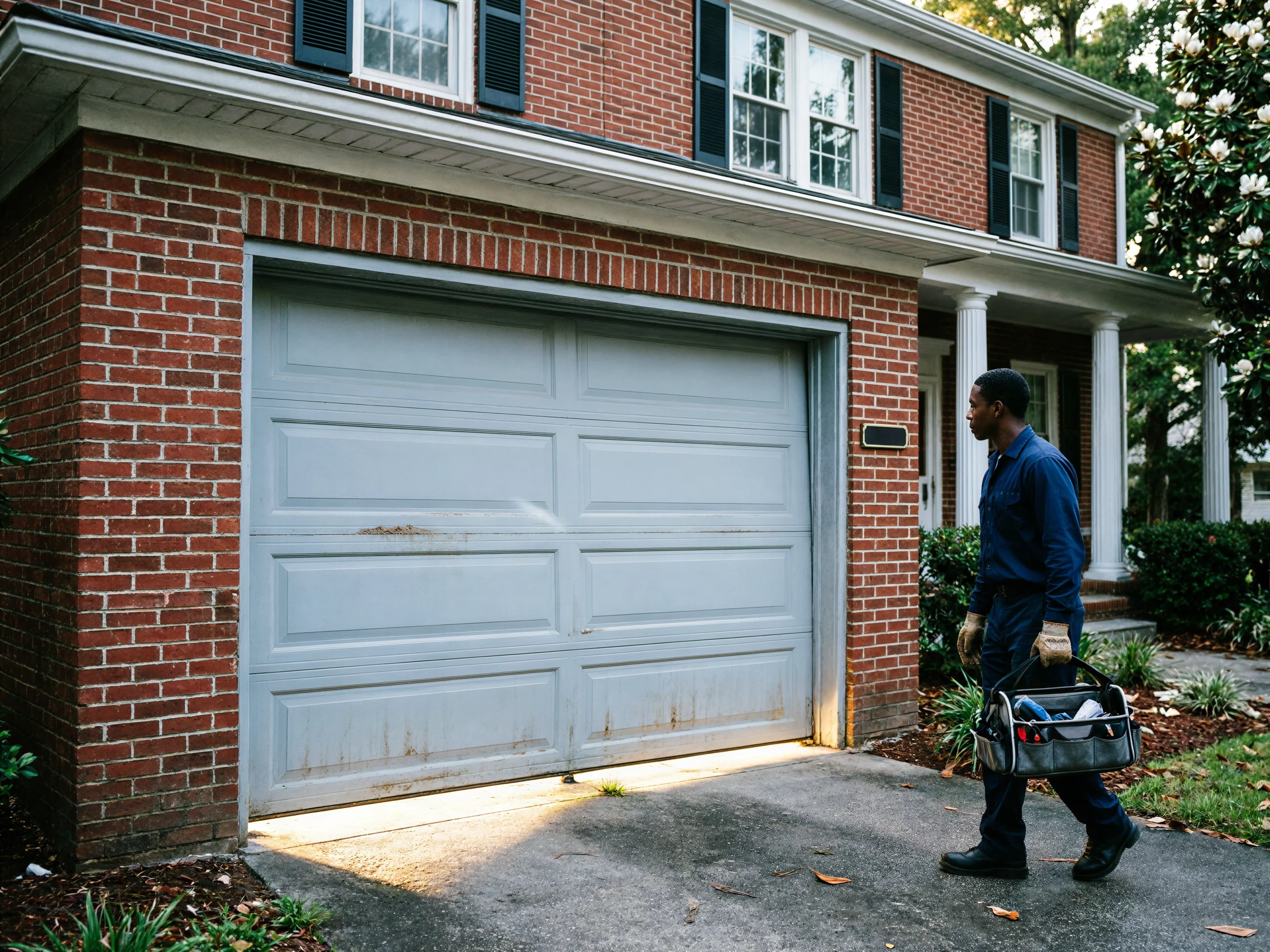
Archdale's housing stock centers on 1985, right in the middle of the broader 1955-1998 range we see across this service area. That means most garage doors here are steel sectional units, 16x7 for two-car openings or 9x7 for singles, hung on either extension springs with a separate cable-and-pulley system or early torsion setups using a single wound spring and two lift cables.
Aging galvanized cable
Neither design has held up as well as the newer double-torsion rigs, and the galvanized cable on a 35-plus-year-old door has usually seen one or two replacements already, sometimes none, which is its own problem.
Two-tier cable pricing
We don't post a flat number for cable repair because the job splits into two different prices: a straightforward cable swap on a door that's otherwise sound, and a cable job that turns up a bent track or a spring that's also on its way out.
Catch fraying before snap
We quote on-site once we've got the door open and the drum, pulley, and bottom bracket in front of us. What we can tell you is that a single frayed cable, caught before it snaps and drops the door, is the cheaper of the two calls every time. There isn't a published rate card here, and we'd rather tell you that than make one up.
What the Repair Takes
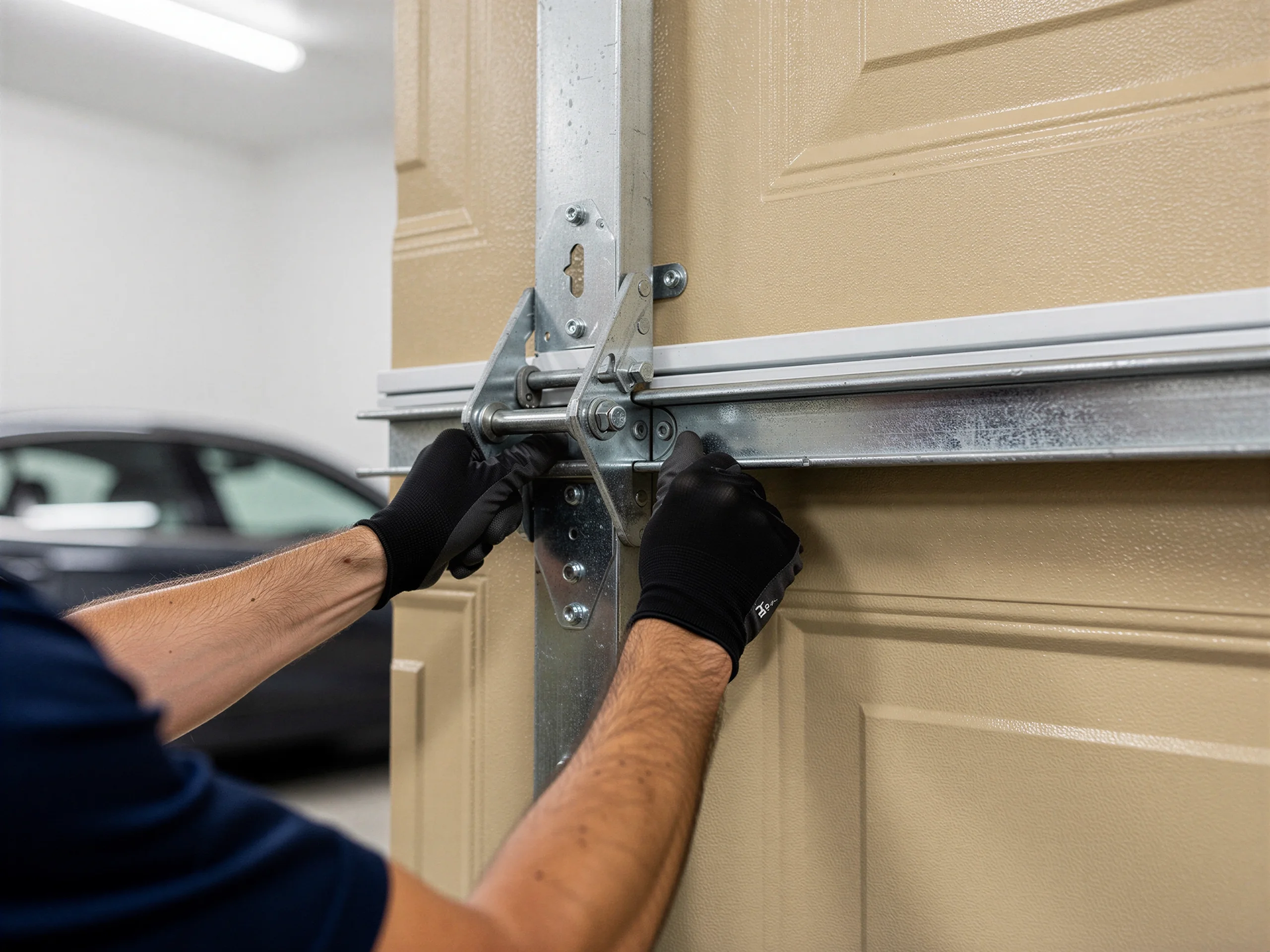
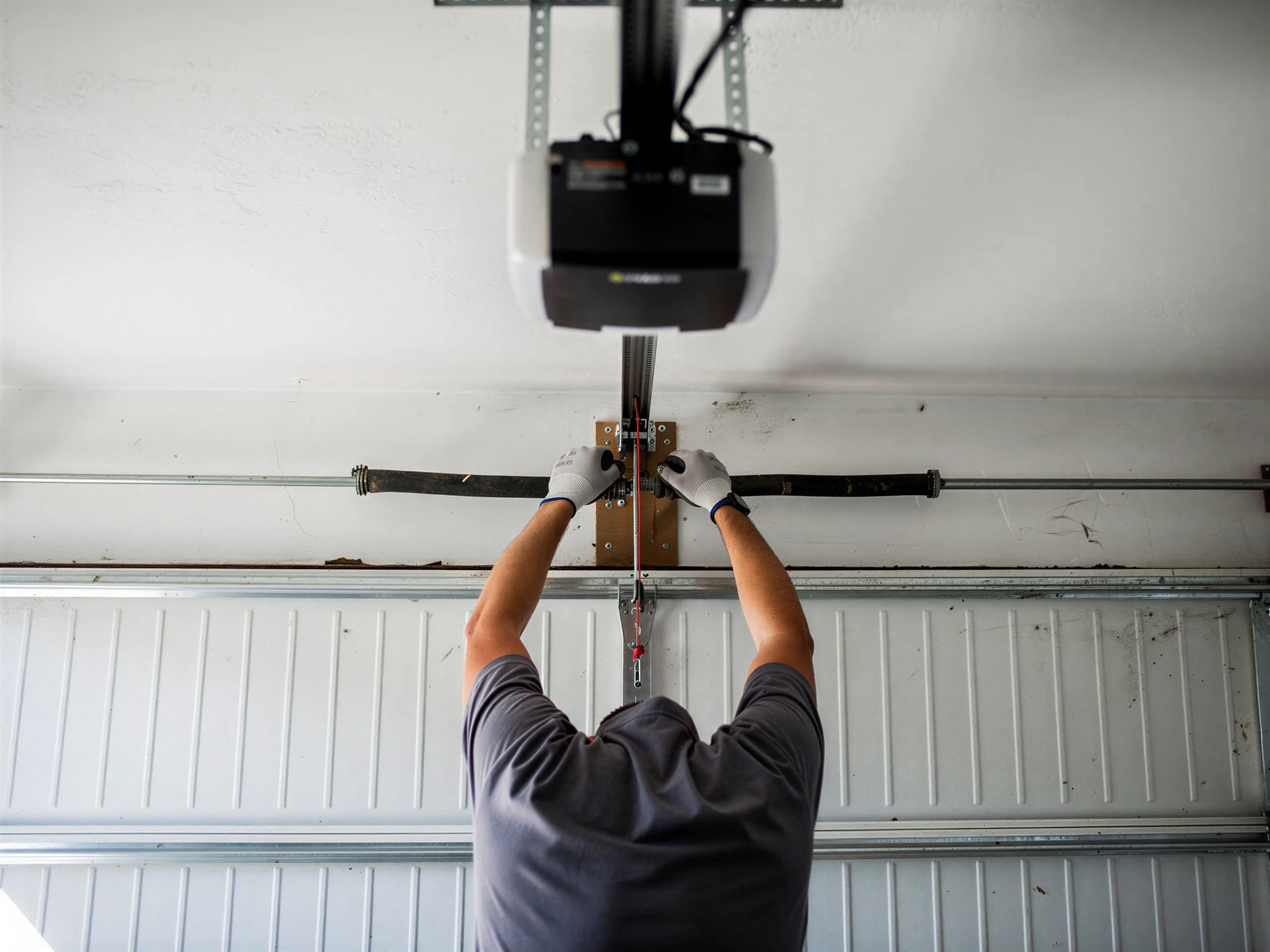
On an extension-spring door, the cable runs from the bottom corner bracket up to a pulley and back to the spring - two cables, two pulleys, and they wear as a pair even when only one has snapped.
Drum wraps under tension
On the torsion setups common in the same build years, the cable wraps a drum at each end of the shaft and the whole thing has to come under control before the old cable comes off, because a torsion drum under tension is not something to work around.
Steps for clean cable swap
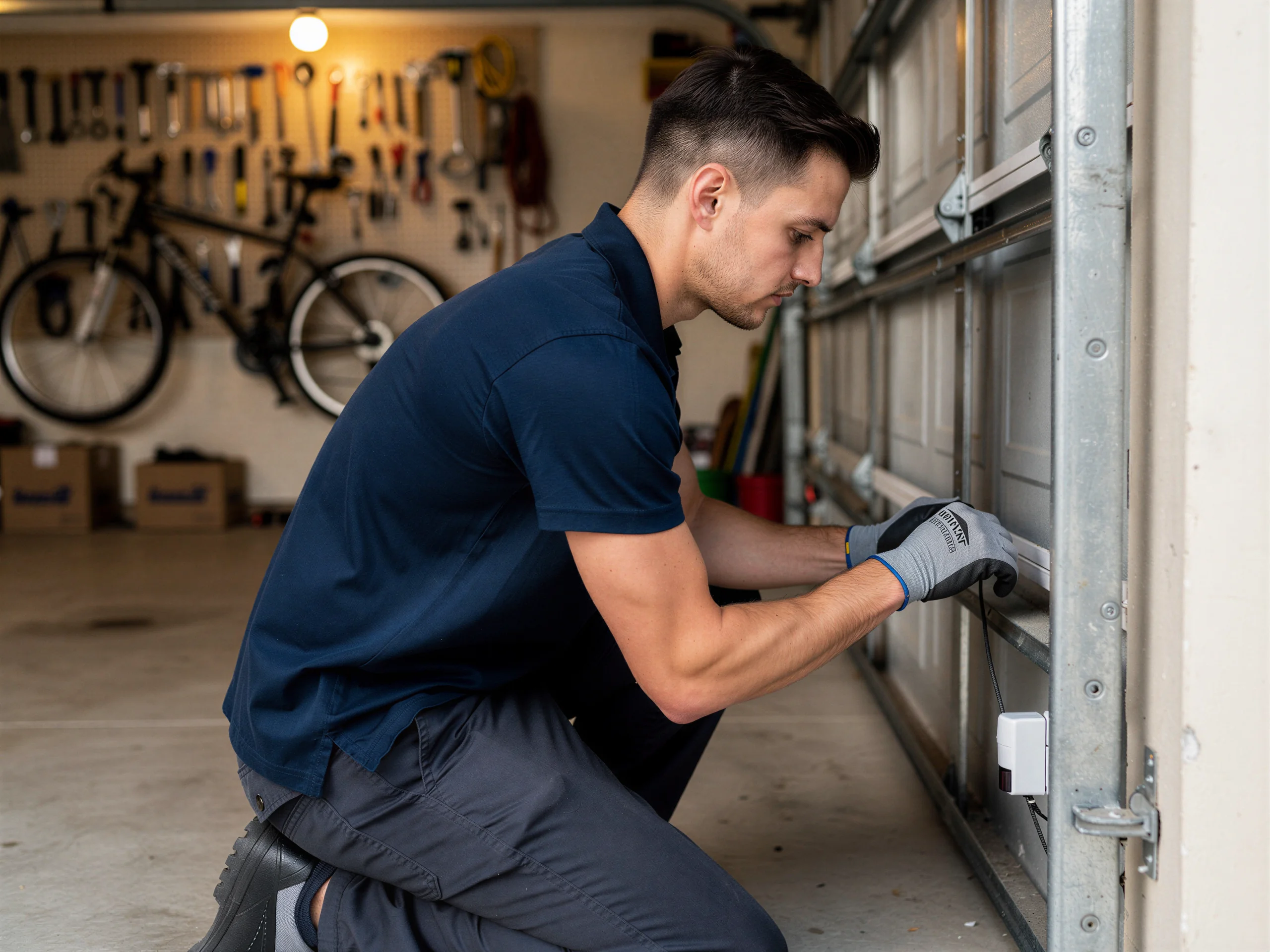
Either way, swapping a cable means relieving the spring tension first, winding or unhooking it safely, running new cable to spec length, and reseating it on the drum or pulley before anything gets tested under load. A clean single-cable job usually runs under an hour once we're on-site.
Bracket shift adds time
If the bottom bracket has shifted, or the track's bent where the cable jumped it, that adds time we won't guess at until we're there. We carry standard-gauge cable stock on the truck for the common door widths. What we don't carry is custom-length cable for odd-size openings - those get cut to order, and that's the one part of this job that can mean a return trip.
The Symptom
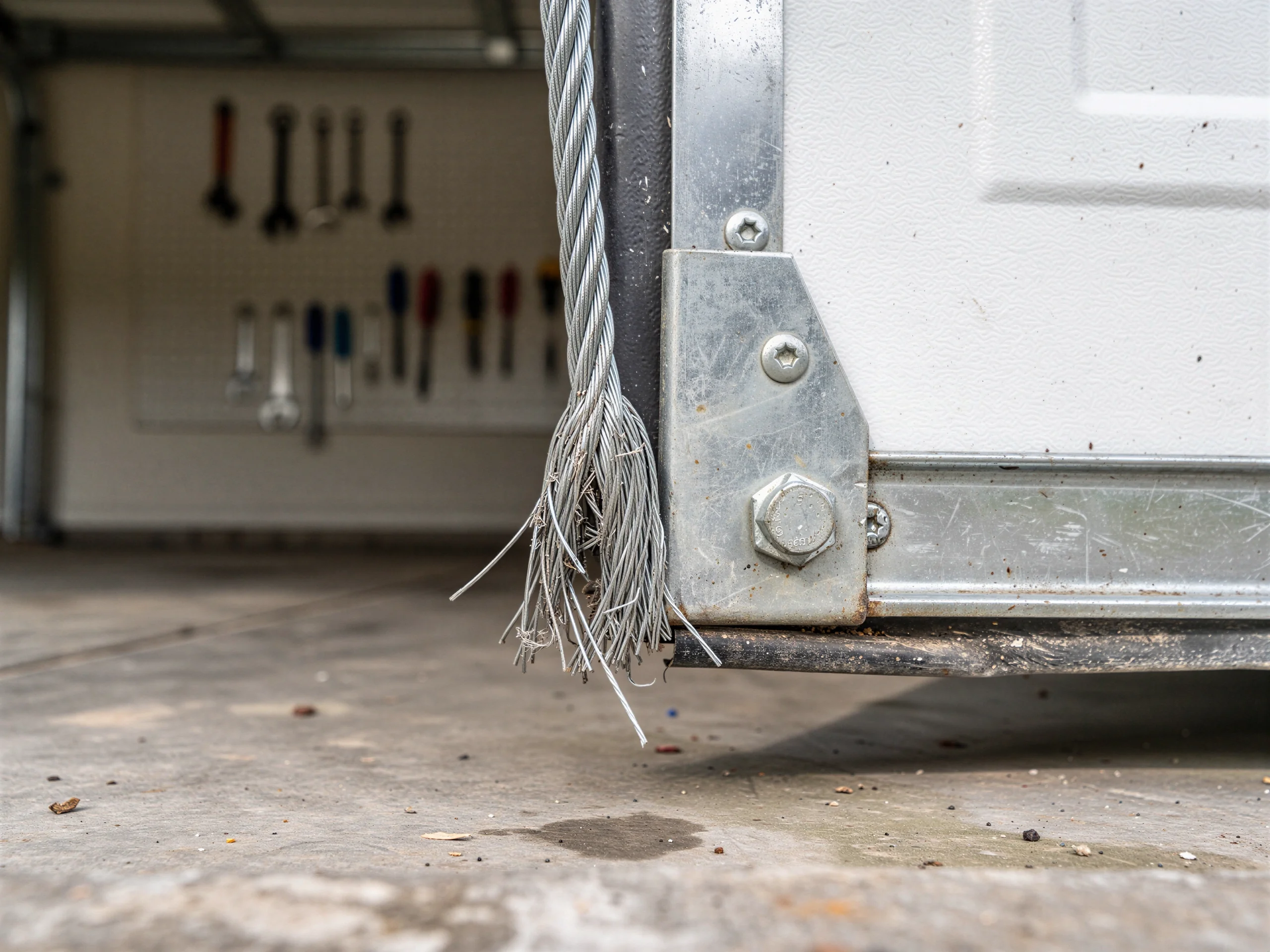
The giveaway on a frayed cable is almost always visual before it's functional: a kink, a few broken strands near the drum or pulley, sometimes a thin coat of rust where the galvanizing has worn through.
Crooked running door
You'll often catch it because the door starts running crooked - one side drops faster than the other as the compromised cable stretches under the last bit of load it can take. A fully snapped cable is louder and more obvious.
Corner drop and jamming
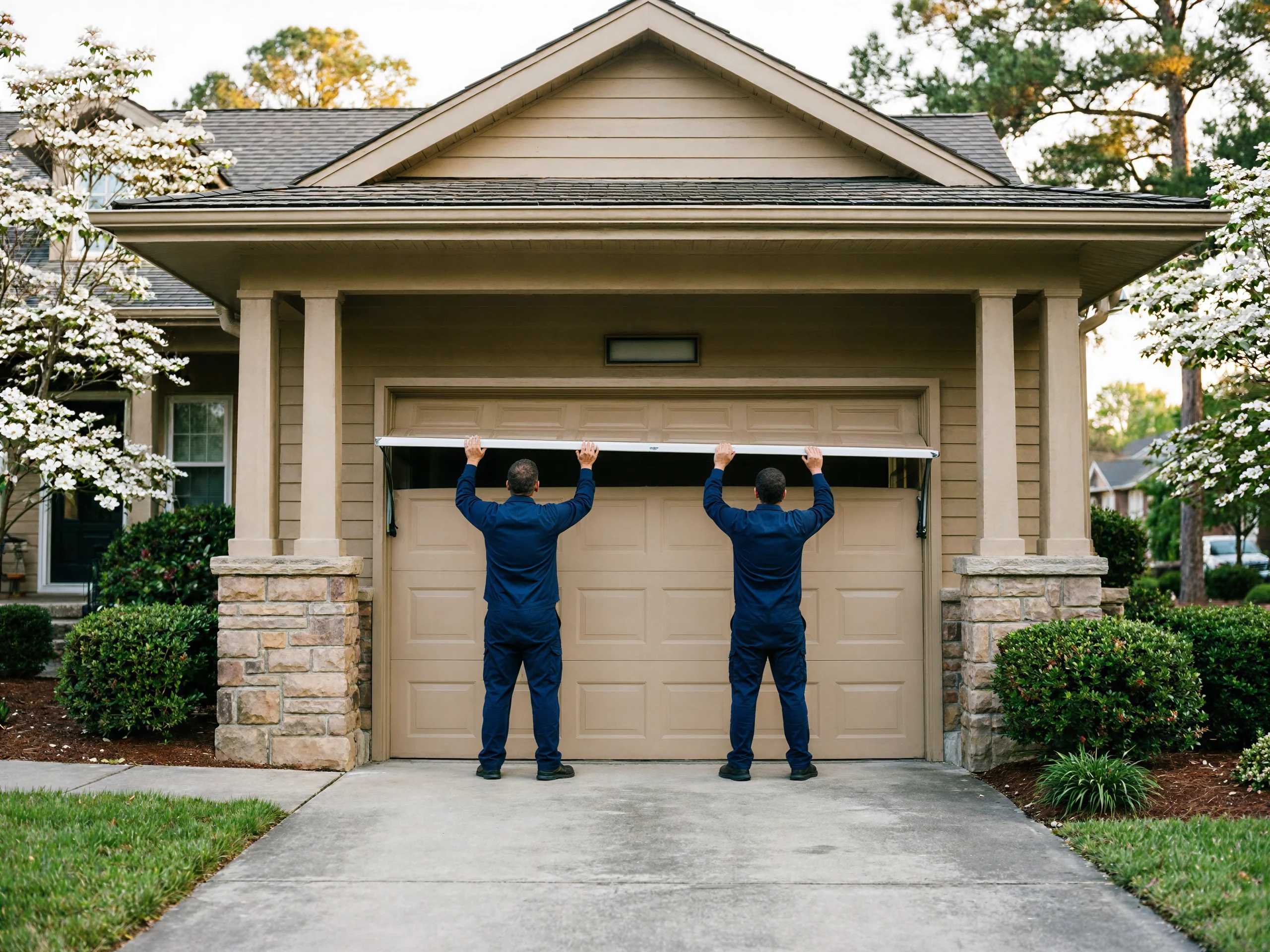
The door drops hard on one corner, sometimes jams sideways in the track, and the opener will keep trying to run the motor against a door that isn't moving right. If that happens, cut power to the opener and don't force the door by hand - a cable that's let go once can still be under spring tension on the other side.
Winter cable stress
Colder stretches through the winter here are harder on cable and pulley hardware generally; metal contracts, old grease stiffens, and a cable that was marginal in October is often the one that lets go in January.
The Complications
The complication we see most on doors from this build era isn't the cable itself - it's what's holding the other end of it. A pulley bracket that's rusted through, or a bottom corner bracket that's loosened from decades of door travel, turns a cable swap into a bracket replacement too. We check both ends before we call the job done, not just the part that snapped.
The other complication is the spring. Extension and early torsion springs from the 1980s don't carry a cycle count printed on them, and a spring that's near the end of its life will often take the cable with it - the cable frays because the spring's uneven tension is working it harder than it should. If we find a spring that's clearly the next failure waiting to happen, we'll say so before we close up the door, not after you call us back out from Lexington a second time.
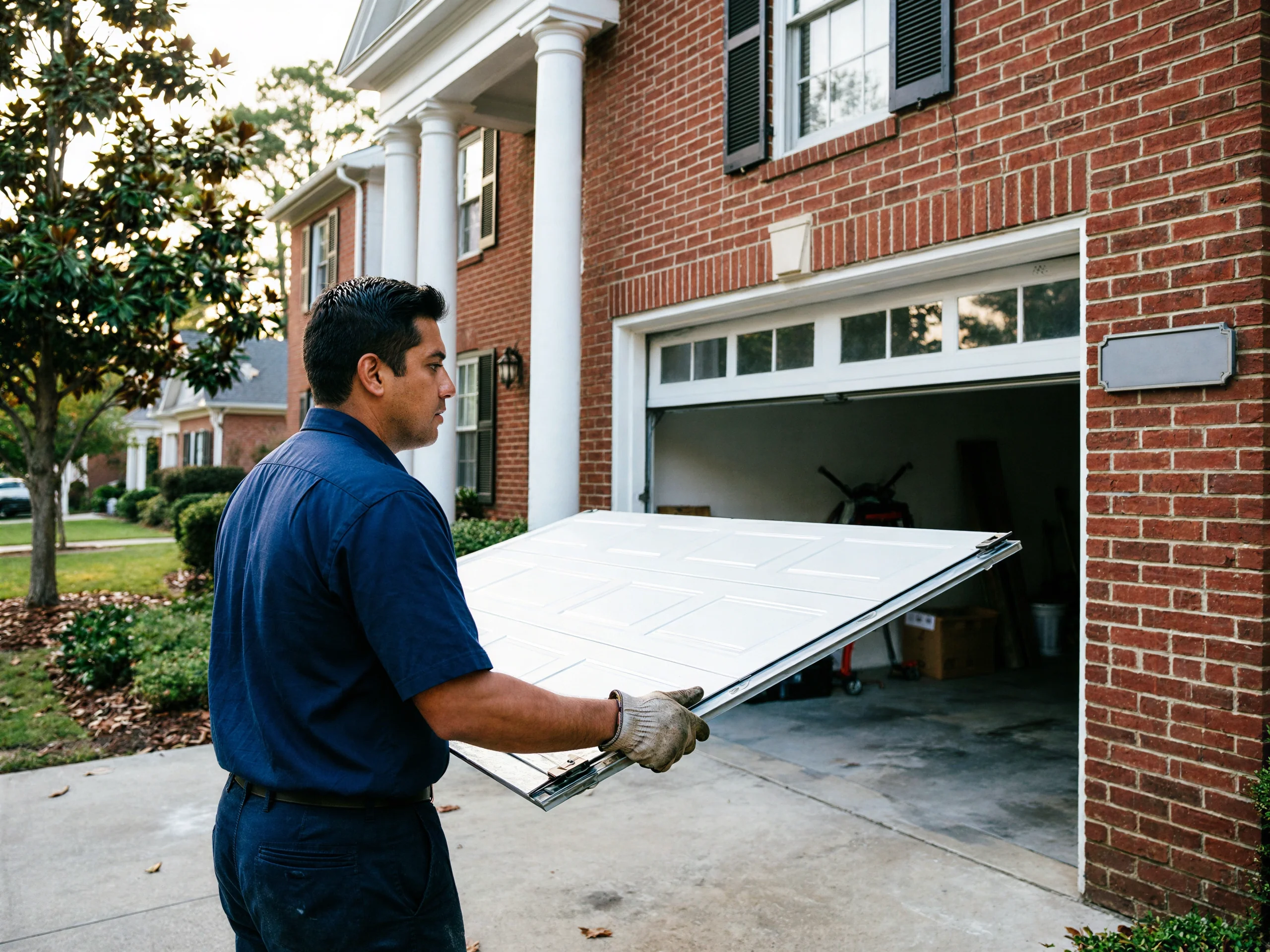
We don't repair cable on doors where the track or panel damage makes the door itself a liability - at that point replacement is the honest answer, and we'll tell you that instead of patching around it.
Getting It Booked In
We run the 19 miles out from Lexington to cover Archdale, so we schedule the visit rather than drop by on a whim - tell us what you're seeing (crooked door, loud snap, door stuck mid-track) and we'll bring the cable stock and tools that match it.
Extension-spring cable stock
With roughly 4,851 households in Archdale and a housing stock that skews toward that mid-1980s build, extension-spring cable setups are common enough that we stock for them specifically.
Photos speed parts choice
If you're not sure whether what you're looking at is a cable or a spring, a photo of the drum or pulley area helps us bring the right parts the first time, since a return trip for a part we didn't expect costs you time, not just us.
Related service page links
Full details on the broader lineup of garage door work we do out of Lexington live on our Archdale page, and the general cable repair writeup for the Lexington service area covers pricing patterns that apply here too.
Talk to a local pro
Garage door service in Lexington?
Same-day service with honest, upfront quotes.