
Garage Door Work for Lexington's Older Housing Stock
Garage door repair in Lexington, NC, built around the 1955-1998 housing stock and cold-moderate winters that work on steel panels and torsion springs here.
Read moreBlogLexington, NC · 4 min read
Lexington homes built 1955-1998 have doors and openers from a specific era. Here's how to tell if yours is worth repairing or past the point of no return.
Local detail
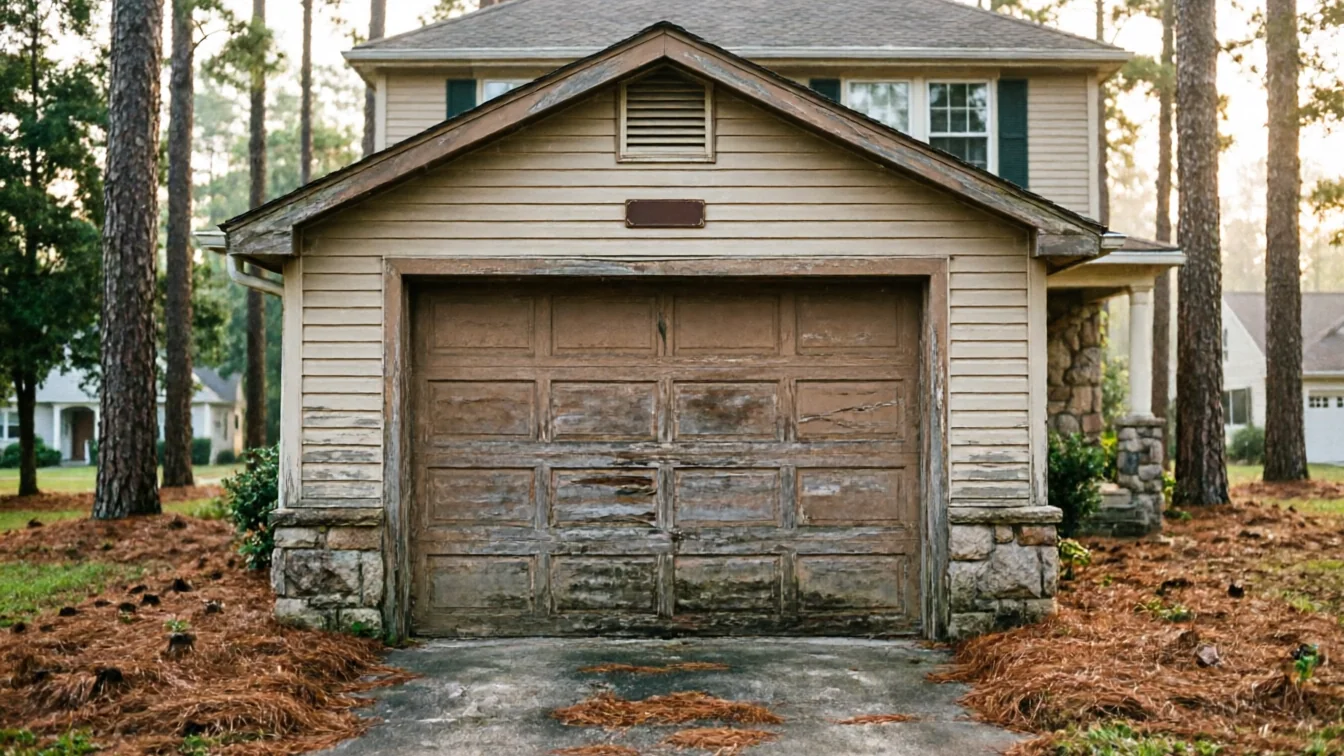
Most of the garage doors we get called out on in this area went up somewhere between 1955 and 1998, with a lot of the stock dating to the early 1980s. That matters because doors from that stretch were built with steel gauges and spring systems that differ year to year, and knowing roughly when your house was built tells you a lot before you even open the door.
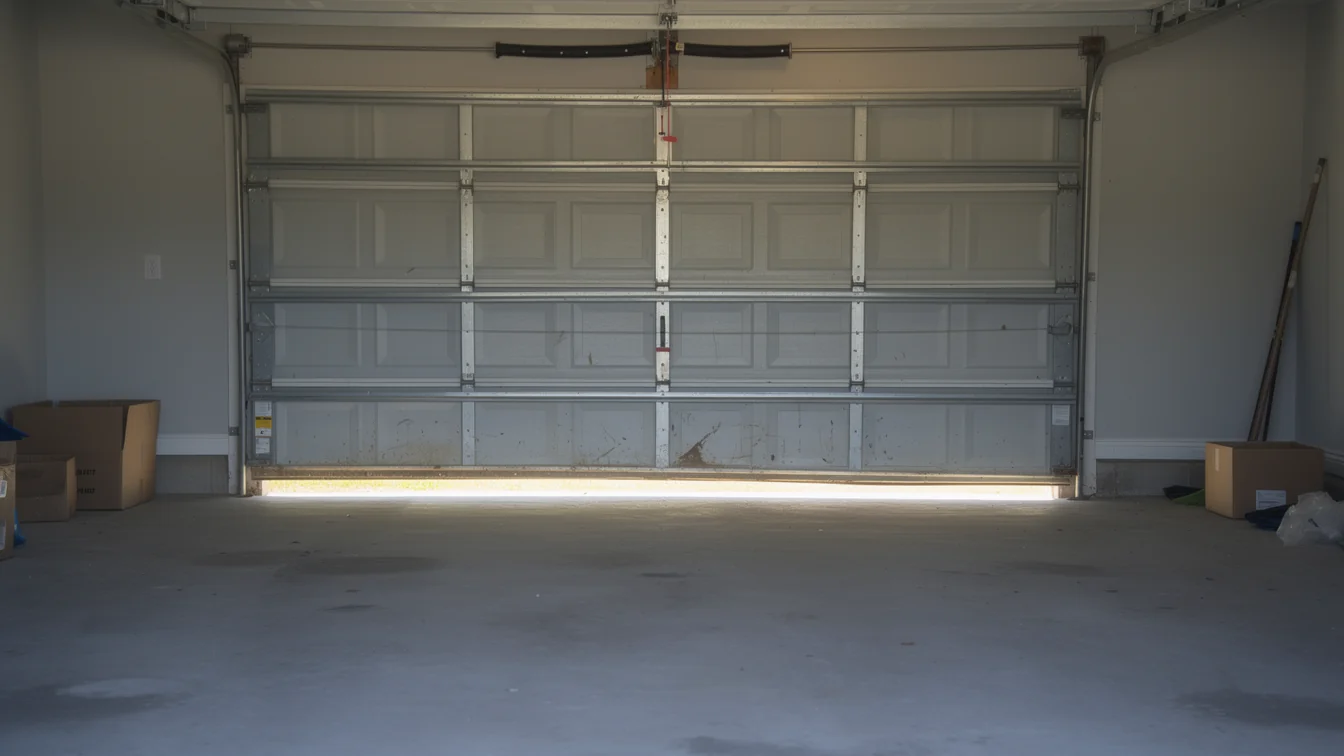
Start by lifting the door halfway by hand with the opener disconnected. If it drops on its own or feels dead heavy, the torsion spring has lost tension - common on doors original to houses from the 1980s stock, since those springs are now 40-plus years old. Check the bottom panel for rust blooming along the seam; on a door that age, rust at the bottom panel usually means moisture has been getting in for years, not months.
Look at the track too. Bent track on an older single-car door is often a sign the rollers seized first and someone forced the door through it anyway. That's a repair that can spiral if you keep running the opener against resistance. If the opener itself predates the door's last repaint, that's another clue you're dealing with original equipment, not a retrofit - and original equipment on a house this old is nearing the end of what's reasonable to keep patching.
The area
We don't publish a flat price list here, because what a repair costs depends on what's actually wrong and what's still available for a door that age - and we'd rather tell you that straight than make up a number. A worn roller or a frayed cable is usually a small job. A full spring and hardware replacement on a door original to a house built in the 1980s is a bigger one, especially if the track or drum has to come out with it.
One honest limitation: if your door is an odd size or a discontinued panel style from that era, we may need to order parts rather than carry them on the truck, and that adds a few days. We'd rather tell you that up front than quote a same-day fix we can't deliver.
Household incomes in this service area run around $64,562 at the median, which is part of why we try to steer people toward the repair that actually makes sense for the door they have rather than pushing a full replacement every time a part fails. Sometimes replacement is the right call. Often it isn't yet.
What we find
Across the 12 named areas we work in, the housing is overwhelmingly 1980s-and-90s construction, with a long tail back to 1955. That means the garage doors we see are rarely uniform - a street built in 1986 can sit a quarter mile from one built in 1962, and the door hardware on each tells a different story. Older sections tend to have narrower single-car doors on side-mounted torsion springs, which are a different animal to service than the center-mounted setups common on the 1980s builds.
With close to 11,737 owner-occupied houses across this service area, a good share of them are now 25 to 45 years past their original door install. That's long enough for springs to fatigue, for weatherstripping to crack, and for openers to start grinding gears nobody stocks anymore. It's also long enough that a door that's never been serviced is usually carrying more than one problem at once - a spring that's weak AND a roller that's seized AND a sensor that's drifted out of alignment. Fixing one and ignoring the others just moves the failure point.
How we work
This area sits in a cold-moderate climate band, which is gentler than true northern winters but still cold enough that steel panels contract and expand through the season, and that cycle is hardest on doors that are already decades old. A worn seal that would be a minor nuisance on a newer door lets real cold into the garage on an older one, which then stresses the opener's cold-start torque - a small issue compounding into a bigger one.
Moisture is the quieter problem. On doors original to 1960s and 1970s builds, we see bottom panel rust more often than on anything installed since, simply because those doors have had more winters to accumulate condensation at the base. That's not a flaw in the door so much as arithmetic - age plus moisture plus steel.
None of this means every older door needs replacing. A door with sound panels and a fatigued spring is almost always worth fixing. A door with rusted-through panels, a cracked section, and a dying opener all at once is usually past the point where repair makes financial sense, and we'll tell you that instead of billing you piecemeal to find out the hard way.
Questions
If the panels are structurally sound and the problem is a spring, cable, roller, or opener issue, it's almost always worth fixing. If you've got rust through the steel, a cracked panel, and an opener failing at the same time, replacement usually costs less over time than chasing three separate repairs.
Cold steel contracts, and worn weatherstripping lets more cold air reach the spring and track than it should. In this climate band that's a real seasonal stress, not just your imagination - it's harder on a door that's already decades old.
Often, yes, but not always same-day. Some panel styles and hardware from that era are discontinued, and we may need to order a part rather than carry it on the truck. We'd rather tell you that upfront than promise a fix we can't deliver that day.
Recommendation
More garage door guides for Lexington homeowners.
Garage door repair in Lexington, NC, built around the 1955-1998 housing stock and cold-moderate winters that work on steel panels and torsion springs here.
Read more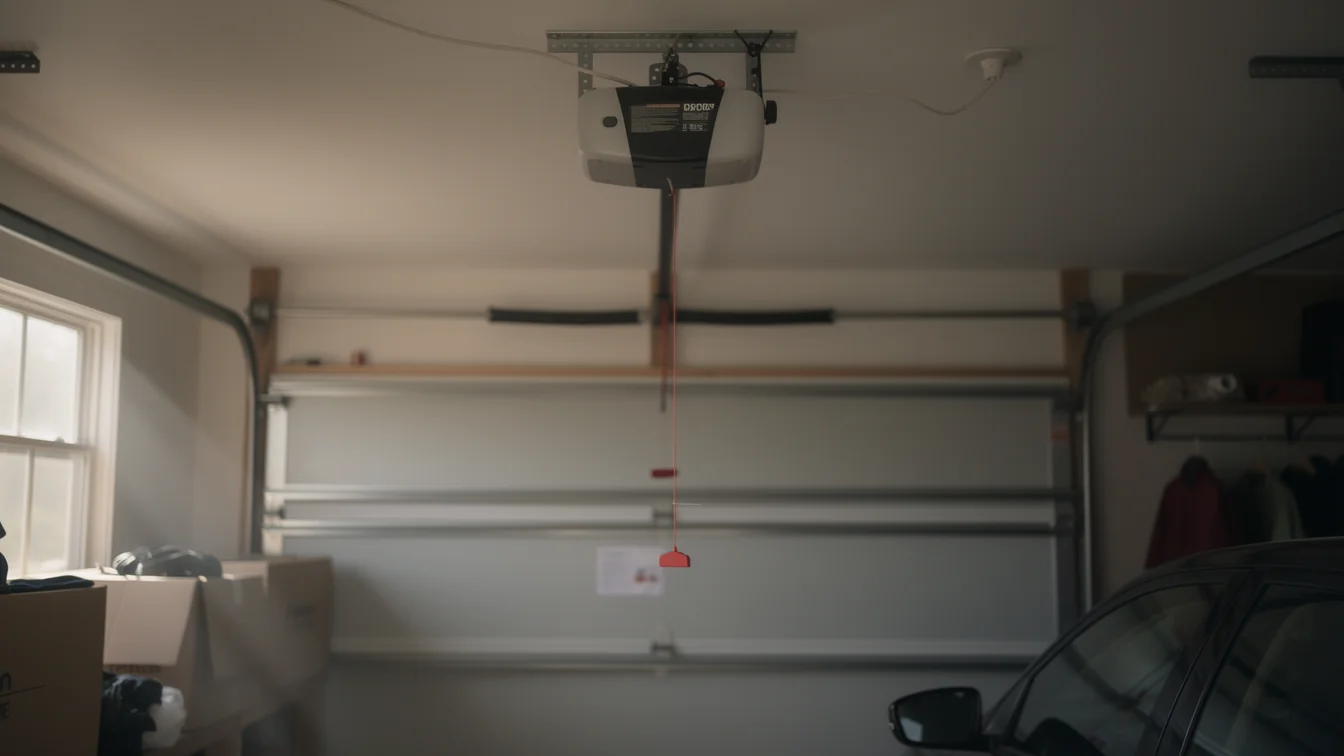
Lexington homes built mostly between 1955 and 1998 see opener failures and power cuts differently than newer builds.
Read more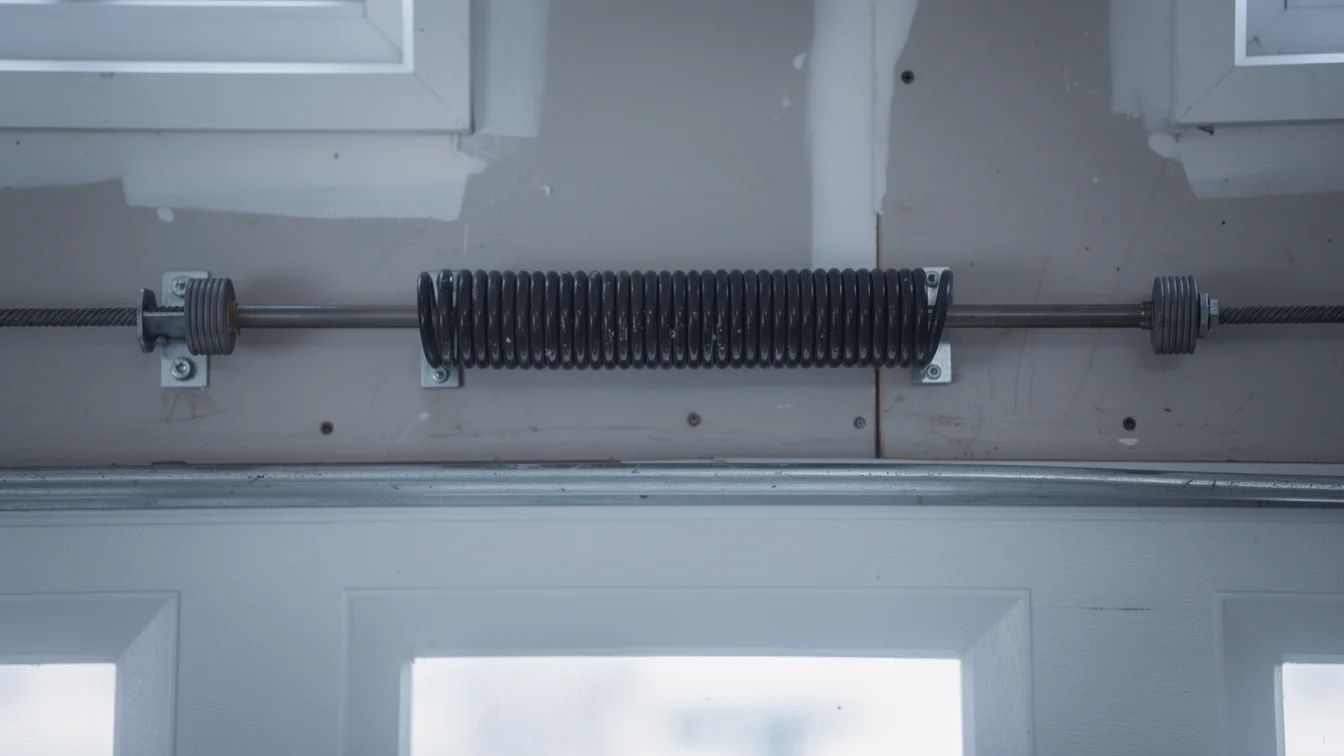
Lexington Garage Door Pros on what cold mornings and 1980s-era hardware mean for springs, openers, and tracks across this service area's older housing stock.
Read moreReady when you are
Lexington Garage Door Pros repairs and installs garage doors, springs and openers in Lexington, NC and the surrounding area.