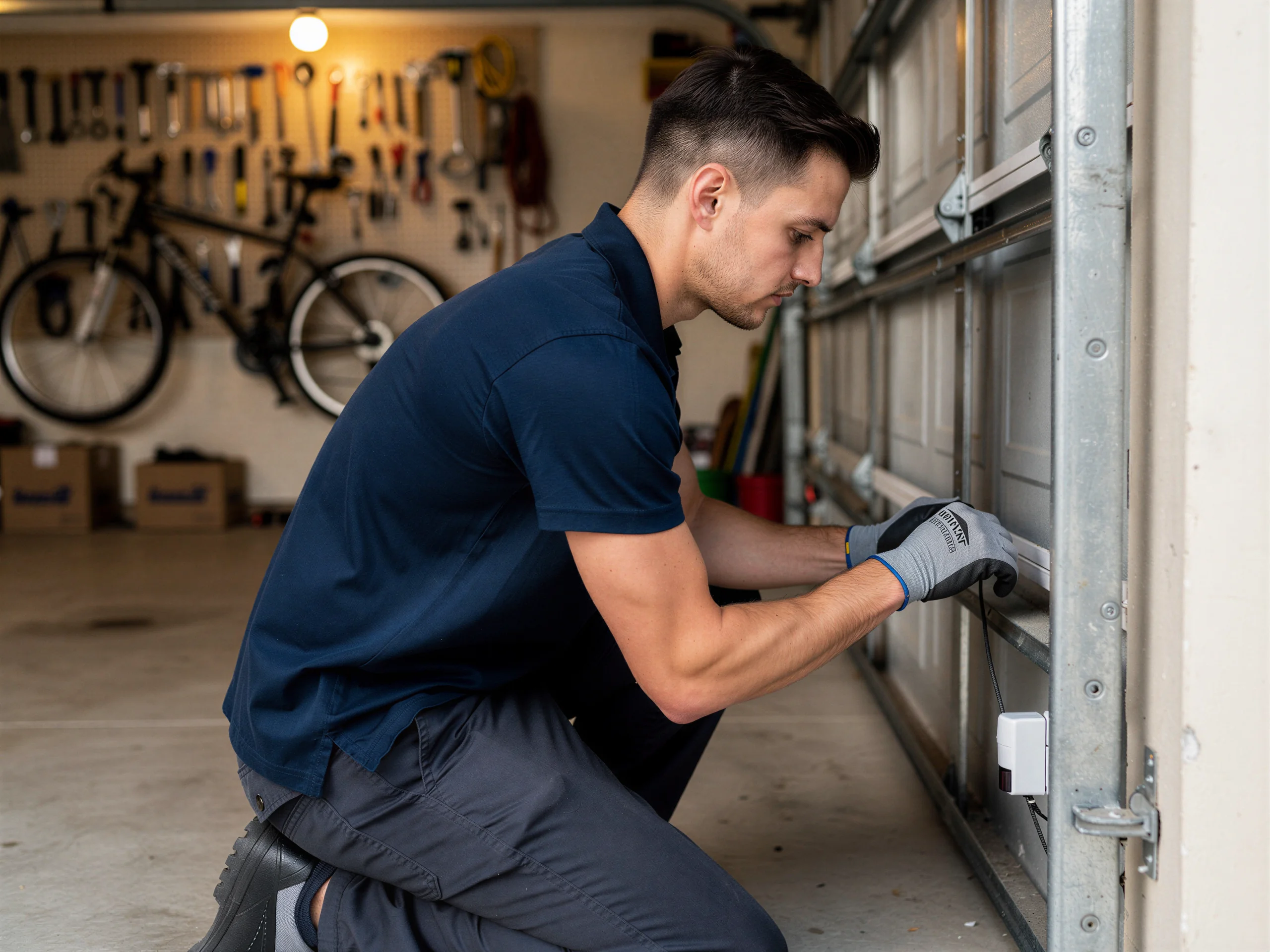
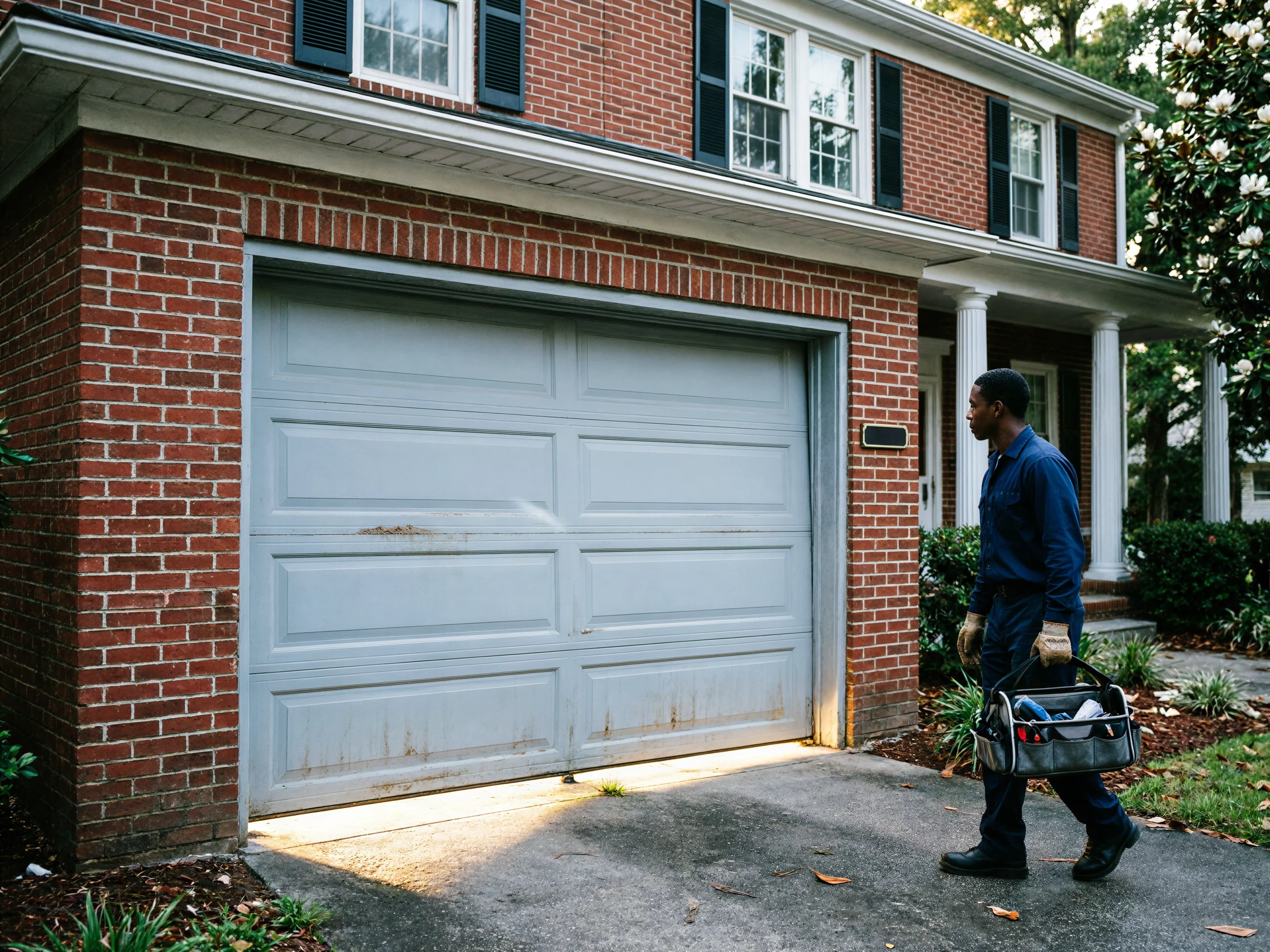
The Symptom
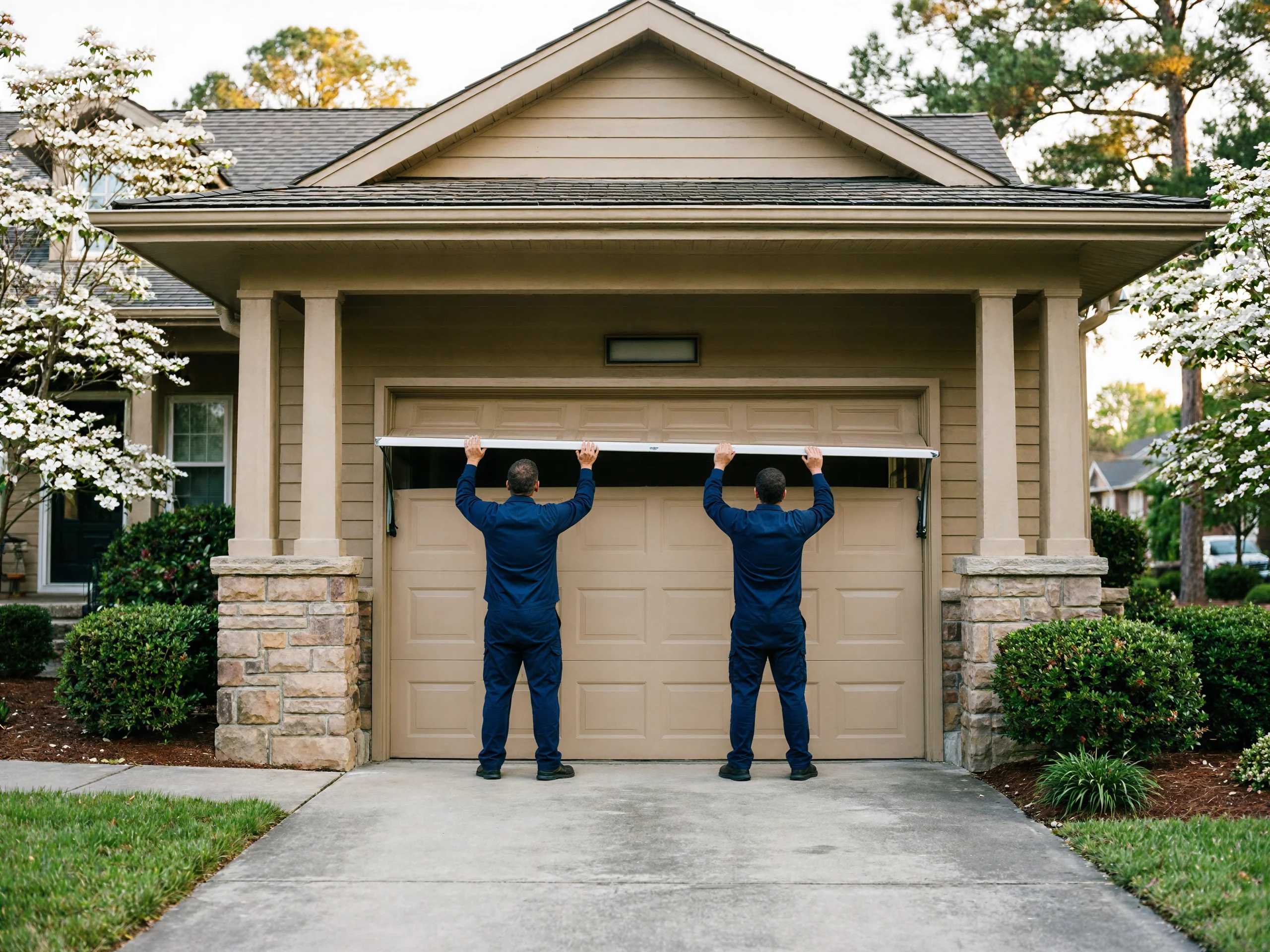
The call usually starts the same way: the door won't move, or it moved halfway and stopped, or it came down hard and now sits crooked in the track.
Bang means spring
Sometimes there's a loud bang first - that's a spring letting go, not the opener. Sometimes the opener just hums and the door doesn't budge, which points to a cable or a jammed roller instead. What matters in the moment is whether the car is trapped inside or the door is stuck open and won't close.
Triage by urgency
A door stuck open on a cold night is a different kind of urgent than a door that won't open for a 7 a.m. drive to work. Both get treated as emergency calls, but we triage by what's actually at risk - a car locked in versus a house locked open.
Handful of repeat failures
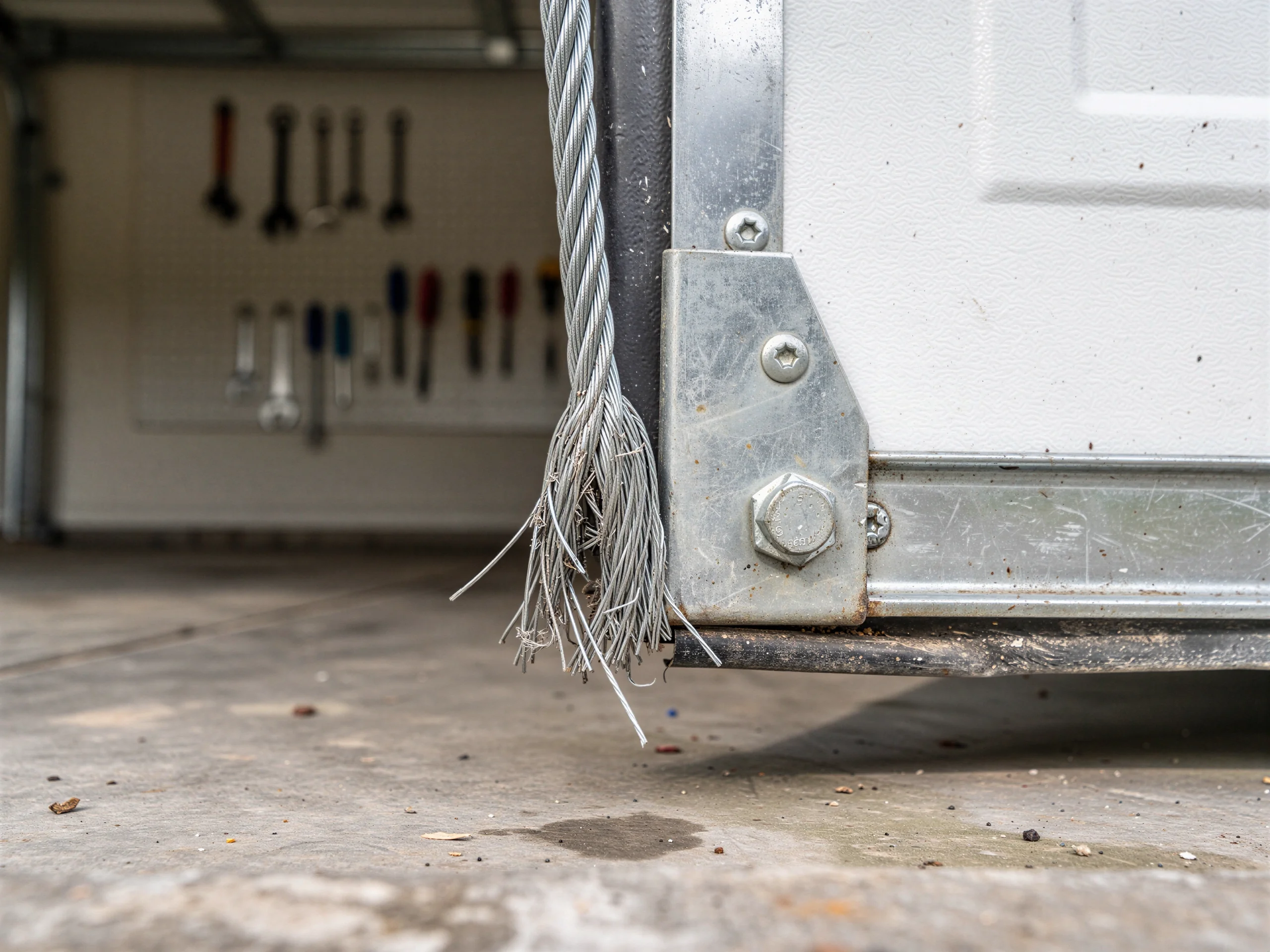
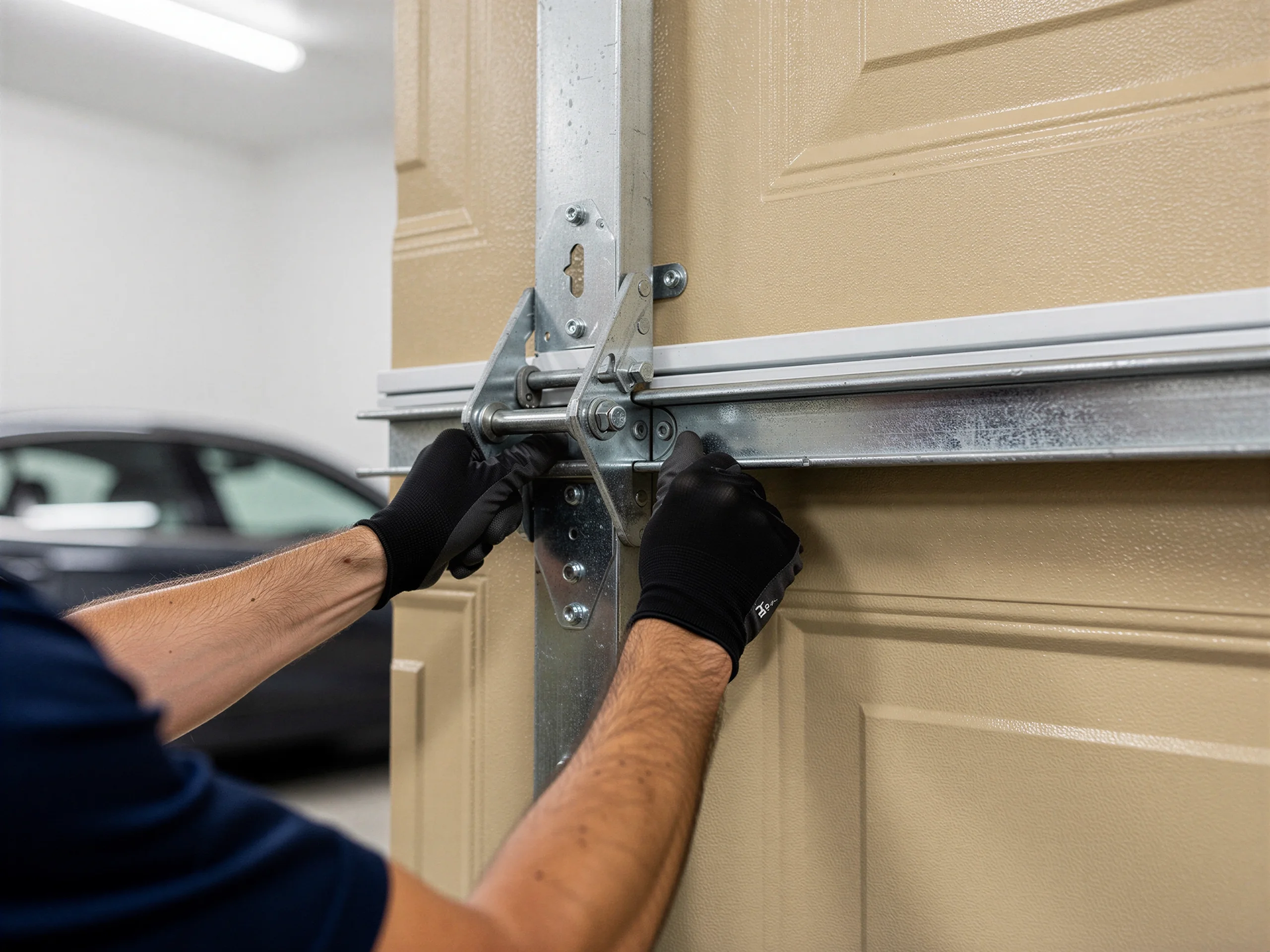
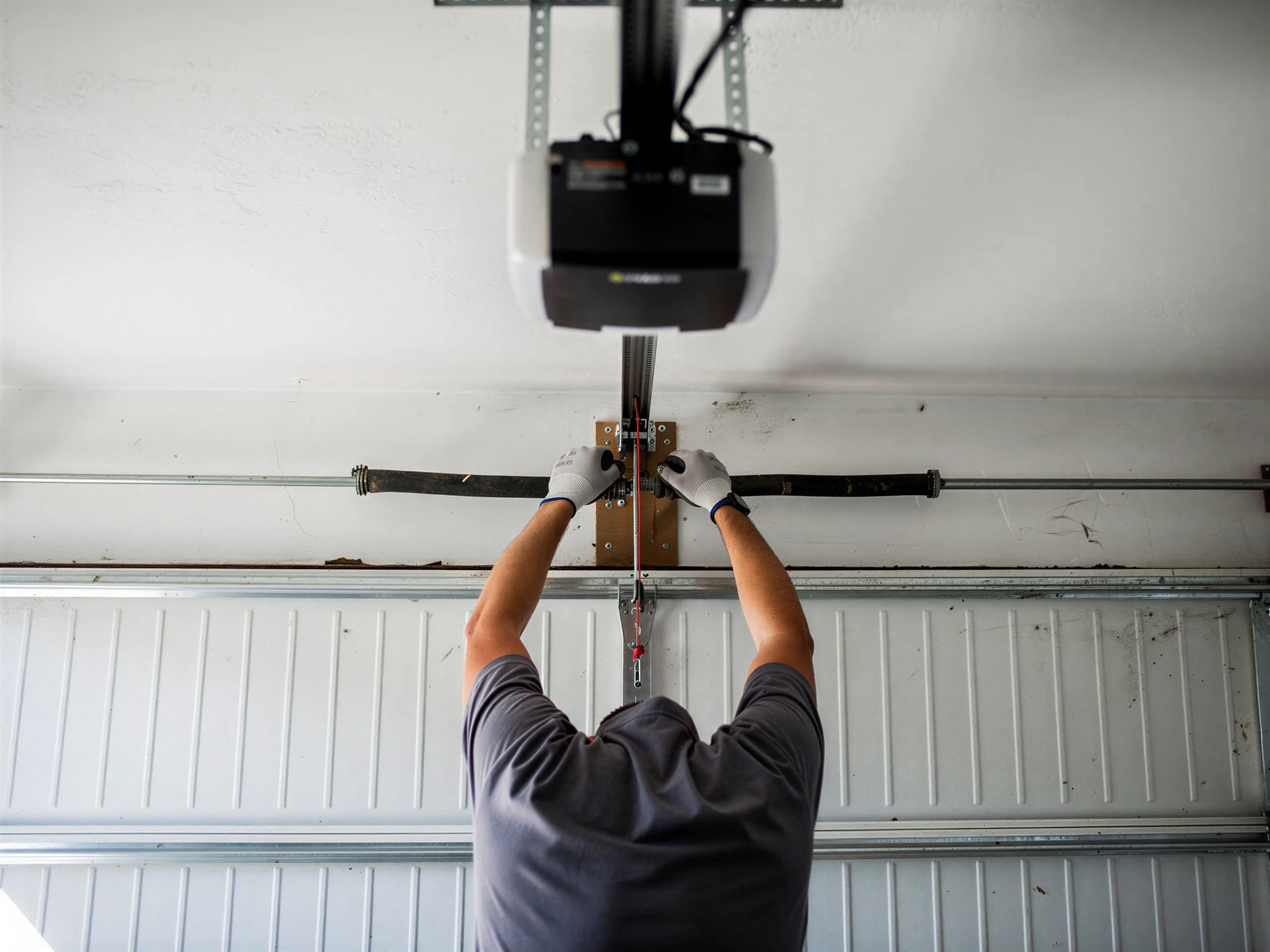
Most emergency calls break down into a handful of repeatable failures: a torsion spring snapped clean through, a cable frayed and jumped the drum, a bottom bracket pulled loose, or an opener gear stripped so the motor runs but the door doesn't.
Hard to diagnose remotely
None of these are mysteries once we're looking at the door. The hard part is figuring out over the phone which one you've got, so we can bring the right spring size and cable length on the first trip instead of a second one.
The Complications
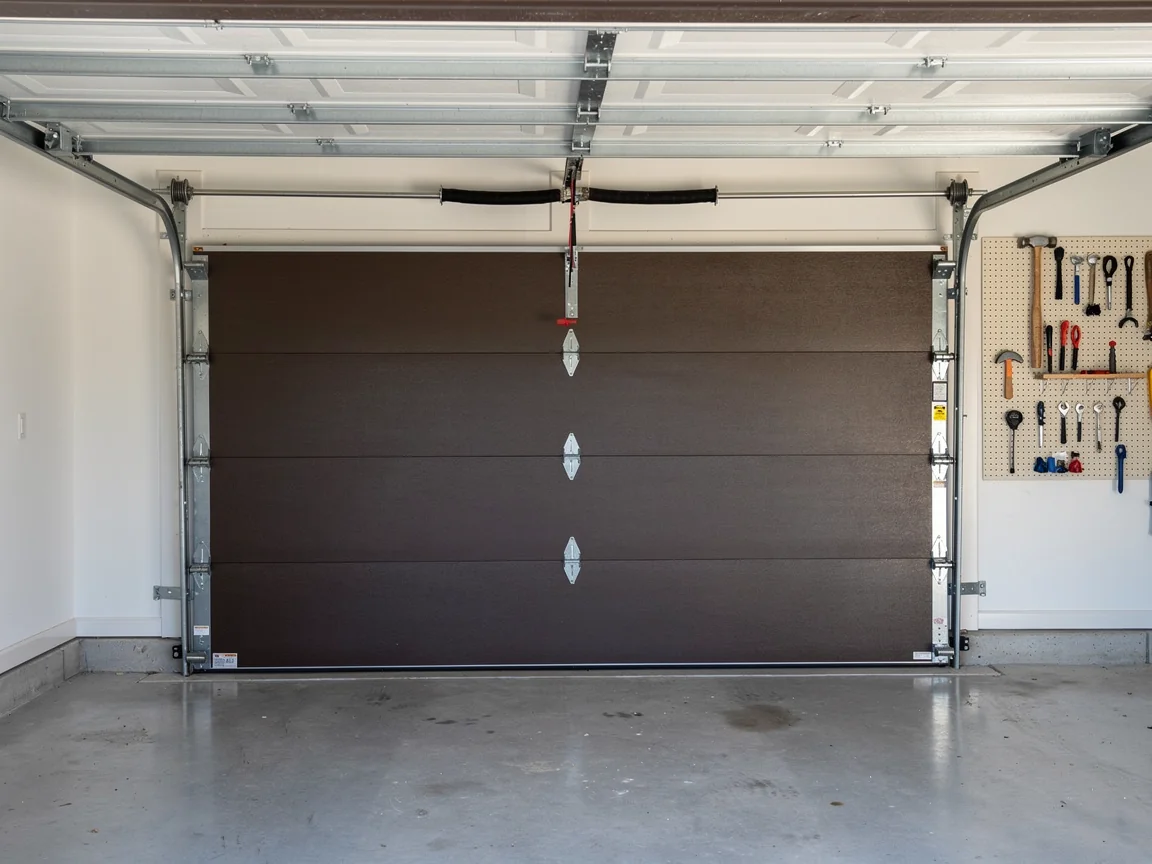
A spring failure rarely stays a spring failure. When a torsion spring snaps, the door drops unevenly and can bind a track, bend a hinge, or put a cable off its drum - especially on a door that's been fighting a weak second spring for months before it finally lets go.
Bracket tearing from panel
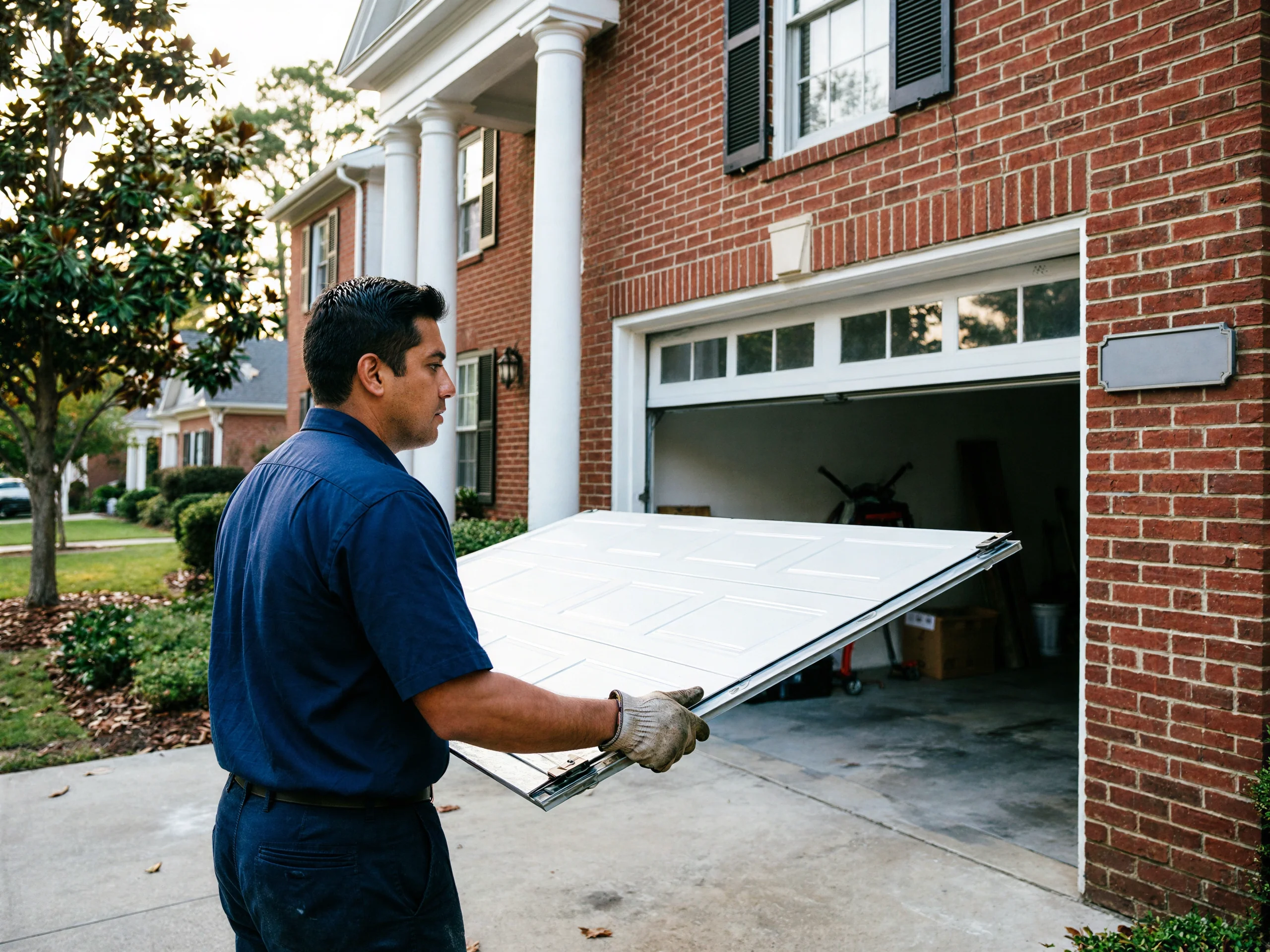
On older doors, a broken bottom bracket can tear loose from the panel itself, which turns a spring job into a panel repair. Winter is where this compounds. In a cold-moderate climate like ours, metal contracts, grease stiffens, and a spring already near the end of its cycle count is more likely to fail on the coldest mornings of the year - right when you need the door working most.
Parts vary across houses
A door that's merely stiff in October can be the door that snaps in January. The other complication is parts matching. Across the roughly 11,700 owner-occupied houses we see in this service area, spring and track hardware varies a lot by the decade a house was built.
Off-shelf springs wear fast
A spring pulled off the shelf that's close enough in size will wear out fast or never balance the door right. We carry a range of spring sizes on the truck for this reason, but an unusual door - oversized, insulated, or a less common brand - can mean a short wait on a part we don't stock.
Why It Happens Here
Housing stock here runs mostly from 1955 to 1998, with the median build year around 1983, and that range matters more than it sounds. A door and opener installed in the 1980s or 90s is now 30-plus years into a service life most manufacturers rate for 10,000 to 20,000 cycles - and a lot of these doors are well past that, just running on inertia until a cold morning finishes the job.
Across the twelve named areas that make up most of the housing here, that 1980s-90s stock dominates, which means a lot of households are carrying the same aging torsion springs, the same steel-roller tracks, and the same first-generation chain openers at roughly the same point in their lifespan. That's not a coincidence - it's a wave of houses built in the same twenty-year window now failing in the same twenty-year window.
Layer the cold-moderate climate on top of that and you get predictable timing: spring failures cluster in the coldest stretches, when stiff grease and contracted metal push an aging spring past what it can take. We don't get the deep-freeze failures some regions see, but "moderate cold" is still enough to turn a tired spring into a snapped one on the wrong morning.
The DIY Question
Some of this you can safely check yourself. If the door won't respond at all, look at whether the opener's light is on - a dead outlet or tripped breaker is a five-minute fix, not a service call.
Blocked photo-eye sensors
If the door is open and stuck, check for an object blocking the photo-eye sensors near the bottom of the track; a stray box or a layer of dust can hold the door open indefinitely. What you should not touch is anything under spring tension.
Stored spring energy hazard
A torsion spring holds enough stored energy to break a hand or worse, and the tools to wind or unwind one safely aren't something most garages have lying around. If a cable has jumped the drum or a bracket has pulled loose from the door panel, that's also a call-it-in situation - forcing the door by hand at that point usually turns a repair into a replacement.
Parts not on truck
Honest limitation: if your opener or spring setup is old enough that the exact part isn't something we carry on the truck, we'll tell you that up front rather than guess and charge you for a return trip. On a door built in the 1980s stock common to this area, that's uncommon but not rare, and it's better to know before we start than after.
Talk to a local pro
Garage door service in Lexington?
Same-day service with honest, upfront quotes.