
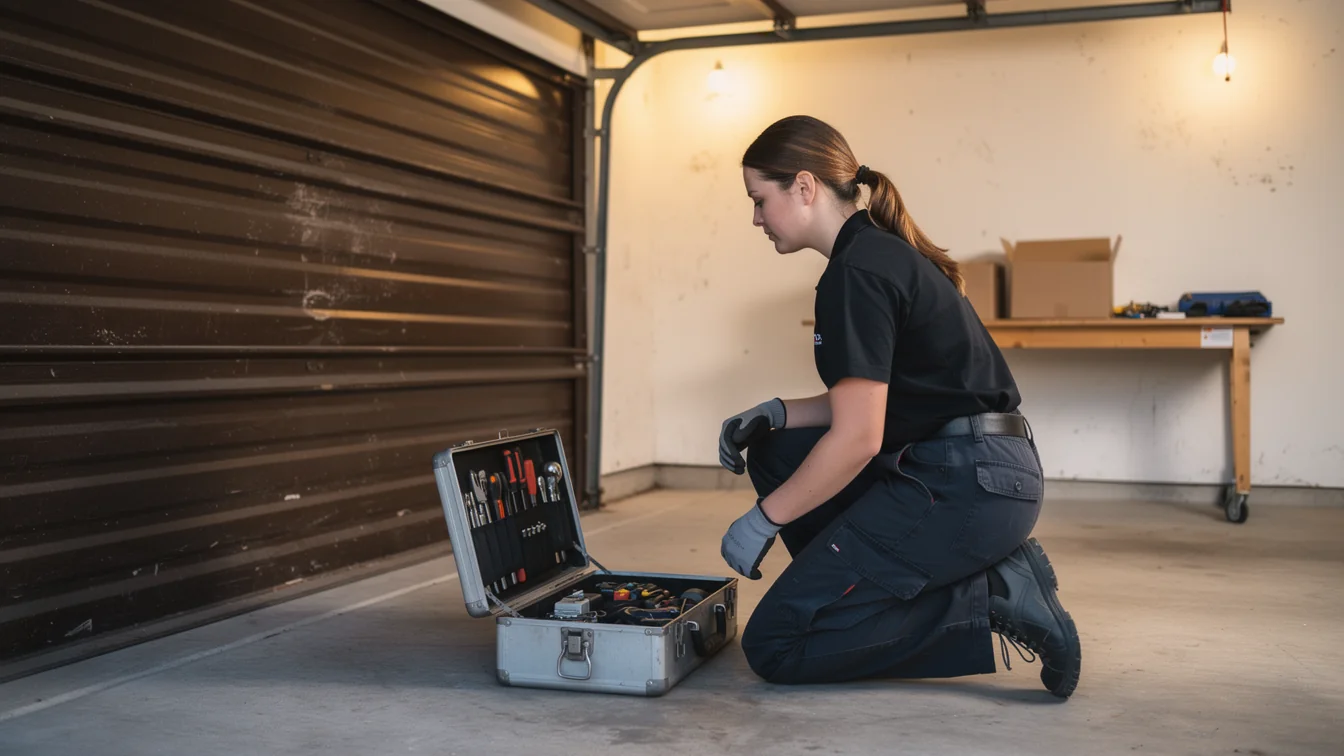
What Actually Happens When We Come Out to Your Door
A clear look at what happens on a Lexington garage door call: what we check, what drives the cost, and why 1980s-era doors behave differently than newer ones.
Read moreBlogLexington, NC · 4 min read
Lexington homes built mostly between 1955 and 1998 see opener failures and power cuts differently than newer builds. Here's what to check before you call.
Local detail
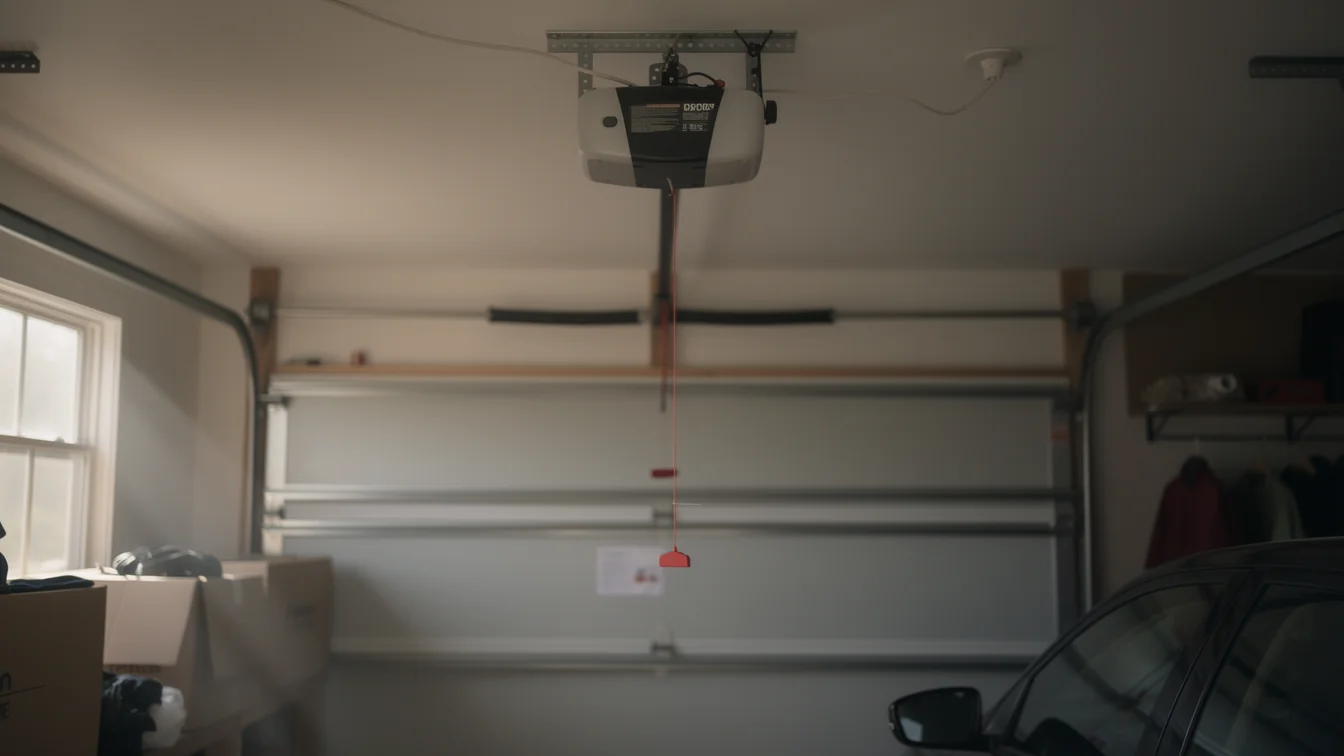
Before you call anyone, there are a few things worth a look. Lexington's housing stock runs mostly 1955 to 1998, with a lot of it clustered in the 1980s and 90s across the dozen service areas we cover. That means a good share of openers out there are either original units pushing forty years old or first replacements from the 90s - both are past the point where parts are easy to find.
Start with the obvious: check the wall switch, check if the bulb or keypad lights up, check the breaker. If the opener has a battery backup, a dead battery after a storm can look exactly like a dead opener. Pop the cover and see if the battery's swollen or corroded.
Look at the sensors near the floor - the two small eyes on each side of the track. A knock out of alignment is the single most common no-go on these older setups, and it costs nothing to check before you pay someone to drive out. If the door reverses right before it touches the floor, or won't close with the light blinking, that's almost always the photo-eye, not the motor.
One limitation: if the logic board itself has failed, there's no home fix for that - the board is what it is, and on units from the 80s and 90s, a matching replacement board usually isn't sitting on a shelf anywhere nearby.
The area
We don't have a flat number to hand you here, and we're not going to make one up. What we can tell you is how the decision usually shakes out. With median household income in the service area sitting at $64,562, most owners we talk to want a straight answer on repair versus replace before committing - not a sales pitch.
If your opener dates from the original build, common in the 1955-1998 housing here, and the board's gone, you're often better off replacing the unit outright rather than hunting for a board that matches 25- or 30-year-old hardware. If it's a sensor or a loose wire, that's a smaller job and usually not worth agonizing over.
The honest answer is it depends on what's actually broken, and we won't know until we look. Anyone who quotes you a number over the phone for an opener problem is guessing, and we'd rather tell you that up front than pretend otherwise.
What we find
Lexington's service area covers roughly 19,193 households, with 11,737 of those owner-occupied houses - and the housing stock across the twelve areas we work runs 1955 through 1998, with the median landing around 1983. That's a long run of houses built before openers had battery backup, soft-start logic, or any kind of surge protection built in.
What that means in practice: a lot of these openers have already been replaced once, sometime in the 90s or 2000s, and that second generation is now aging out too. We see a steady mix of original chain-drive units still running next to newer belt-drives that got swapped in after an earlier failure.
It's not a dramatic story, just a slow one. Houses built in that window weren't wired with the opener in mind the way newer construction is, so the circuit feeding the garage is often shared with something else in the house. When that circuit trips, the opener goes down along with whatever else is on it, and it can look like the opener failed when the real problem is upstream.
How we work
This part of the state sits in a cold-moderate climate band - not the brutal winters you'd get further north, but enough cold snaps and humidity swings to matter for a garage that isn't heated. Cold mornings after a damp night mean condensation on the track and on the photo-eye lenses, and that's enough to throw a false reading on units from the 1980s and 90s that don't have sealed sensors.
Power cuts tied to winter weather are the other piece. An opener without battery backup just stops working until the power's back - no warning, no error code, the door's wherever it was when the lights went out. On the older end of our housing stock, that's most of what's out there, since backup battery wasn't standard equipment when these openers were first installed.
None of this is unique or exotic - it's ordinary cold-climate wear working on housing stock that's now decades old. The fix usually isn't glamorous either: clean sensors, a battery backup added where there wasn't one, and a breaker checked before anyone assumes the motor's dead.
Questions
On the older setups common here, that's almost always the photo-eye sensors near the floor being out of alignment or fogged with condensation, not the motor. Check that both sensor lights are solid, not blinking, and that nothing's blocking the beam between them before assuming the opener itself has failed.
If your opener doesn't have battery backup, it simply stops the moment power drops and stays stopped until power returns - there's no error, no warning. A lot of openers original to this area's older housing stock were installed before backup batteries were standard equipment.
Depends on what's broken. A sensor or wiring issue is usually worth repairing. A failed logic board on a unit that old generally isn't, since matching boards for 80s and 90s hardware are hard to find - replacing the whole unit is usually the straighter path.
Recommendation
More garage door guides for Lexington homeowners.
A clear look at what happens on a Lexington garage door call: what we check, what drives the cost, and why 1980s-era doors behave differently than newer ones.
Read more
Lexington Garage Door Pros explains which noises actually mean trouble on the torsion-spring doors common in Lexington, NC homes built between 1955 and 1998.
Read more
Lexington homes built 1955-1998 have doors and openers from a specific era.
Read moreReady when you are
Lexington Garage Door Pros repairs and installs garage doors, springs and openers in Lexington, NC and the surrounding area.