The Symptom
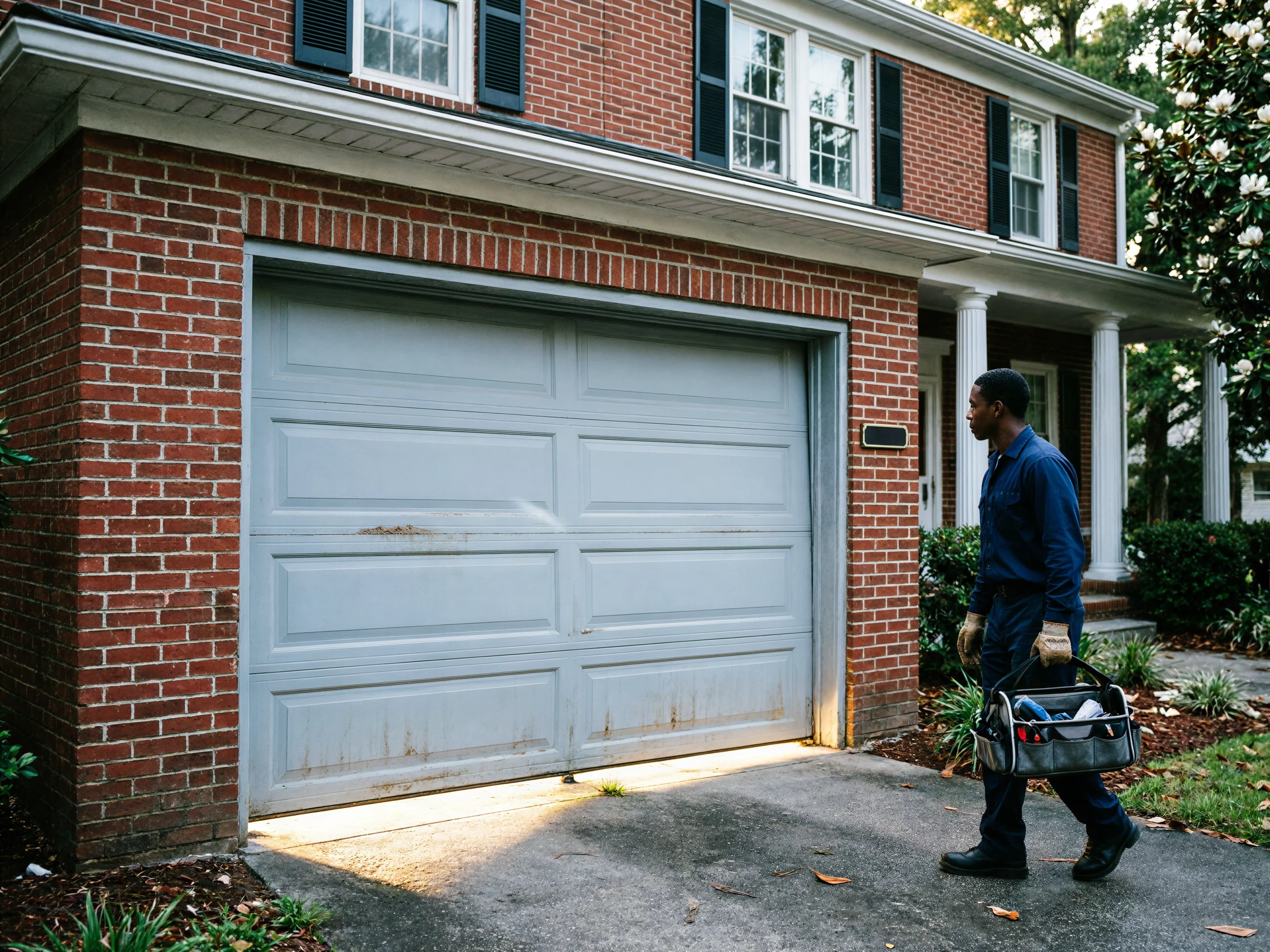
You notice it from the driveway before you notice it up close: one panel sits lower than the others, or it's caved in at a corner where a bumper or a basketball found it.
Rusted bottom panel edge
Sometimes it's not an impact at all - the bottom panel has gone soft and rusty along the edge where water sits after it rains. The door still runs, mostly, but it grinds a little going up, or the weatherstrip along that panel never seals flush anymore.
Single panel swap possible
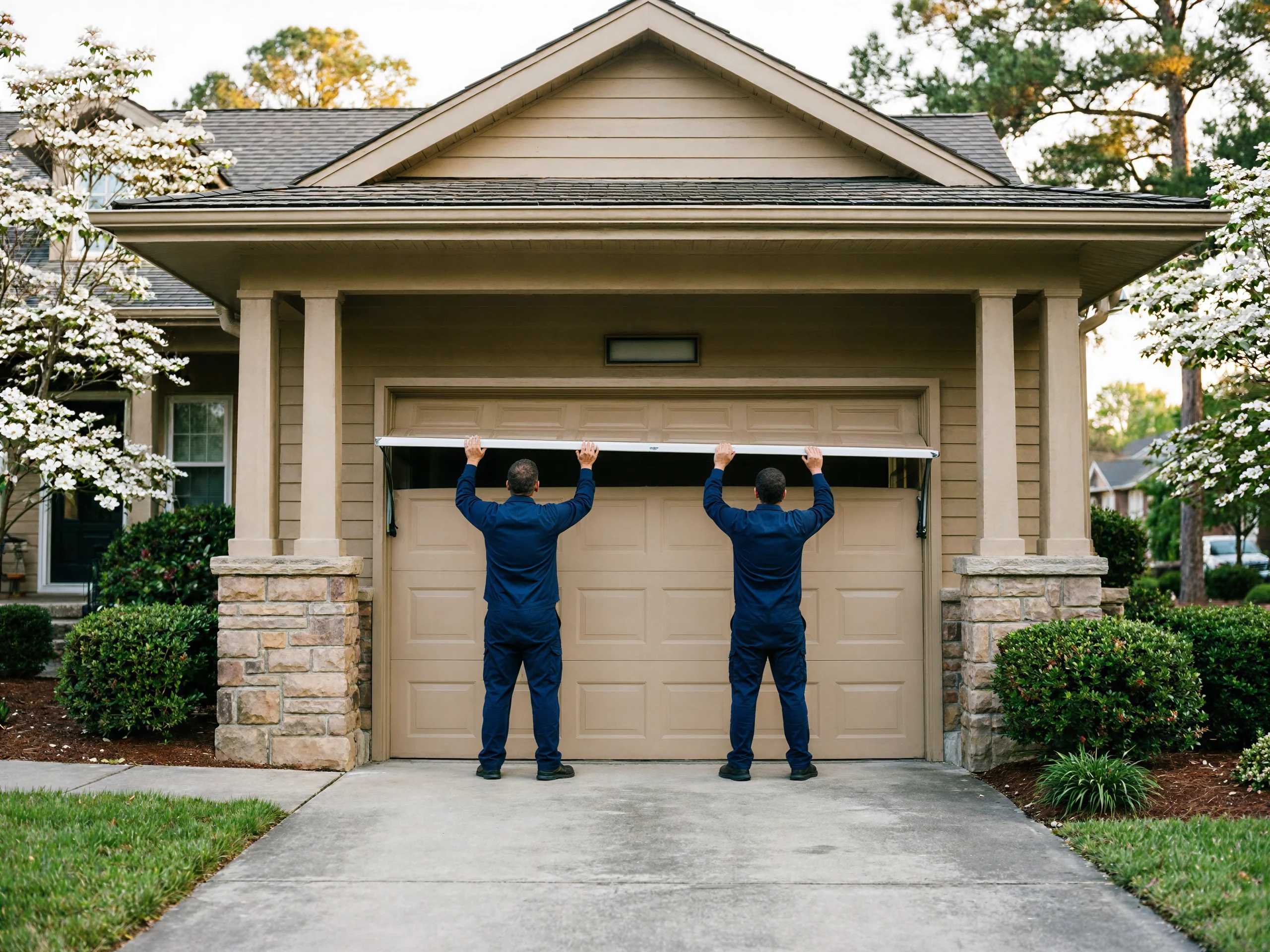
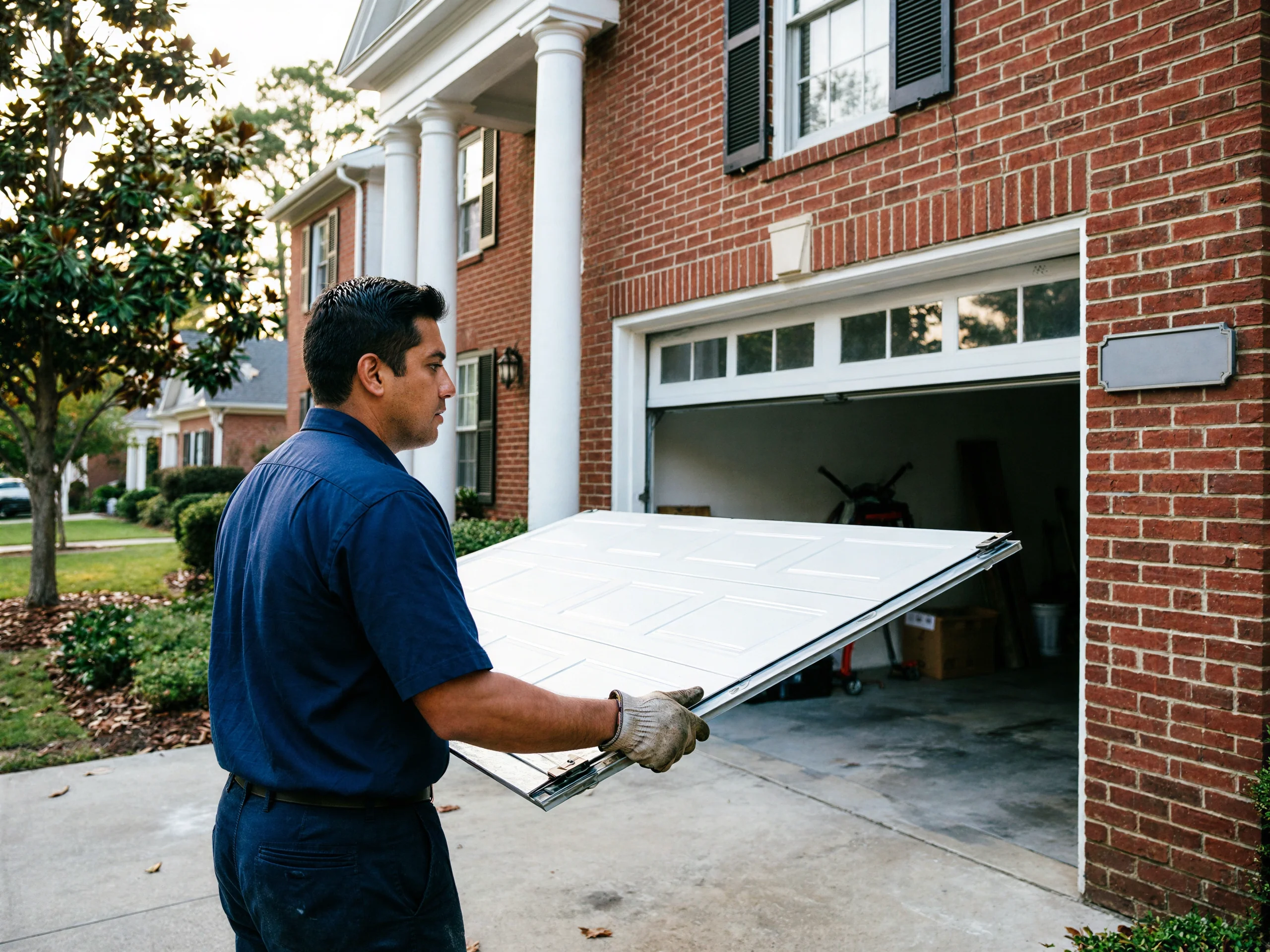
A single damaged panel on a multi-panel steel door doesn't mean the whole door is junk. Sectional doors are built in individual panels precisely so one section can be swapped without replacing the track, the opener, or the rest of the skin.
Is the panel still made
The question that actually matters is whether the panel you need still exists - and that depends a lot on how old the door is and who made it, which in Lexington's housing stock covers a wide range. If the dent is cosmetic and the door still opens square, you can usually wait.
Bent panels stress the opener
If the panel is bent enough to bind on the track, or the seam between sections has started to separate, the door is working harder than it should and the opener will show the strain first - usually as a motor that runs longer per cycle or a door that reverses partway up.
The Complications
The real complication with panel replacement is matching stock. Lexington-area homes were built mostly between 1955 and 1998, with the median house going up around 1983, so the doors on them span four or five distinct eras of garage door manufacturing.
Discontinued vintage panel style
A door installed when the house was built in the late 1950s or 1960s may be a style that hasn't been made in decades - no manufacturer stocks a matching panel, and the whole door has to come out. A door from the 1980s or 1990s boom, when most of the area's housing went up, has a far better chance of a panel match because that generation of steel sectional doors is still common enough that parts suppliers carry comparable profiles.
UV fading mismatches color
Color is its own problem even when the panel style matches. A fifteen-year-old door has faded under UV exposure, and a brand-new panel bolted in next to sun-bleached ones will look like exactly what it is - a patch. Sometimes that's fine. Sometimes it's the reason to repaint the whole door instead of just the one section, which changes the job and the price.
New panel misaligns track
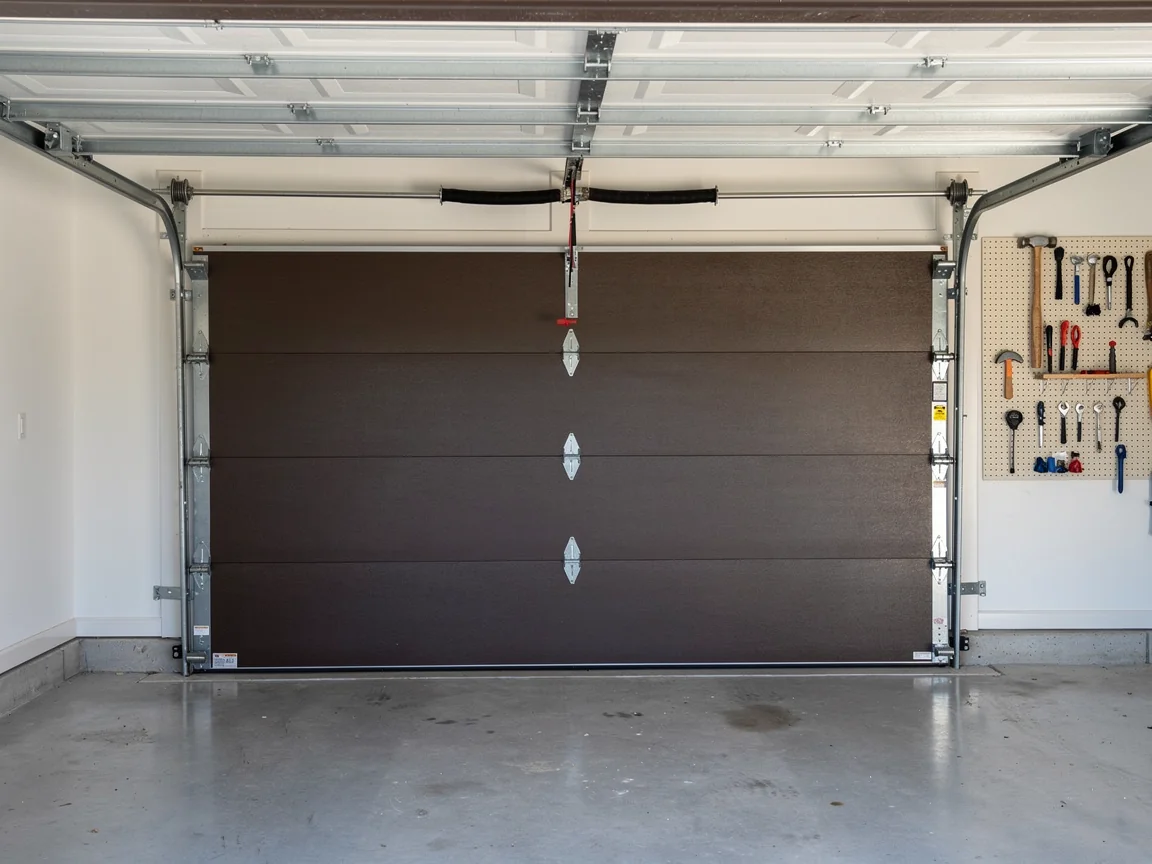
Track alignment is the other one people don't expect. Swap a panel without checking that the hinges and rollers seat the same way as the original, and the door will run crooked even though the new piece looks right sitting on the ground.
Why It Happens Here
Two things push panel damage in this area: the age spread of the housing and the climate band. Houses here sit in a cold-moderate zone, which means real freeze-thaw cycles every winter without the deep, sustained cold that forces heavier-gauge doors elsewhere. That cycle is hard on steel skins at the bottom panel specifically - moisture gets into a scratch or a ding, freezes, expands the seam a little, thaws, and repeats. Over a few winters that turns a cosmetic scuff into a rust bubble that eventually perforates the steel.
The other driver is simply how much of the local housing dates to the 1980s and 90s. That generation of doors used thinner steel than what ships today, and after thirty-plus years of that freeze-thaw cycle, a lot of bottom panels in the area are at or near the end of their service life even without a single impact. Add a mower, a trailer hitch, or a bumper tap - common on doors facing a driveway rather than a garden - and the panel gives out at a seam that was already thin.
Houses built closer to 1955 carry an older generation of door entirely, often with hardware that's been replaced once already, which changes what "just swap the panel" actually means for that house.
The DIY Question
A single panel kit is one of the more DIY-able garage door repairs, and we won't tell you otherwise. If you can find an exact match for your door's brand, model, and color, swapping a bottom panel on a door that's otherwise in good shape is a Saturday job for someone comfortable with a socket wrench and a second pair of hands.
Hunting for exact match
Where it gets harder: finding that exact match. Given how spread out the ages of doors are across local housing - built across a 1955 to 1998 span - a lot of homeowners spend more time hunting for a discontinued panel than the repair itself would take.
Sourcing through trade channels
We can often source panels through channels a homeowner can't easily reach, but we're honest when a match genuinely doesn't exist anymore; at that point replacing the whole door is the straight answer, not a panel that's close enough to look wrong forever.
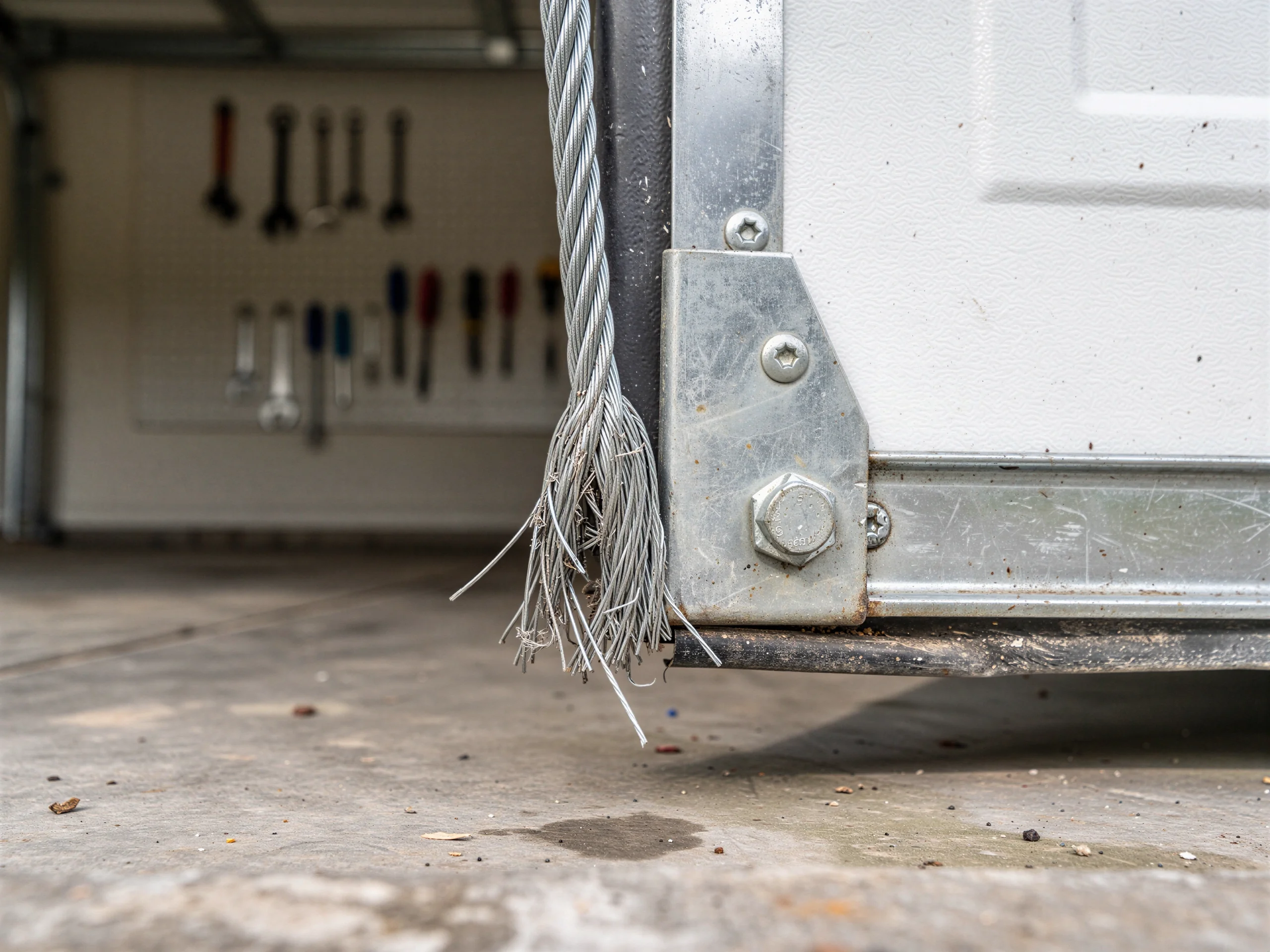
Hinge torque risk at bottom
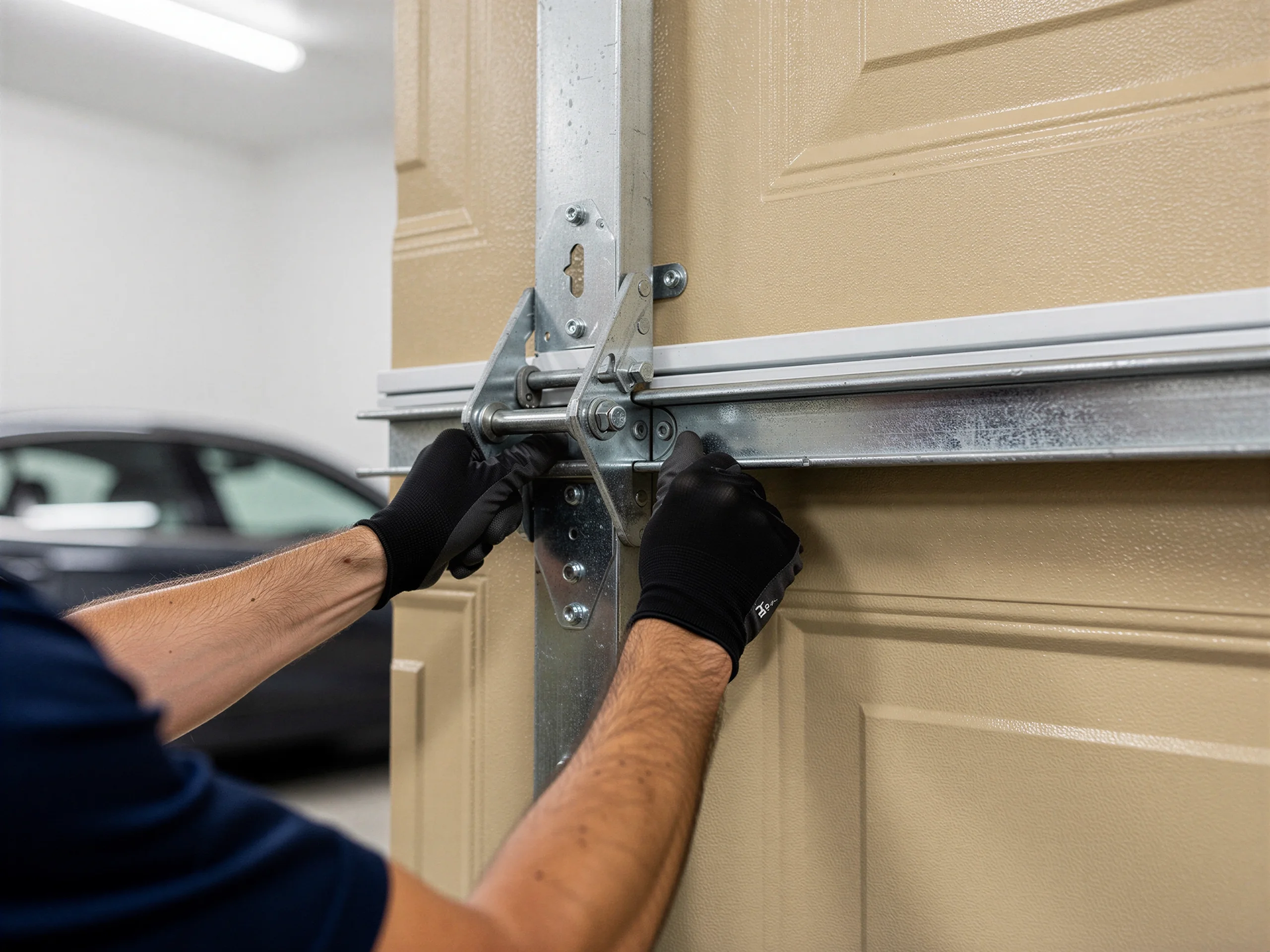
The other place DIY gets risky is a panel near the bottom corners, where the hinge brackets carry spring tension through the cable system. Get that hinge torque wrong and the door can bind or drop unevenly. If your damaged panel is anywhere near the bottom roller brackets, that's the one case we'd say call rather than guess.
Talk to a local pro
Garage door service in Lexington?
Same-day service with honest, upfront quotes.