The Complications
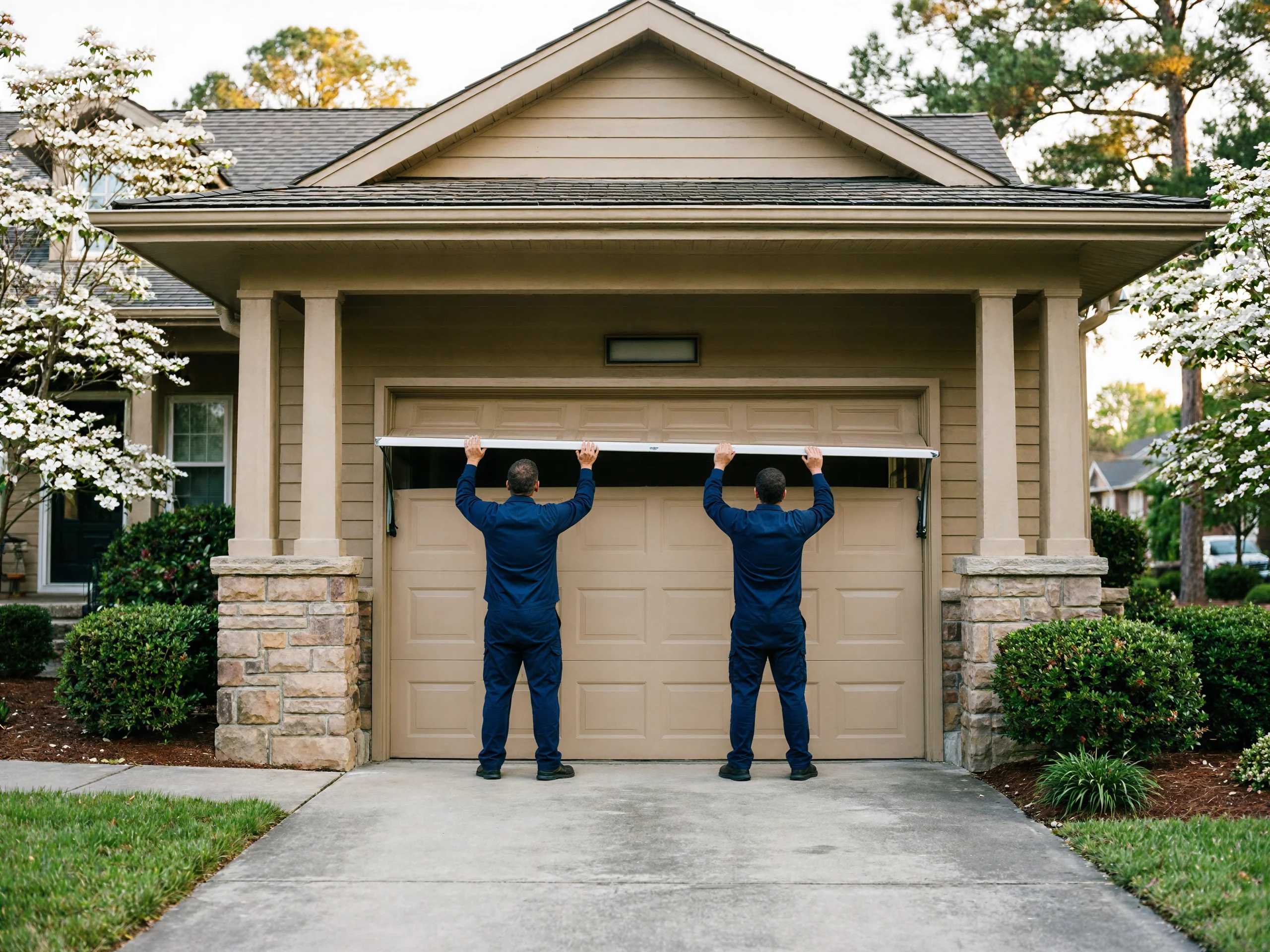
The fault we see most in Welcome is a bottom or second-from-bottom panel that's buckled inward or split along a seam, usually after a car bumper or a trash can catches it at an angle.
Quick swaps are rare here
On a newer door that's a quick single-panel swap. On a Welcome door, it rarely is. Most houses in Welcome went up around 1976, a good seven years before the median build year across the wider Lexington service area, which runs closer to 1983.
Discontinued 1970s embossing
That gap matters because 1970s sectional doors used steel panel profiles and embossing patterns that manufacturers stopped stamping decades ago. A dented panel on one of these doors often can't be ordered to match - the rib spacing, the woodgrain texture, even the panel height can be off from what's sold today.
Rust from inside out
Cold-climate moisture doesn't help. Steel from that era, especially at the bottom panel where splash and snowmelt sit longest, tends to rust from the inside of the skin outward, so what looks like a dent sometimes turns out to be a weak spot that's been rusting for years before it finally buckled.
The Symptom
You'll usually notice it before you can name it. The door looks fine shut, but one panel bows out slightly when the door is halfway up, or daylight shows along a seam that used to sit flush. Sometimes it's a scrape of paint missing where a panel edge is riding against the track roller instead of sliding past it.
On a bent panel, the door often still runs, which is the trap - owners keep opening and closing it on a bowed section until the track pulls loose from the jamb or a roller pops out of its channel. If the door binds, hesitates, or makes a new scraping sound only on one side, that's usually the damaged panel dragging, not the opener losing strength.
A cracked panel seam on a steel door from this era is also worth checking in cold weather specifically, since the metal contracts and a hairline split that's invisible in summer can open into a visible gap once temperatures drop.
What You Pay
We don't have a flat number to quote here, and we're not going to invent one. What we can tell you is what drives the cost up or down for a Welcome job specifically: whether we can source a matching panel at all, or whether the door needs a full replacement because the 1976-era profile isn't made anymore.
Welcome's median household income runs close to the wider service area's figure, and most jobs here fall into one of two buckets - a straightforward panel swap when a reasonably close match exists, or a full door replacement when it doesn't. The second costs more up front but usually ends up being the honest answer rather than a patchwork door with one panel that's visibly a different shade or texture than the rest.
We'll tell you on site which bucket your door falls into before any work starts, not after.
What the Repair Takes
We run the job out of Lexington - it's an eight-mile drive to Welcome, which is short enough that we don't tack on a travel charge for a standard panel job.
Half-day swap when available
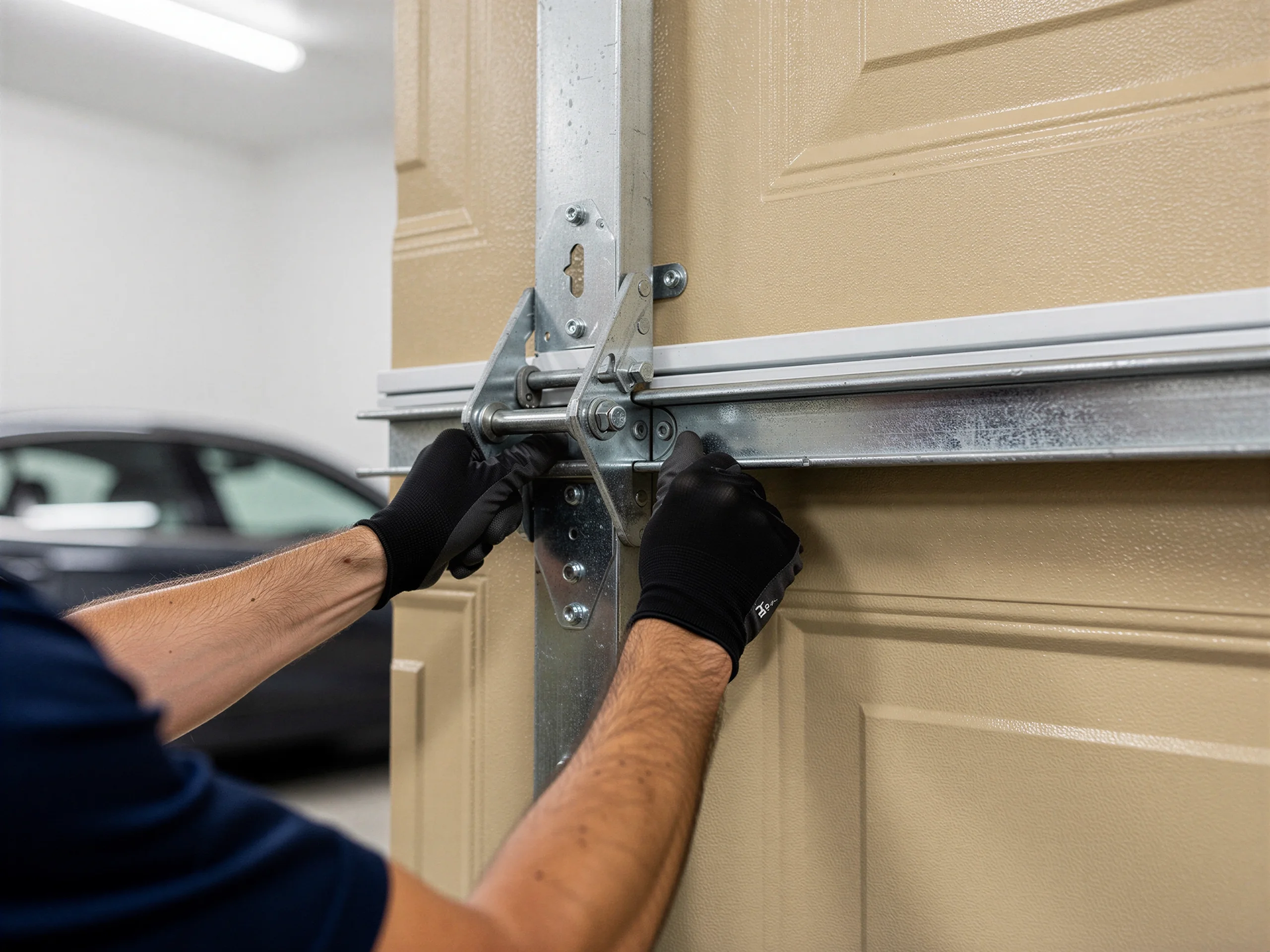
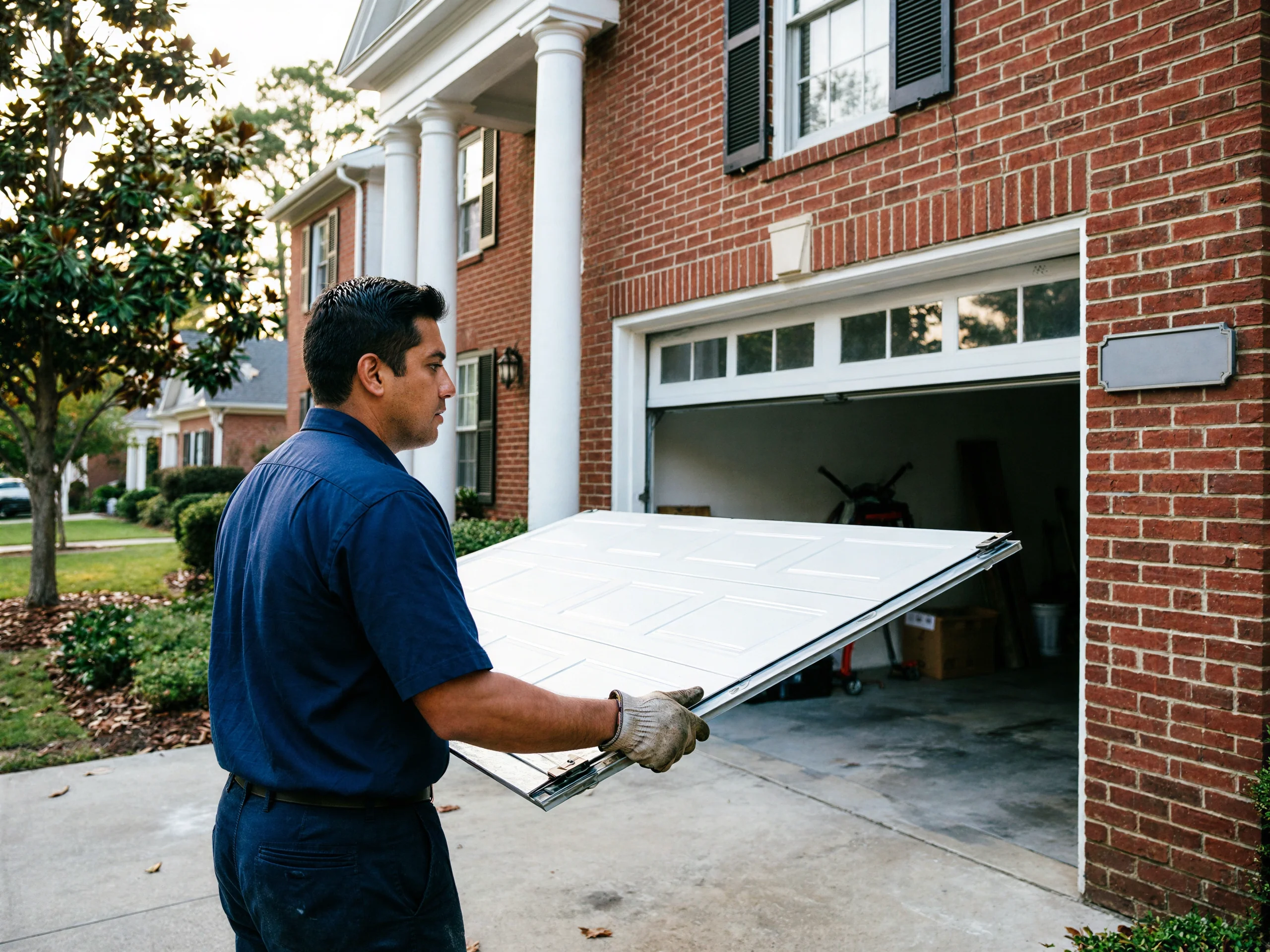
What takes time isn't the drive, it's sourcing. If your panel profile is still made, the swap itself is usually a half-day job: pull the damaged panel's end hinges, disconnect it from the panels above and below, slide the new one in, and re-hang.
Salvage or full door
If it's not made anymore, we're either hunting a close match from a salvage supplier or we're talking you through a full door replacement, since a mismatched panel on an otherwise good door looks worse than people expect.
Match impossible pre-1980s
Here's the honest limitation: we can't promise a color or texture match on anything older than the late 1980s, and for a lot of Welcome's 1970s stock, we won't know if a match exists until we've actually called around. That's not a line - it's just how discontinued steel profiles work.
Talk to a local pro
Garage door service in Lexington?
Same-day service with honest, upfront quotes.