What You Pay
We don't have a set number to quote you here, and we're not going to make one up. What a broken cable costs depends on whether it's a frayed lift cable on a torsion system or a snapped cable on an older extension-spring setup, and whether the drum or pulley took damage when it let go. What we can tell you is that most houses in Advance went up around 1997 - noticeably newer than the 1955-1998 spread across the rest of the territory we cover out of Lexington - so you're more likely to have a factory torsion setup with steel cable on a drum than the older extension-spring hardware common in houses built before 1983. That matters for parts: torsion cable and drums are a more standardized job than tracking down obsolete extension hardware. We'll give you a number after we look at the drum, the spring size, and whether the track took any damage from the door dropping. We won't quote a repair over the phone from a description.
The DIY Question
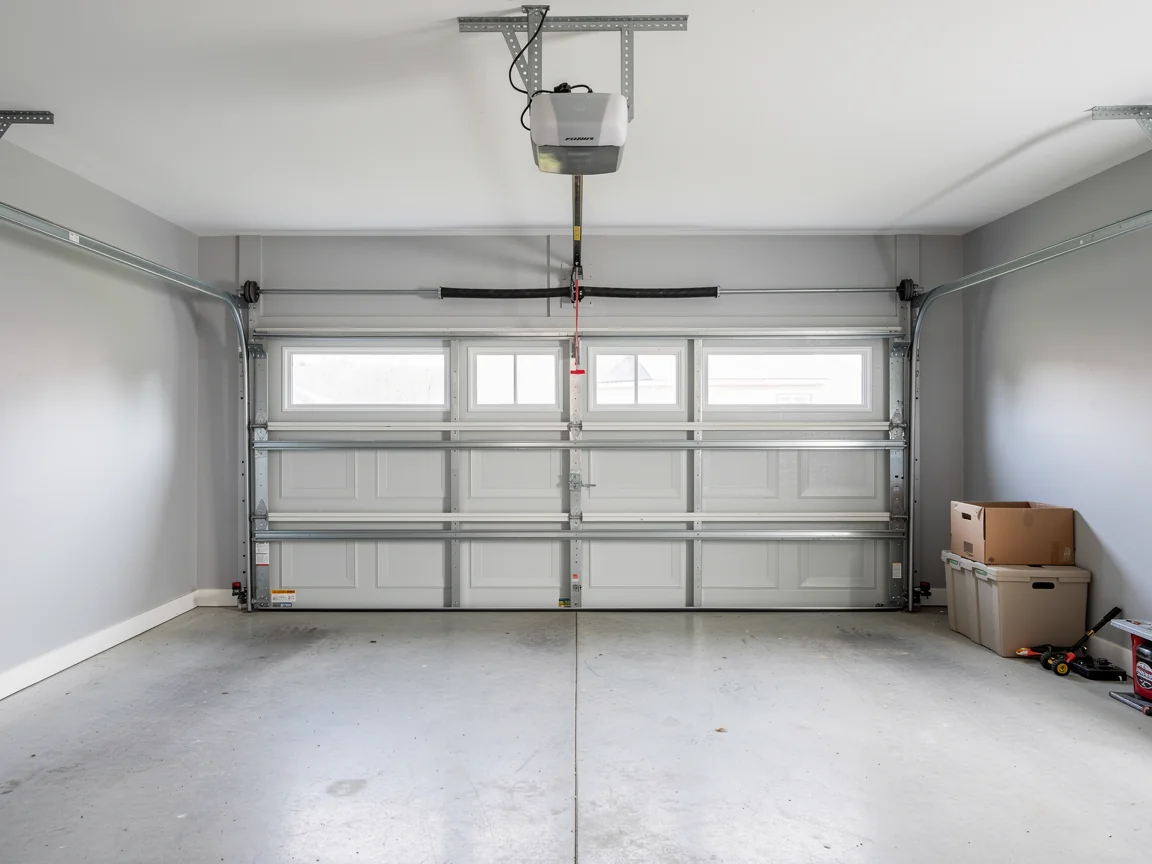
A broken lift cable means the door has nothing holding one side of its weight except the spring, which is still fully wound.
Spring injury risk
If that spring lets go while you're working near it, it can take a finger or worse. We're not going to tell you this is a weekend project with a $20 part from the hardware store, because on a torsion system - which is what most Advance houses built in the mid-90s run - the cable, drum, and spring are one wound-up system, and pulling one piece out wrong can snap the whole assembly loose.
When to call in
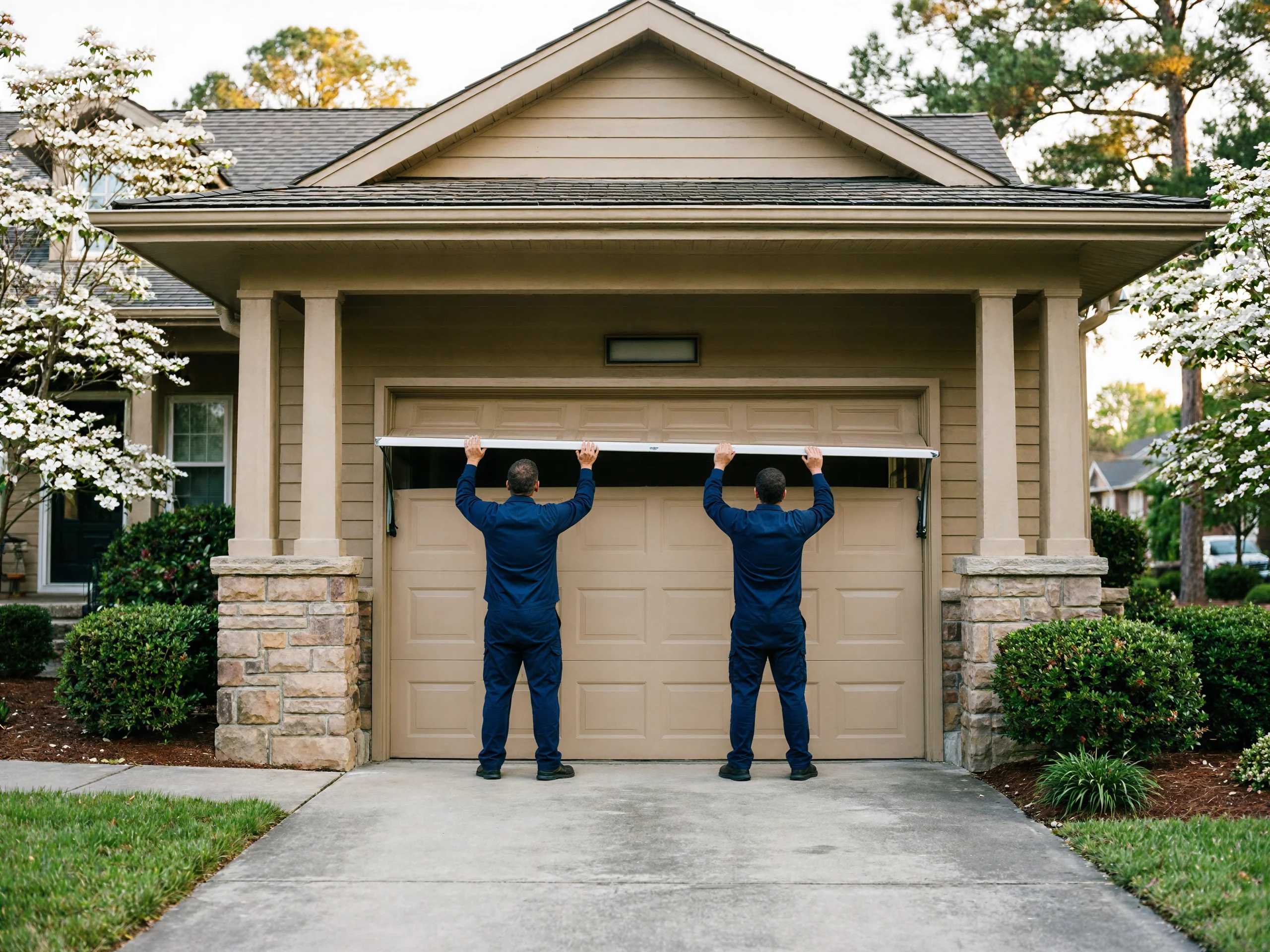
If you've got the door propped open with a 2x4 and the cable hanging loose off the drum, leave the spring alone and call it in. That's the honest limit: this isn't a job for someone without the winding bars and the clamps, full stop.
The Symptom
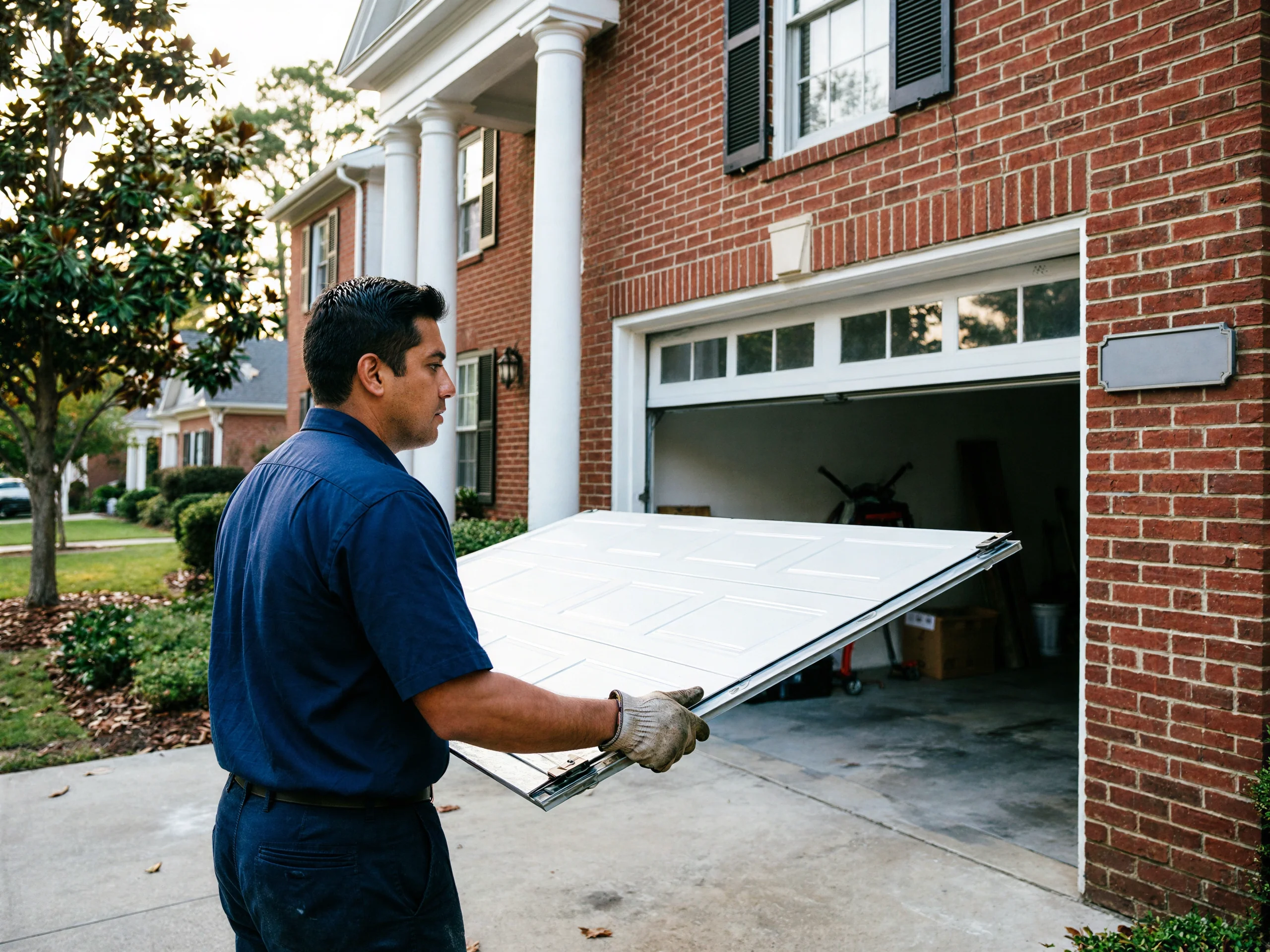
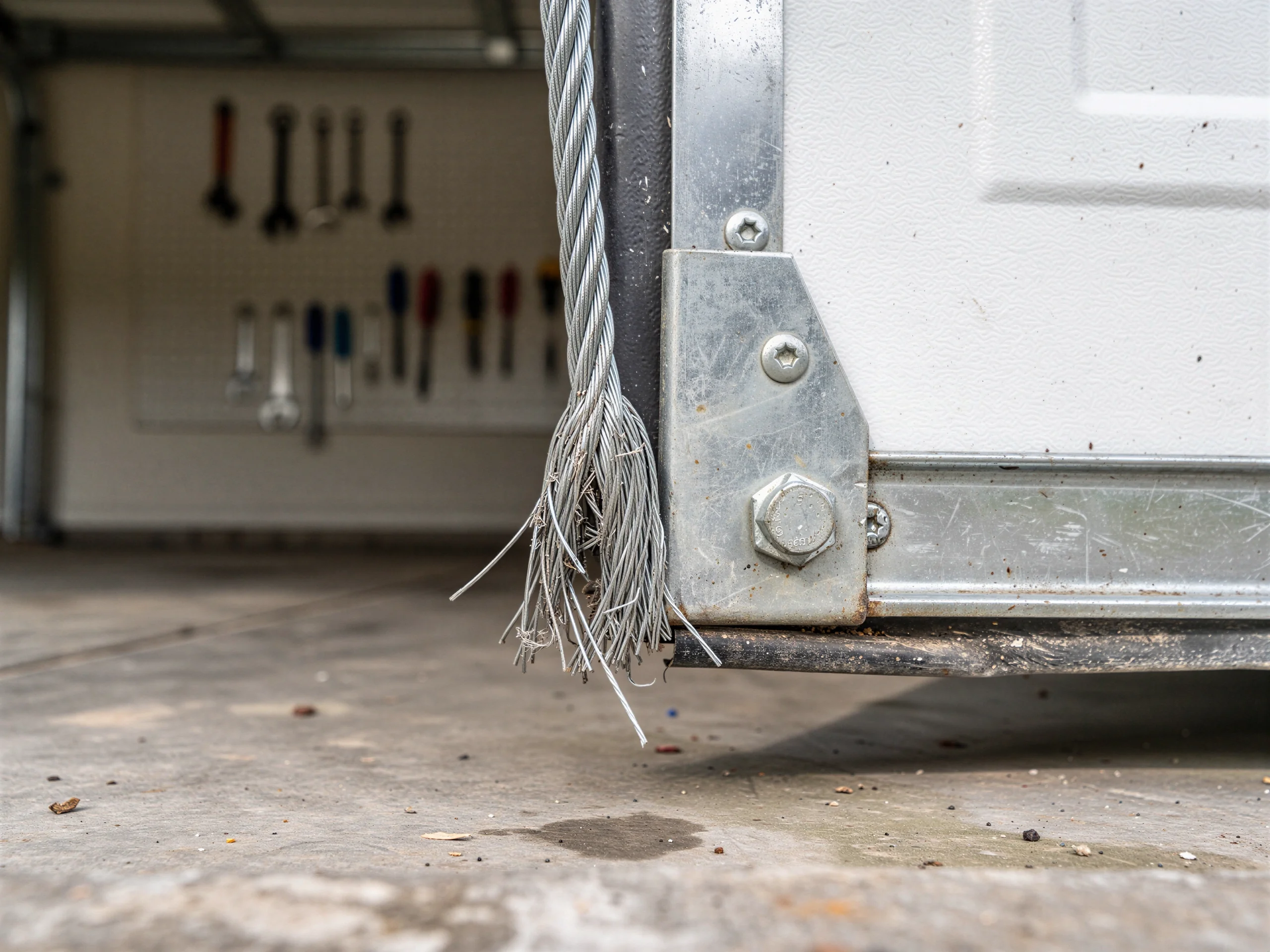
On a door with a frayed or snapped cable, one corner usually sits lower than the other, or the door hangs crooked in the track when it's halfway up. Sometimes you'll see the cable itself bunched up loose at the bottom bracket instead of running taut to the drum. With housing in this pocket mostly dating to 1997, the cable you've got has usually had somewhere around three decades of cold-season temperature swings on it. That's when the zinc coating on aircraft cable starts to pit, and pitted strands fray before they snap clean. If the door won't move at all and the opener strains against it, stop running the opener - that's how a cable finishes tearing and drops the door on one side.
What the Repair Takes
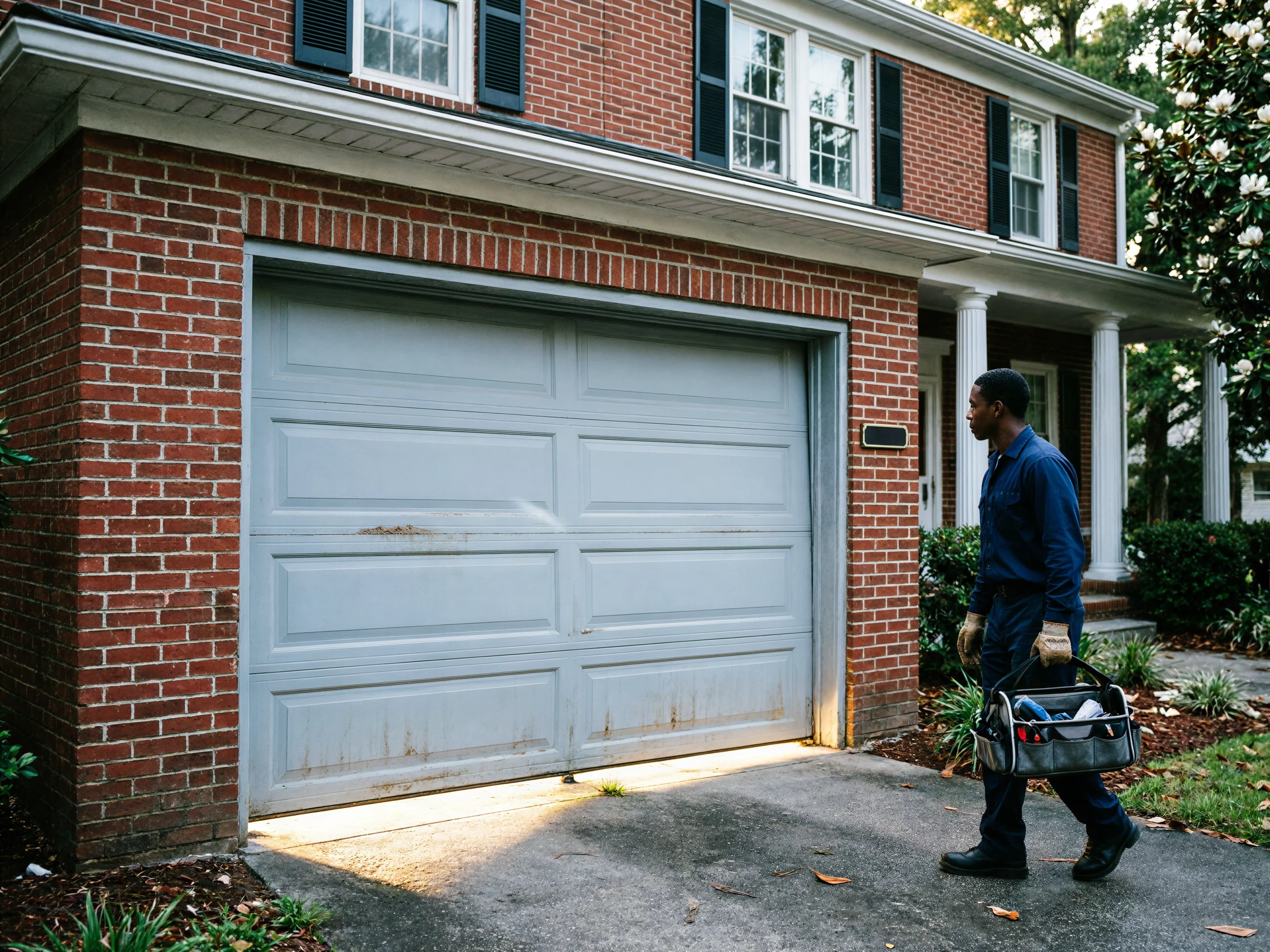
We travel the 12 miles out from Lexington to Advance for this one, and the job itself doesn't change because of the drive - it's the same winding-bar work either way.
Tension release and recabling
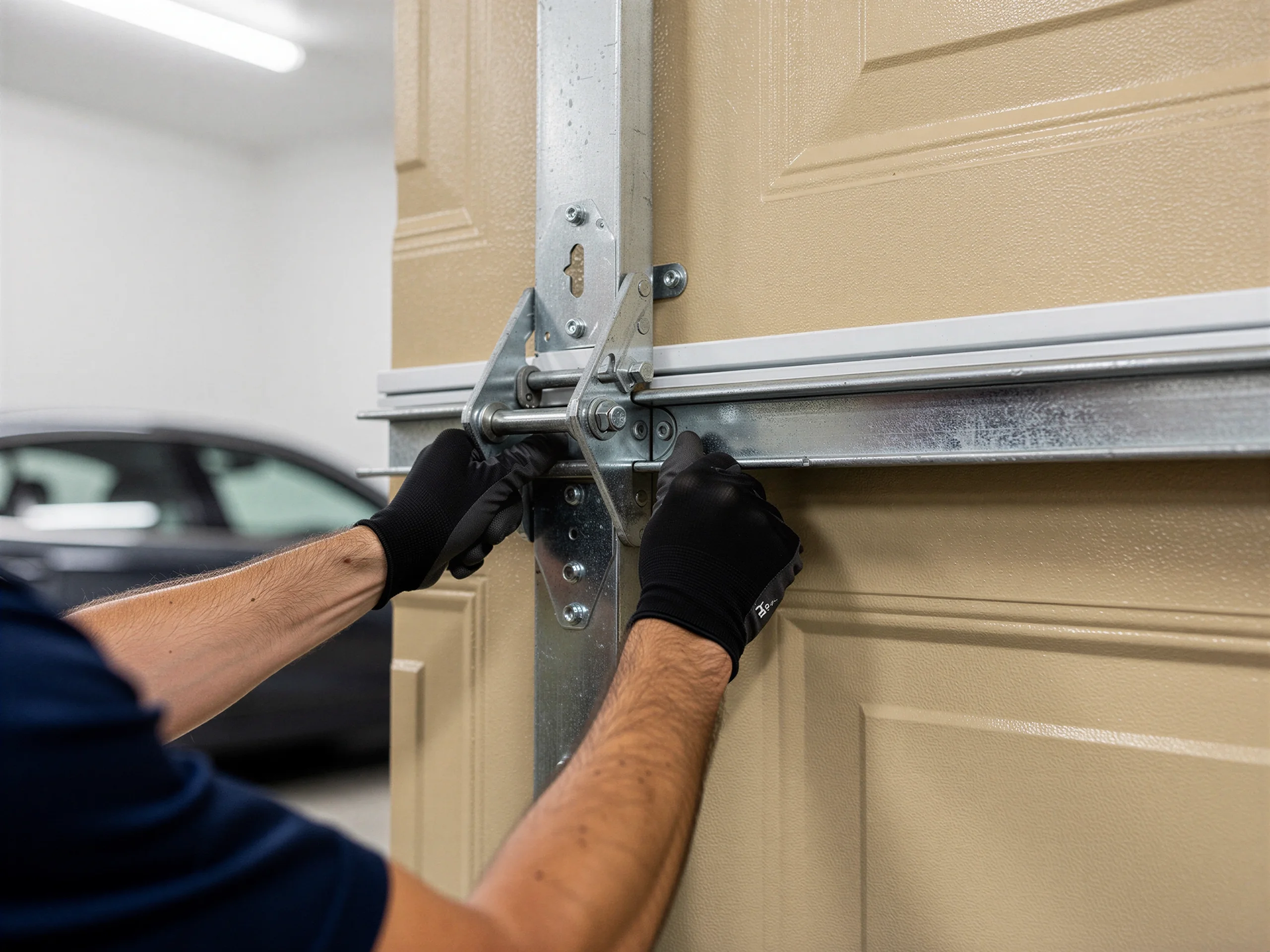
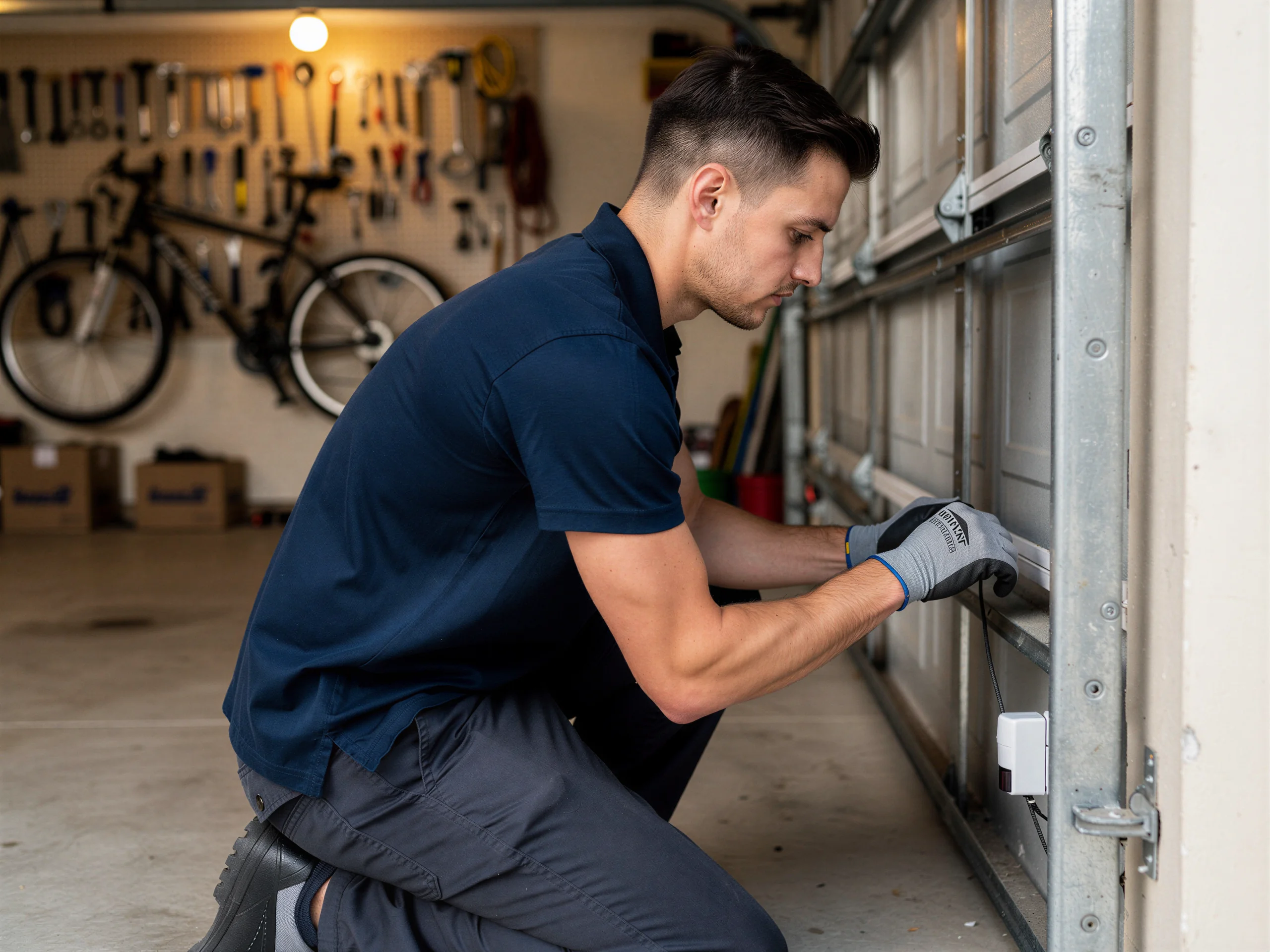
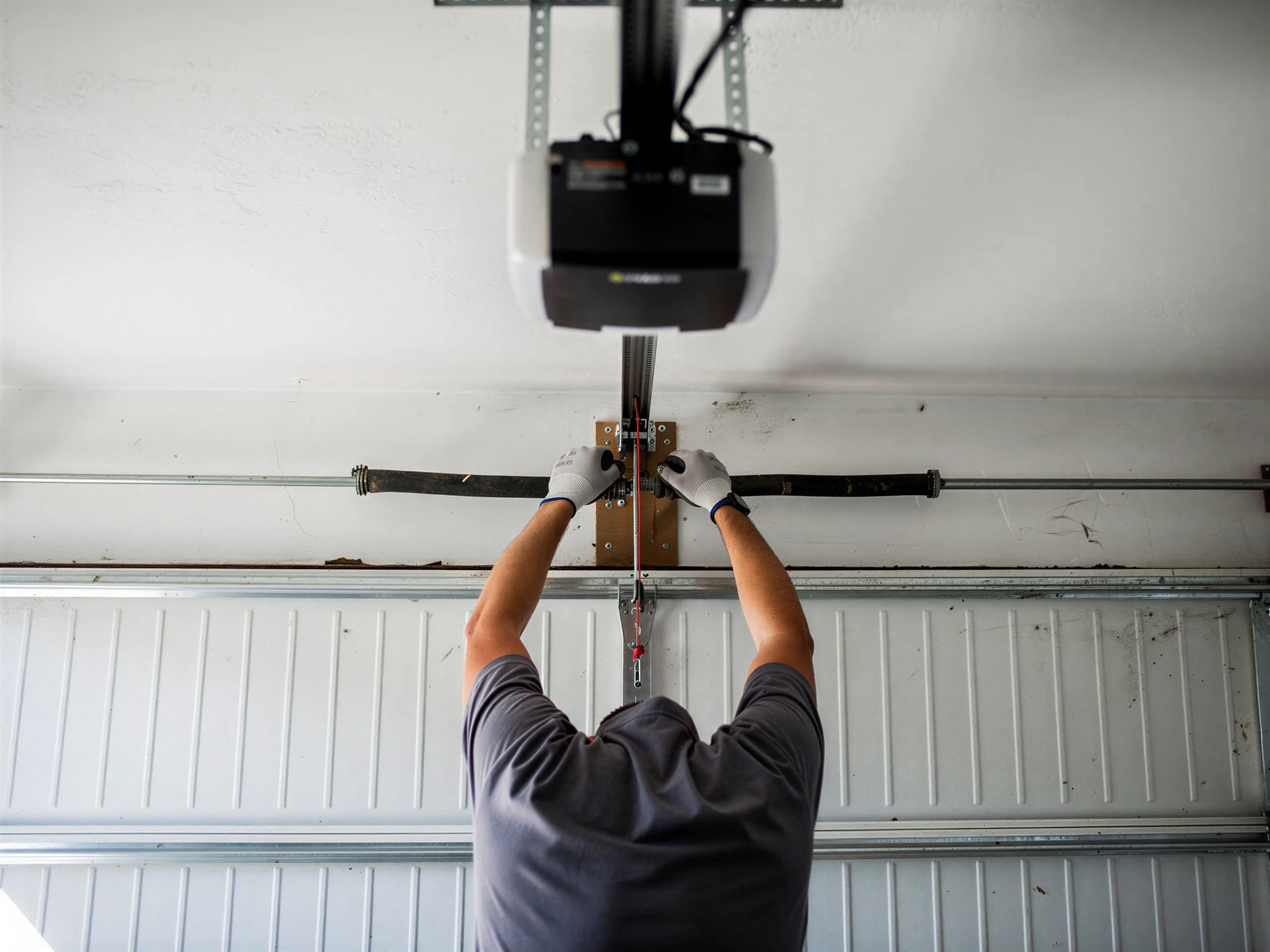
Once we're there, we release tension off the spring, pull the old cable off the drum and the bottom bracket, run new cable to spec for the door's weight, and re-tension the spring to match.
Replace both cables together
On a torsion system - the setup most houses here have, given the 1997 median build year - that's usually both cables done together, since if one frayed from age the other is close behind. We check the drum and the bottom bracket for wear while we're in there, since those let go for the same reasons the cable did.
The Complications
The complication we run into most in newer housing stock like this is cable sized to a heavier insulated steel door than what older extension-spring hardware ever had to handle - Advance's housing sits well past the older end of the 1955-1998 range we see across the rest of the service area, so you're less likely to be fighting rust-seized pulleys and more likely to be dealing with a factory torsion spring that's simply worn out from age rather than neglect. With roughly 495 households in this area against the roughly 19,193 we cover overall, parts stocked for the newer torsion setups common here move fast; the slower piece is a bent drum or a damaged track bracket, which sometimes means a second trip if the part isn't on the truck.
Talk to a local pro
Garage door service in Lexington?
Same-day service with honest, upfront quotes.