What You Pay
Advance sits about 12 miles out from our shop in Lexington, which matters more than people think when they call about a stuck door. That drive is on top of whatever the repair itself costs, and it's the reason we ask a few more questions on the phone before we load the truck - we want to know what's actually wrong so we bring the right spring or roller the first trip, not the second.
Higher income, same parts
Advance also runs a different income profile than most of the towns we cover; median household income here is $109,402, well above the wider service area's $64,562. That doesn't change what parts cost, but it does mean we see more owners asking for a full opener upgrade instead of a patch job, since the budget is there to do it once.
No flat price
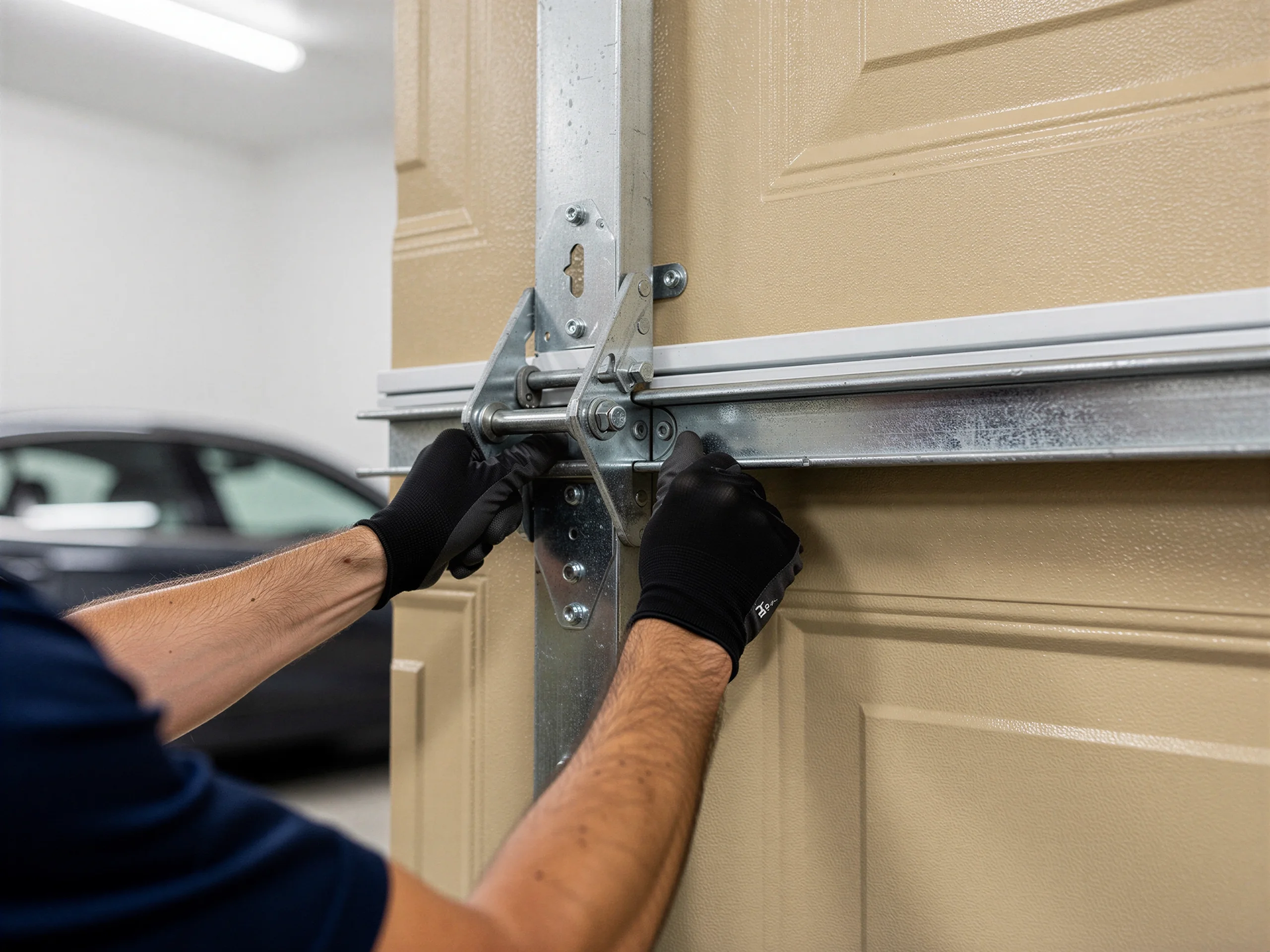
We don't post a flat price for the call because the job varies - a broken roller on a steel panel is not the same ticket as a torsion spring replacement on a double door.
On-site quote is final
What we can tell you is that the quote you get on-site is the number you pay, no surprise line items added after the truck is already in the driveway.
The DIY Question
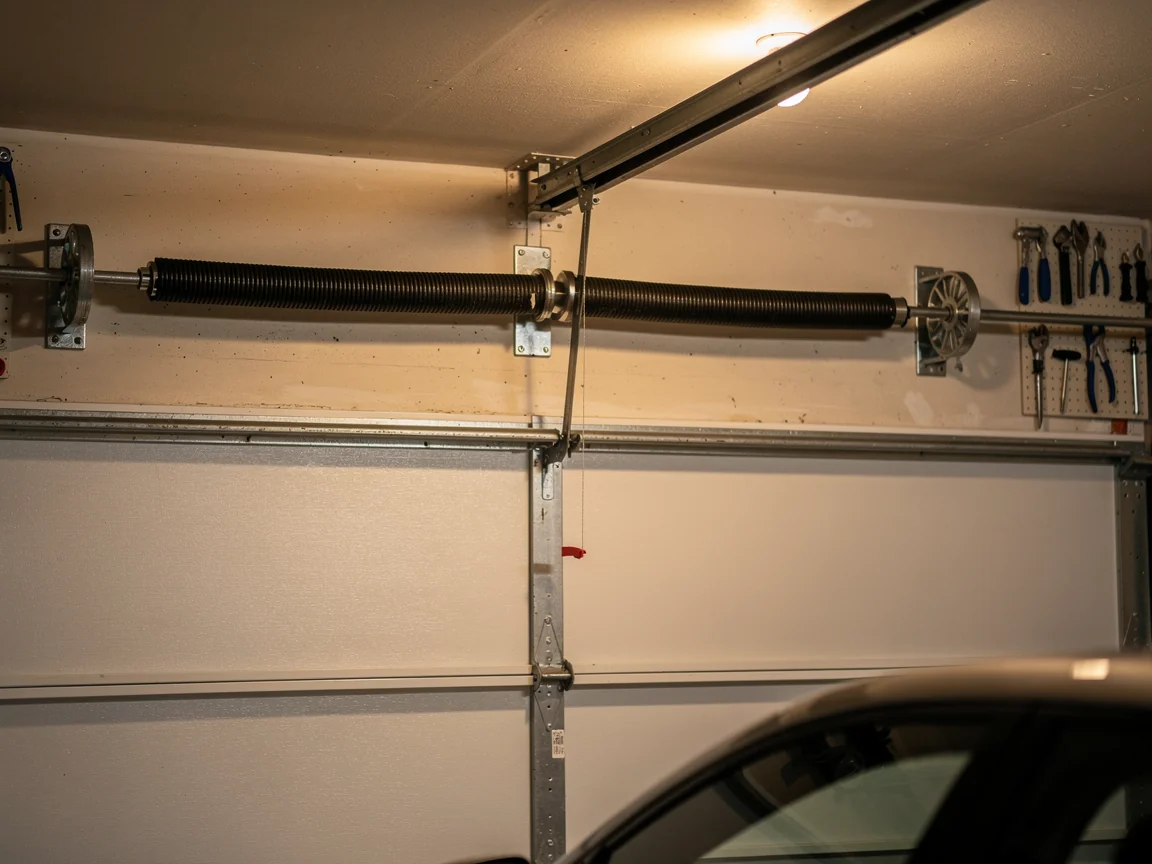
If your door won't close and you're staring at a torsion spring, don't. A wound torsion spring under tension has put people in the ER, and that's true whether the house was built in 1983 or 1997.
Photo-eye and lock checks
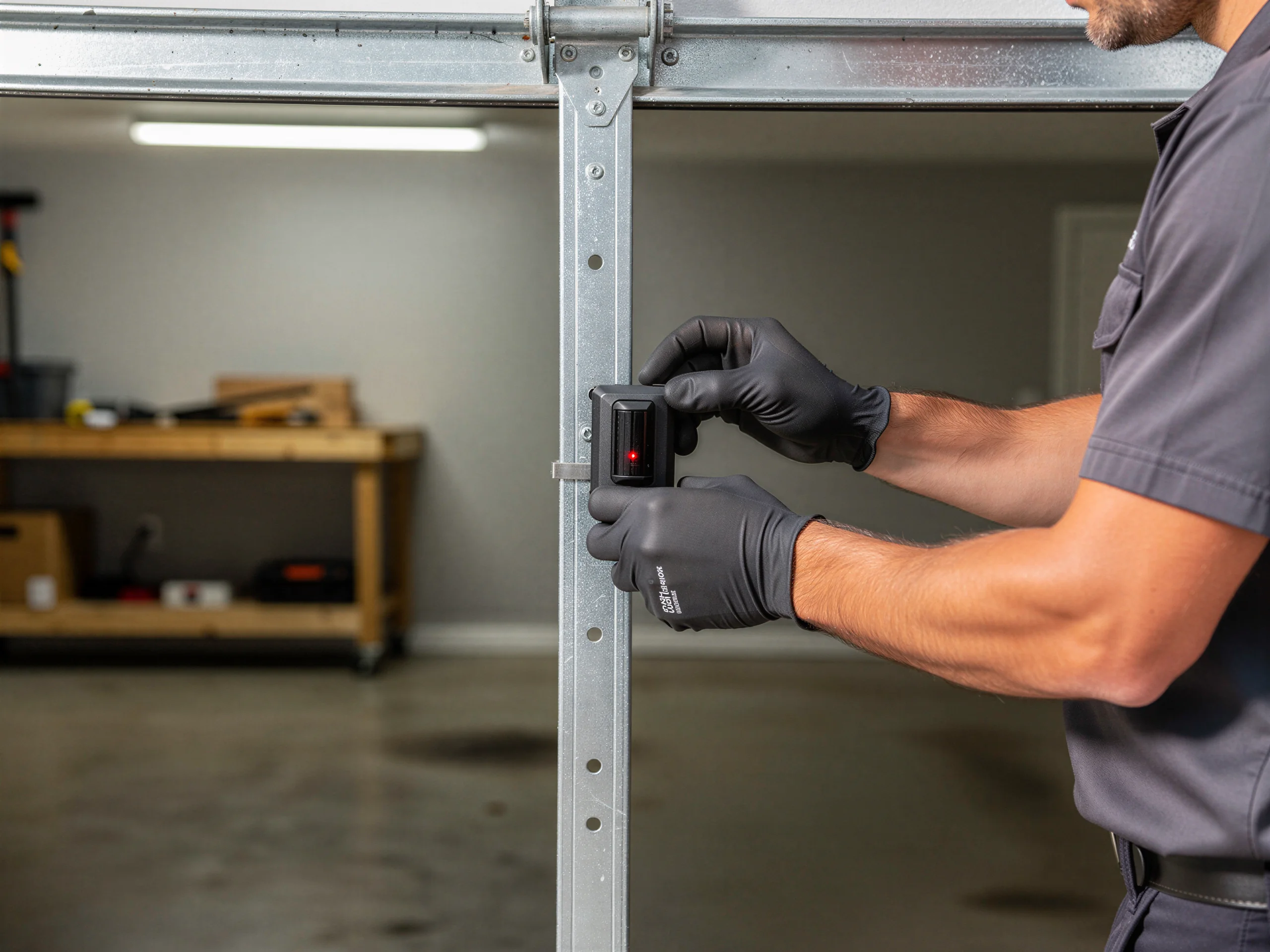
What you can safely check yourself: the photo-eye sensors near the floor track (a stray leaf or a shift in position trips a lot of calls that aren't actually broken doors), the manual lock on the door itself, and whether the opener has power at all.
Standard hardware here
Advance's housing stock, mostly 1980s-90s build with a chunk running right up to the late '90s, means most of what we see here is steel sectional doors on extension or torsion hardware that's reasonably standard - not the oddball older setups you find in older housing stock elsewhere.
Common failures are standard
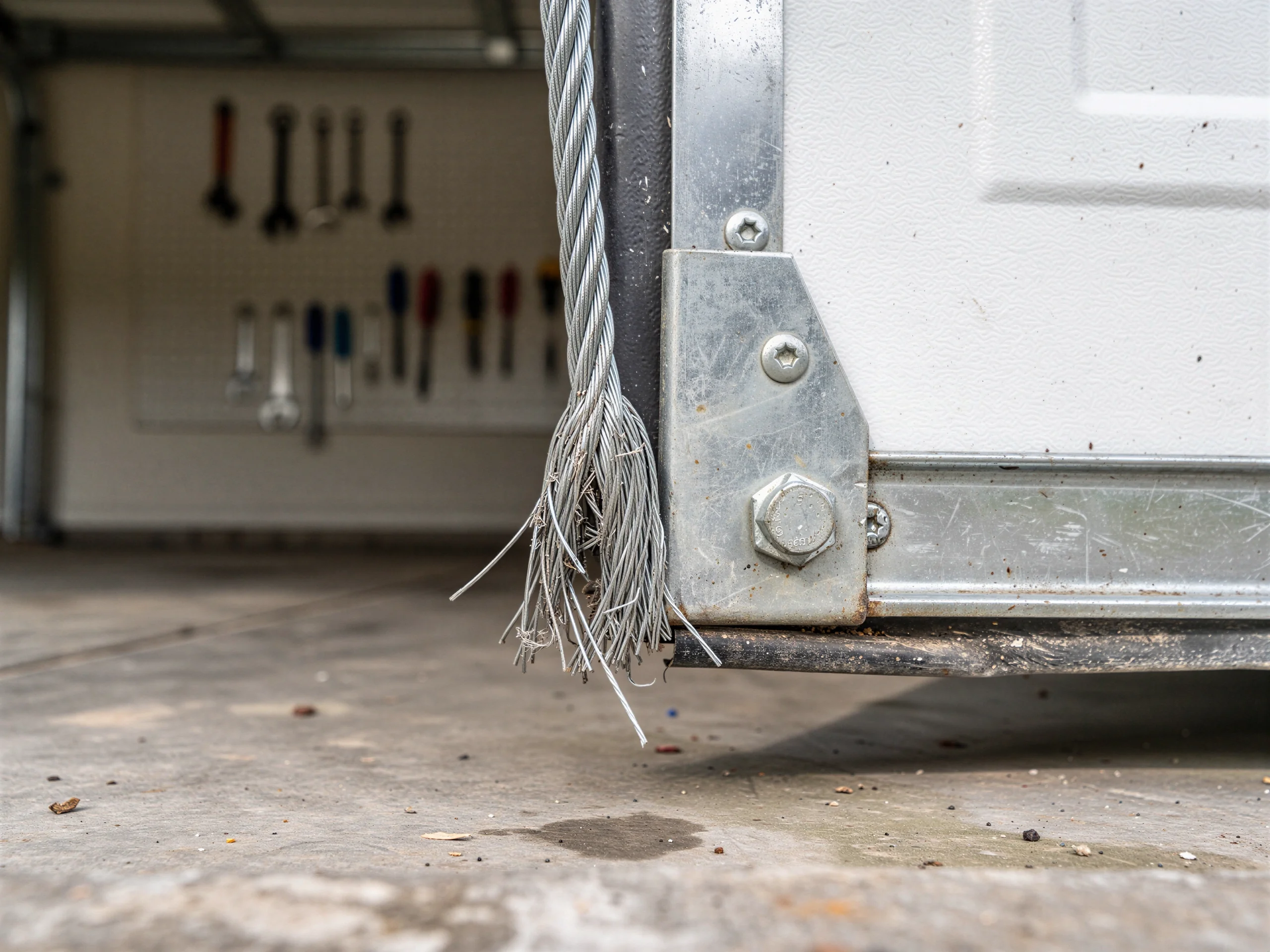
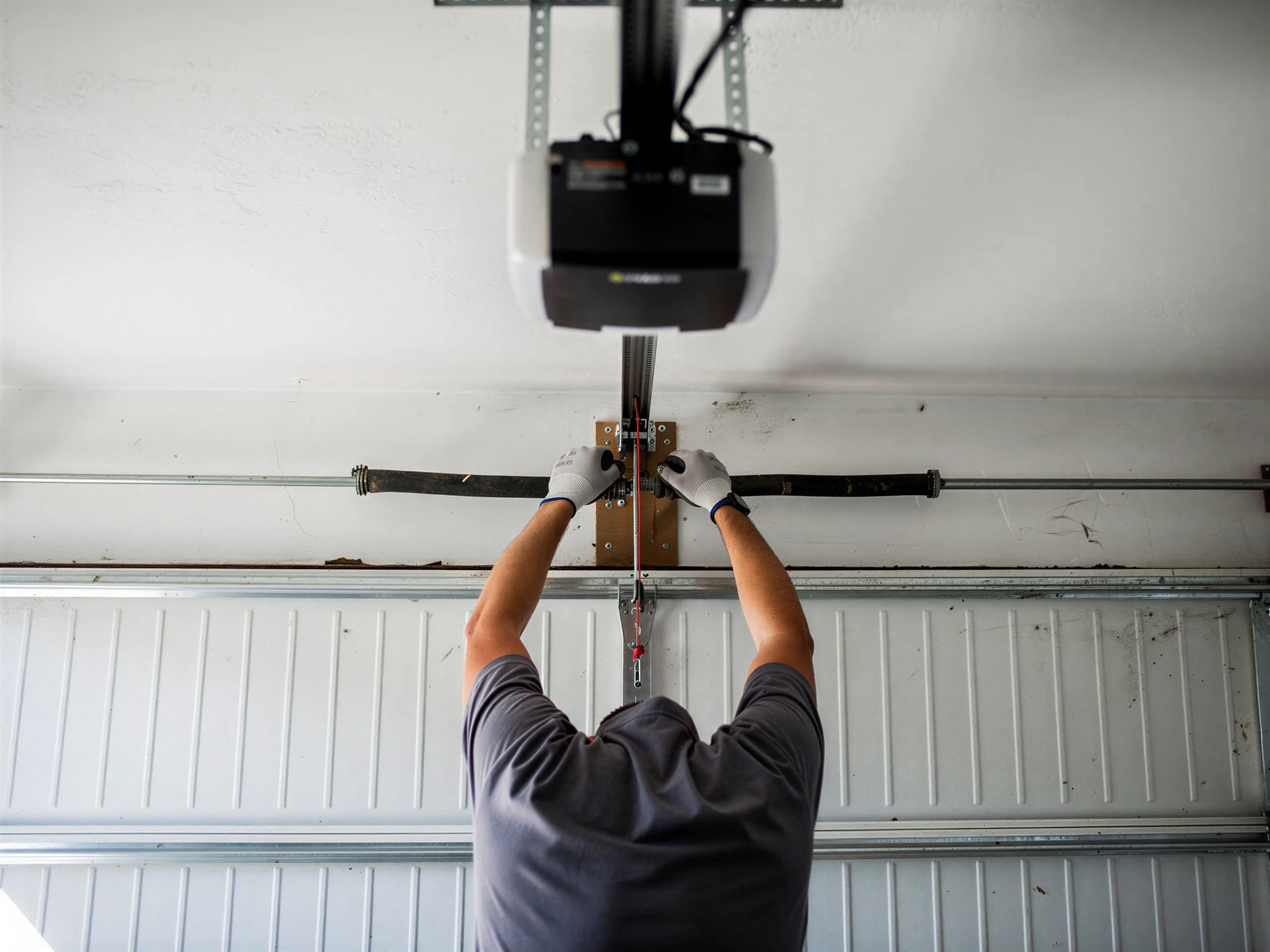
That's actually good news for a homeowner trying to diagnose: the failure is usually a worn roller, a snapped cable, or a dead opener logic board, not some discontinued part. Still, a spring job isn't a weekend project. Unwinding tension safely takes the right bar and the right hands.
The Symptom
The call we get most from this area is a door that opens fine but won't close all the way, or reverses halfway down. On houses from this build era, that's almost always the down-limit switch drifting out of adjustment or a photo-eye that's gotten knocked out of alignment - not a structural problem with the door itself.
Bang then door stuck
Second most common: a loud bang followed by the door refusing to move, which on a 1990s-build double door is usually a torsion spring giving out after years of cycling.
Rollers grind after cold
Given the climate here - cold winters, not extreme, but enough freeze-thaw to stiffen grease and tighten metal - we also see rollers that have gone from quiet to grinding over a single cold snap.
Age-driven wear, not location
None of these are Advance-specific failures caused by anything unique to the town, but the age band of the housing (median build year 1997 for this area) does mean the doors are old enough to have worn hardware but young enough that parts are still stocked, not special-order.
What the Repair Takes
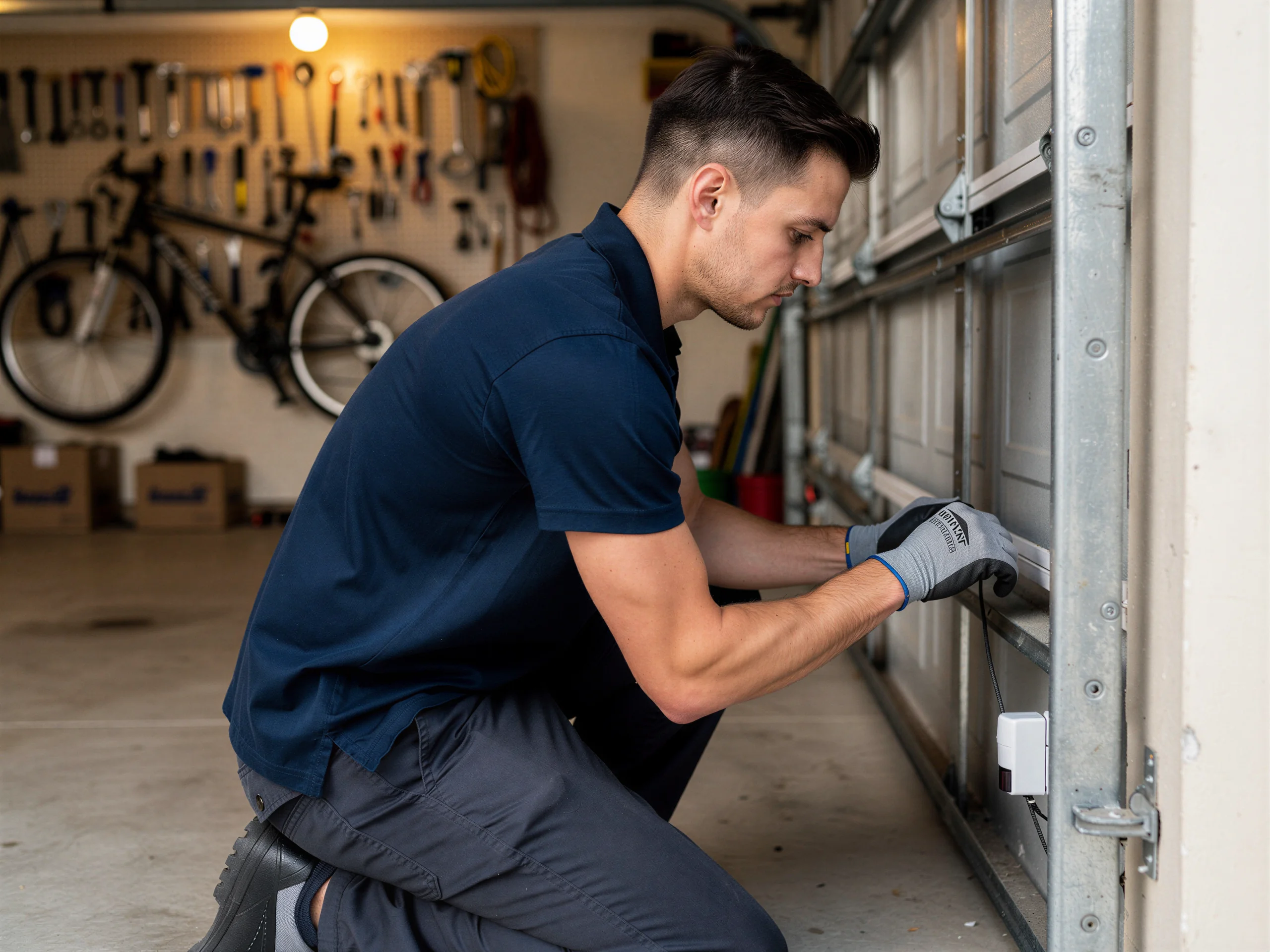
Once we're on-site, most of the common fixes - roller replacement, cable, sensor realignment - run under an hour. A torsion spring swap takes longer because we have to fully unwind the old spring, measure wire gauge and wind direction, and balance the door afterward so the opener isn't doing all the lifting. Opener replacements take longer still if we're also swapping the drive type. With 495 households in Advance itself, we don't have a dedicated local stock of parts sitting idle - everything comes out from Lexington on the truck, which is part of why we ask detailed questions up front. If a part turns out to be something we don't carry (an obsolete opener model, for instance), we'll tell you that on the spot rather than stringing out a second visit.
The Complications
The one thing that slows a job down here isn't the door, it's access and timing around the drive. If a part isn't on the truck when we diagnose the issue over the phone, that second trip costs real time given the distance, so we'd rather spend an extra two minutes asking about the symptom before we leave Lexington. We also won't tell you a repair is worth it when it isn't - on a door old enough that the track is bent and the panels are rusted through, patching one spring doesn't fix the door, it just delays the real conversation about replacement. That's the honest limitation: we fix what's fixable, but we're not going to sell a $300 repair on a door that needs to be replaced in a year anyway. For more on full door and opener installs for this area, see our page on garage doors in Advance, or for the broader repair service out of Lexington, that page covers the rest of what we do.
Talk to a local pro
Garage door service in Lexington?
Same-day service with honest, upfront quotes.