Why It Happens Here
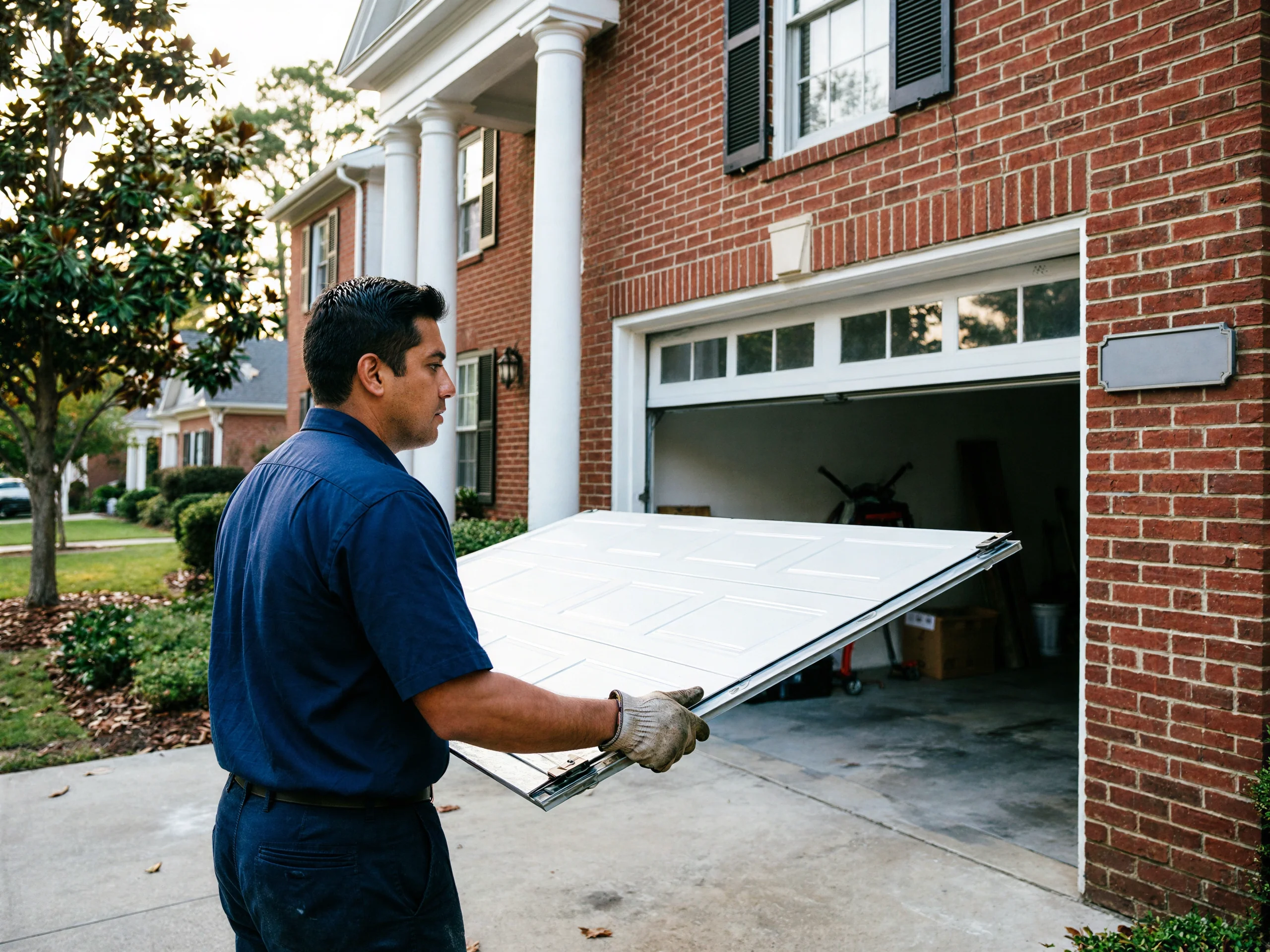
Spencer's housing stock centers on 1955, which puts it well ahead of the 1983 median you see across the rest of the service area we cover out of Lexington. A door installed on a house built in 1955 was almost never the insulated steel sectional door you see on newer builds. It was a single-panel, one-piece door swinging up and back on long horizontal tracks, or an early sectional with a basic extension-spring setup bolted to the header. Neither style matches what most garage door parts counters stock today. Fifty-plus years of that hardware aging in place means hinges wear oval, track brackets pull loose from old framing, and springs that were never rated for the door's actual weight finally give out. We see this pattern across the older end of town more than in subdivisions built later. It's not that the doors are poorly made - some of that 1950s steel has held up fine structurally - it's that the lift hardware was designed for a different kind of door than what's often been swapped in since, and the two don't always match up cleanly.
The Symptom
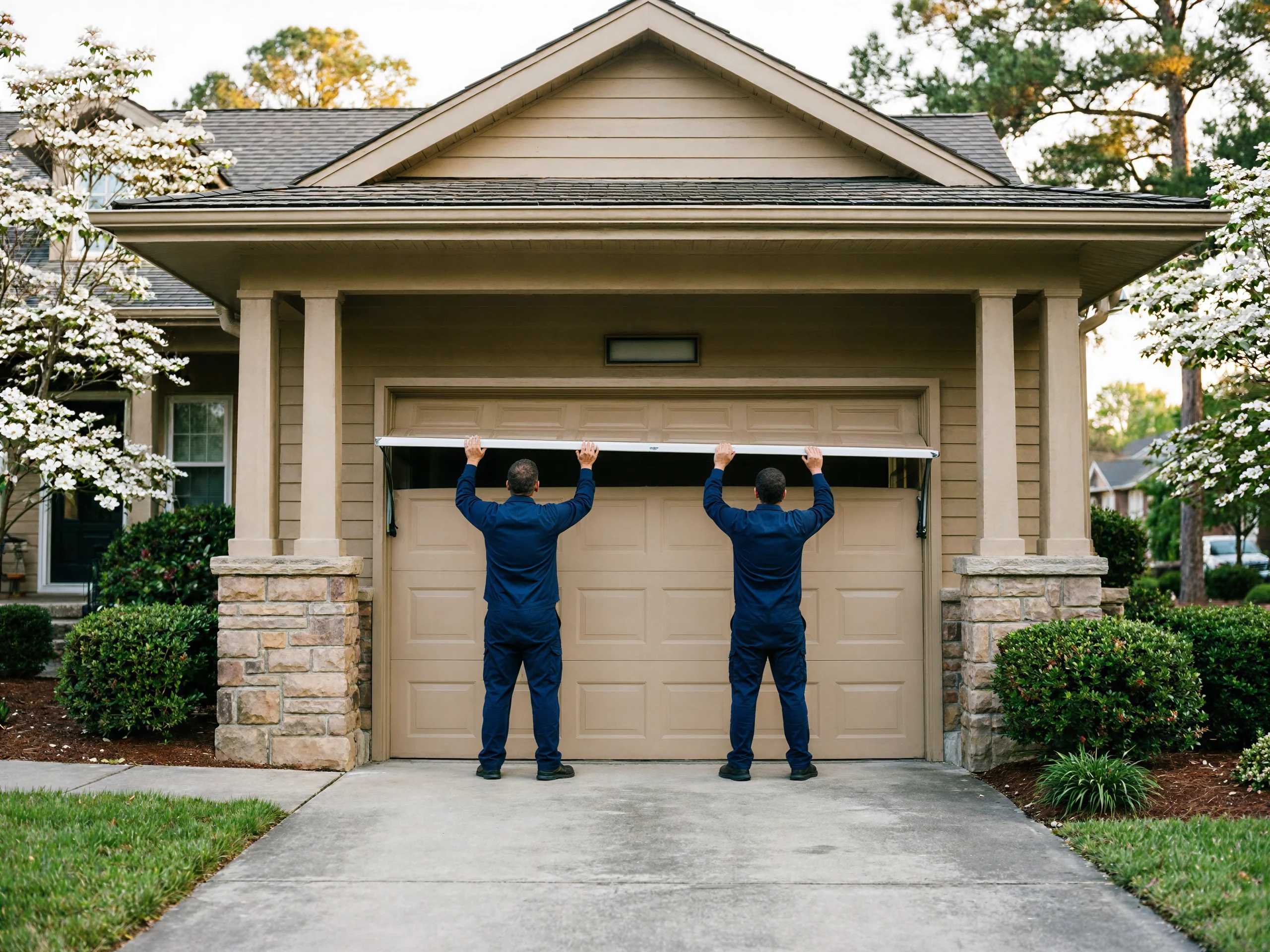
The most common call from this part of town is a door that's suddenly heavy to lift by hand, or an opener that strains, reverses, or trips its breaker trying to move it.
Guessed retrofit spring size
On a house from the 1955 era, that's often a torsion spring that was added later as a retrofit and sized by guesswork rather than by the door's actual weight.
Clunk partway up
You'll also hear it in a slow grinding or a hard clunk partway up the track - usually a roller or hinge that's worn enough to bind rather than roll. In this climate band, cold snaps tighten metal fittings and stiffen old lubricant, so a door that was merely sluggish in fall can lock up hard the first cold week.
Noise versus real danger
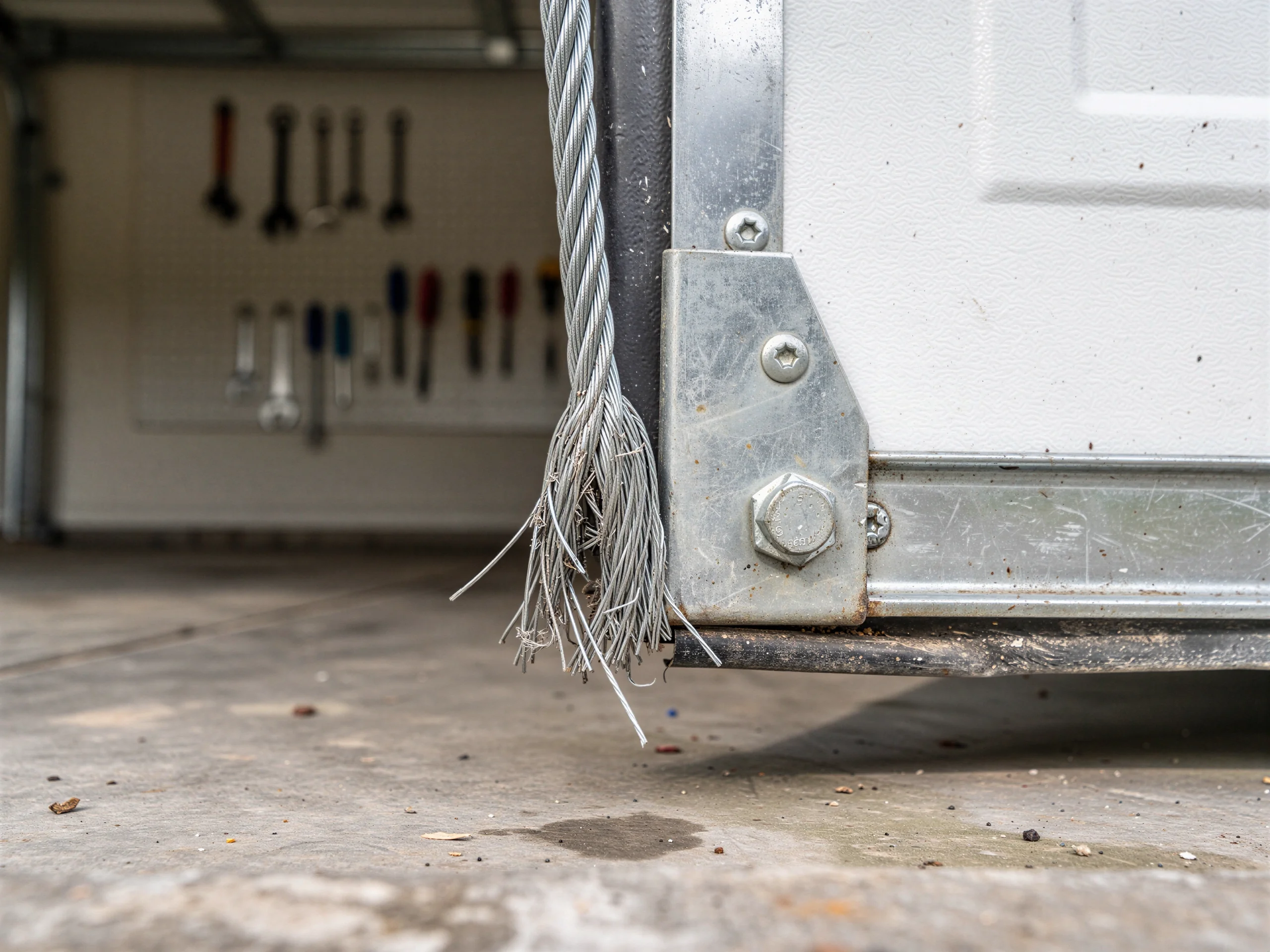
We don't treat every noisy door as an emergency - some of what you're hearing is just an old door doing what old doors do, and tightening a few bolts fixes it. But a door that won't stay up on its own, or drops suddenly when the cable lets go, is a safety issue and shouldn't wait.
What You Pay
We don't post a flat price for Spencer calls because what a door needs depends entirely on what's actually failed, and on a house this age that varies more than it does in newer neighborhoods. A worn roller or a frayed cable is a small job. A torsion spring that was undersized when it was retrofitted, or a track that's pulled away from rotted header framing, costs more because the fix involves correcting the original mismatch, not just swapping a part. Spencer's median household income sits at $64,031, close to the $64,562 median across the wider service area's roughly 19,193 households, so we price jobs the same way here as anywhere else we work - by what the door needs, not by the zip code. We'll give you the number after we've actually looked at the hardware, not before.
What the Repair Takes
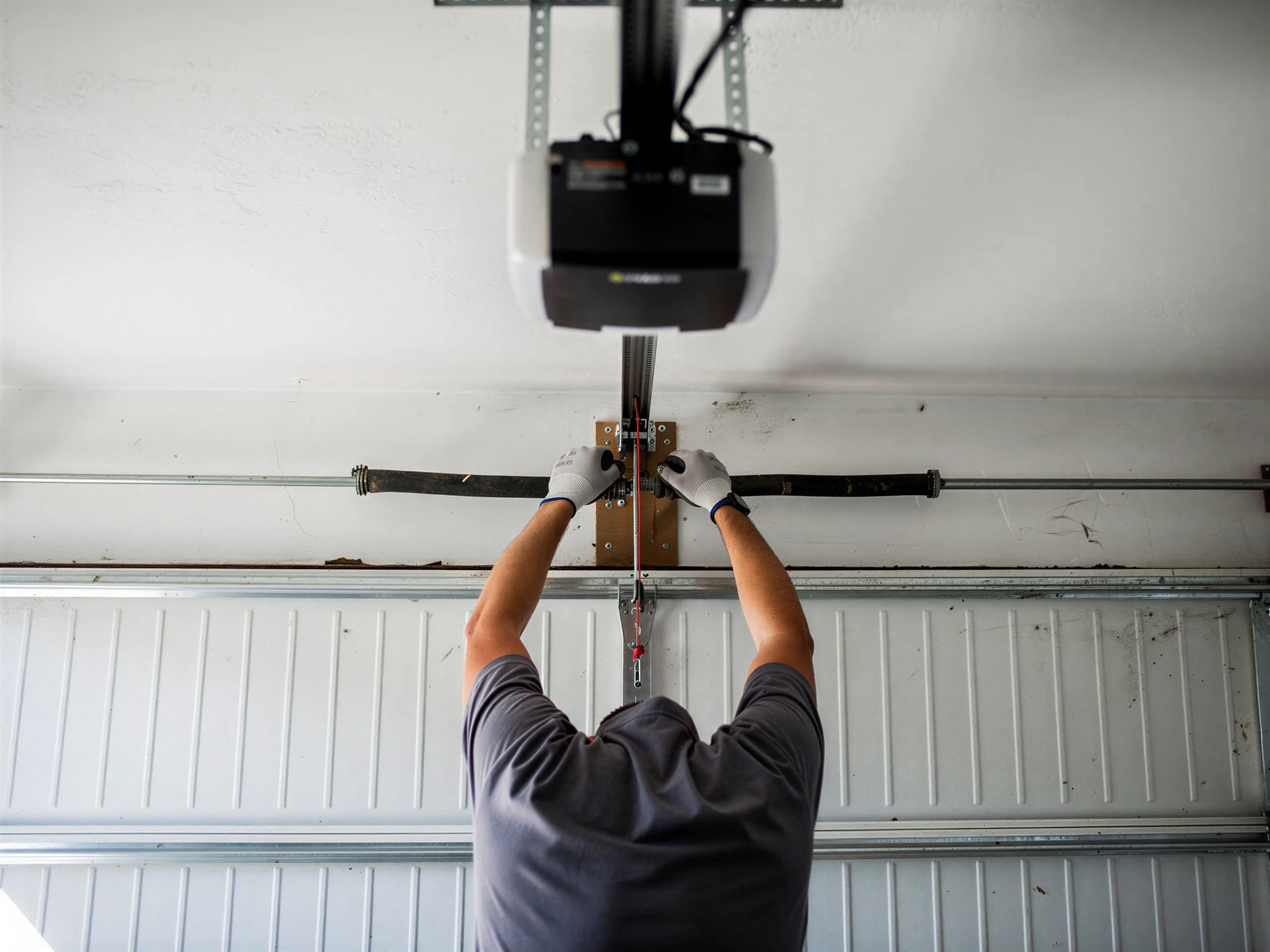
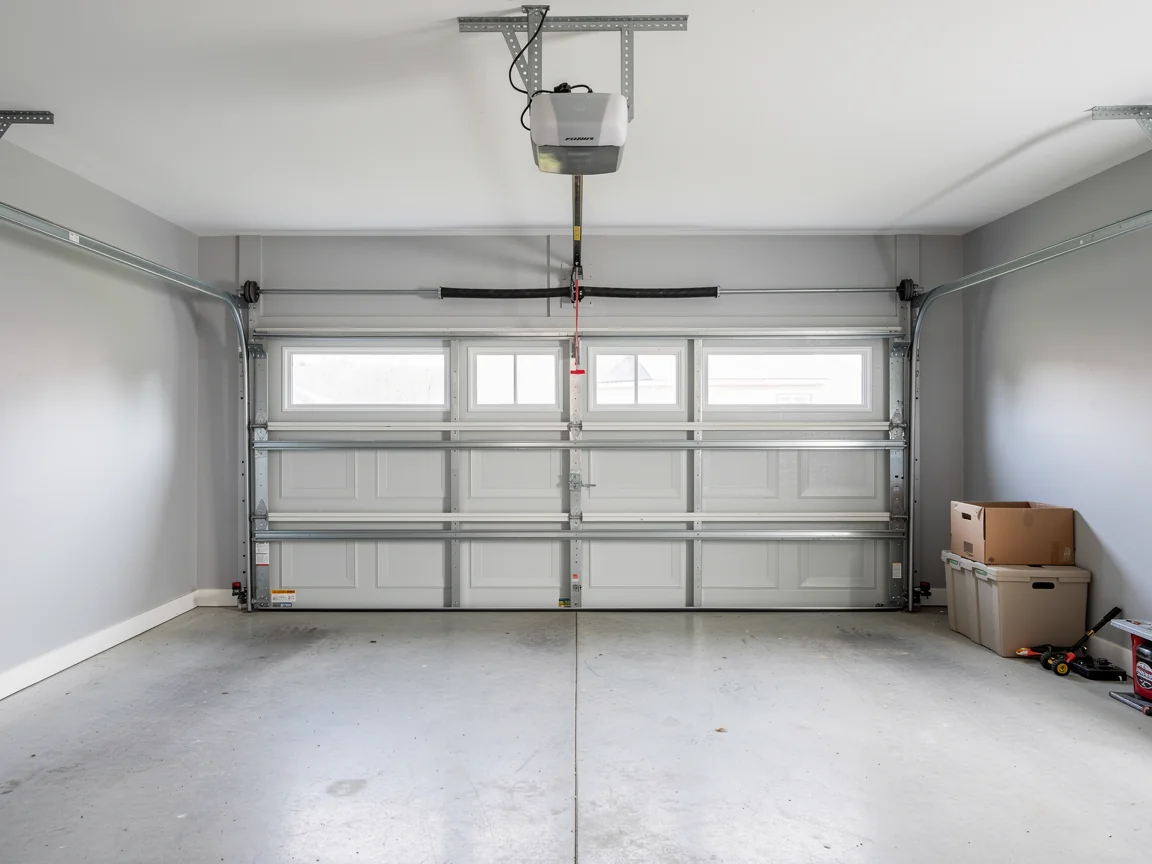
On a 1955-era one-piece or early sectional door, the repair usually starts with matching spring tension to the door's real weight rather than whatever was installed last time.
Heavier door, mismatched spring
If the original lift system used a single torsion spring mounted center-header, and the door has since been replaced with a heavier insulated panel, that spring is often flat wrong for the load - that mismatch is one of the more common root causes we find on older Spencer doors.
Torsion conversion and cables
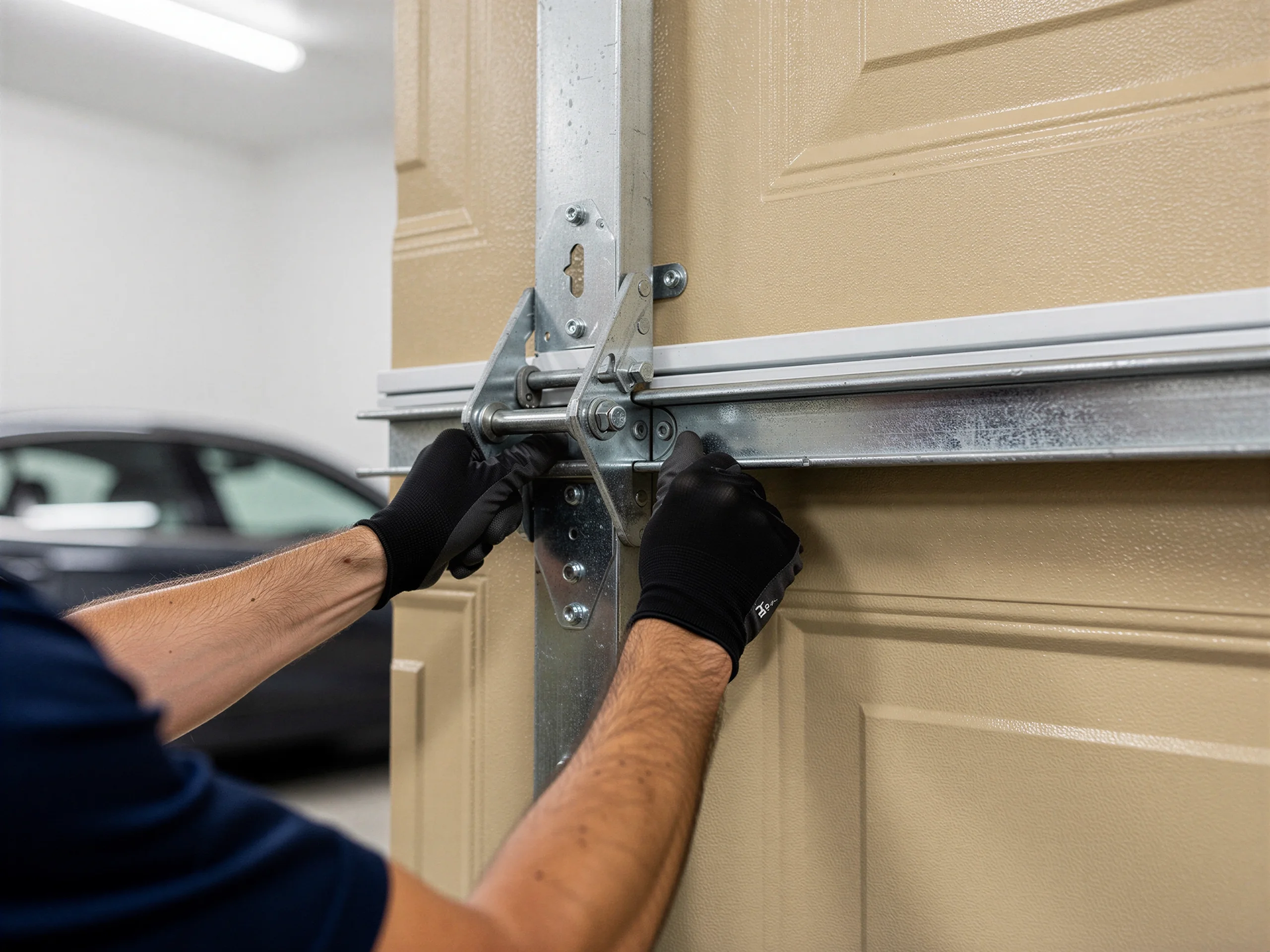
The fix is a torsion conversion sized correctly, galvanized lift cables rated for the actual door weight, and steel track brackets re-anchored into solid framing if the originals have pulled loose.
Oval hinge wear check
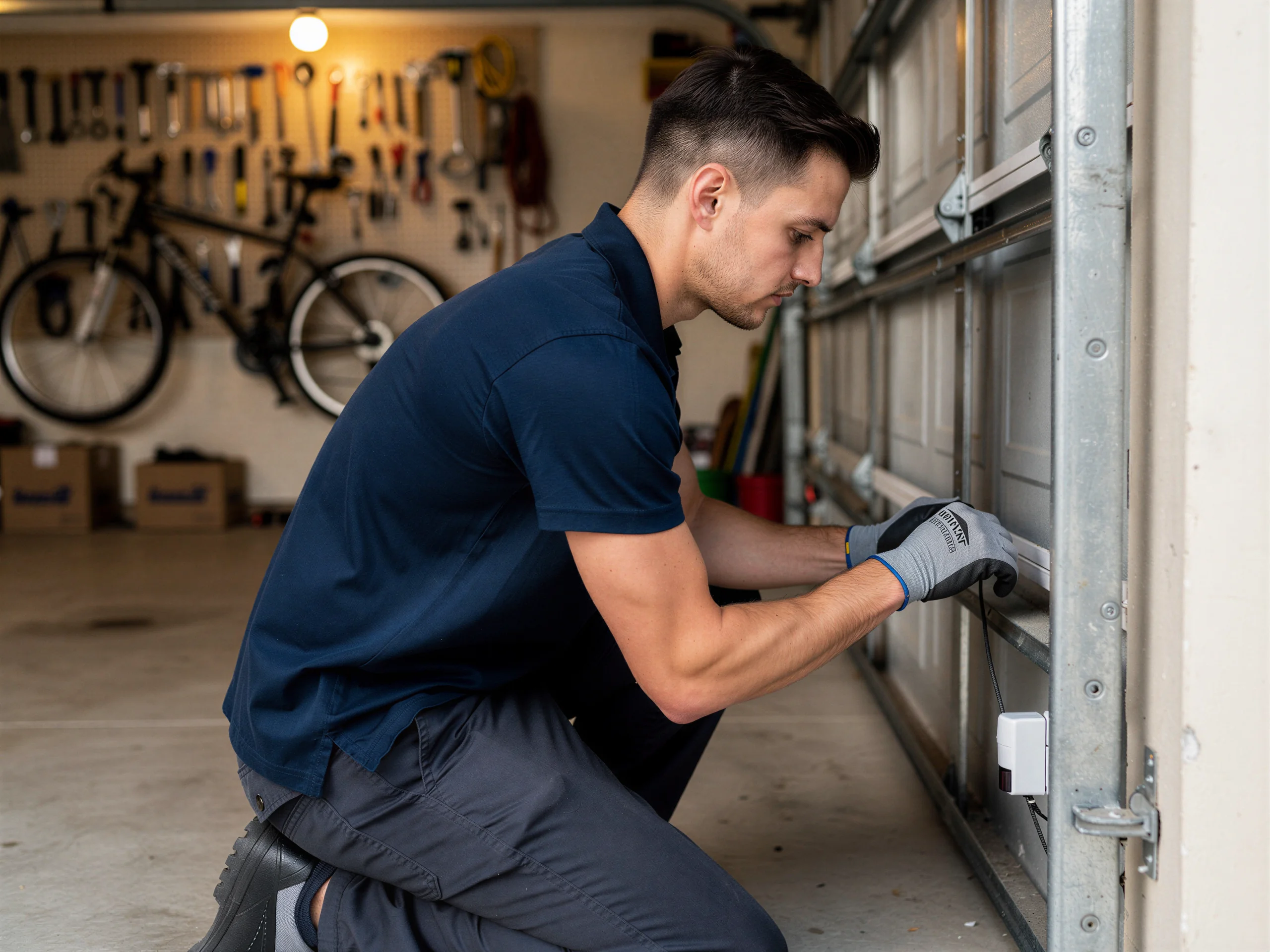
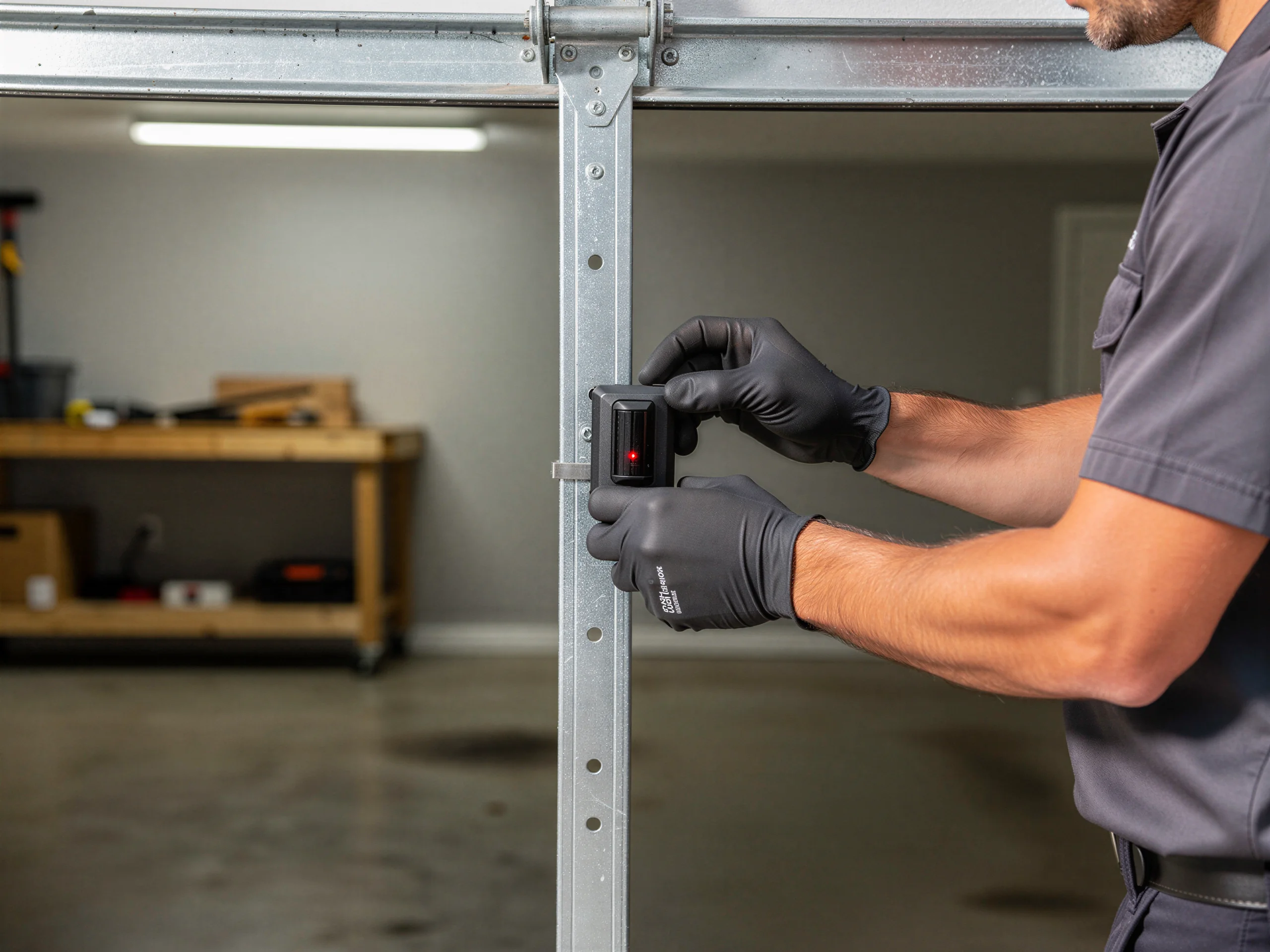
We also check hinges for oval wear, since a worn hinge will keep straining a new spring the same way it strained the old one. We won't replace parts that don't need it - if the track is sound and only the spring failed, that's all we touch.
How Long It Takes
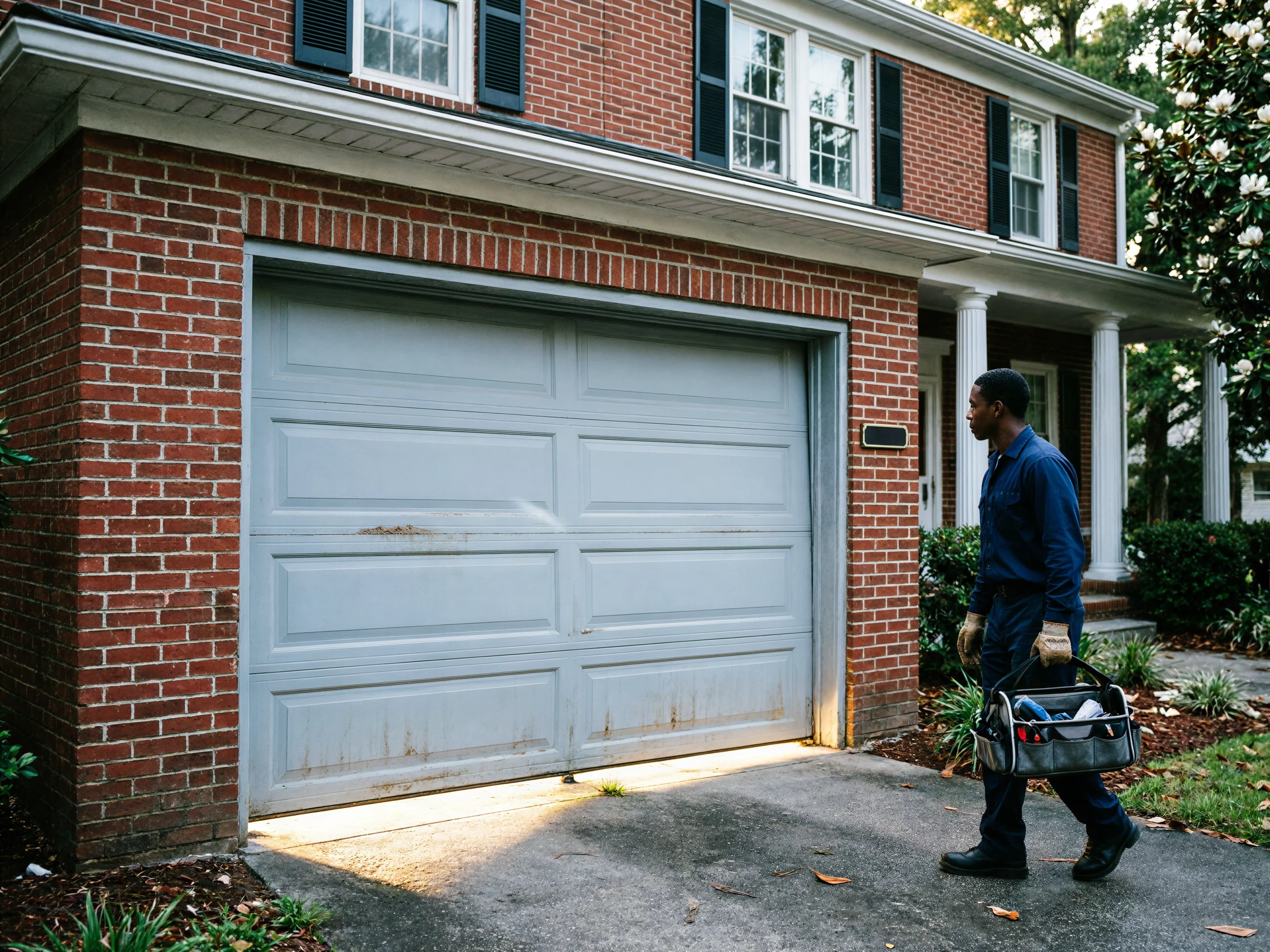
We run this job from Lexington, about 11 miles out, so there's travel time built into any call to Spencer - we don't keep a branch or a crew staged in town. Once we're on site, most spring and cable repairs on a door this age run a couple hours, since the work is straightforward once the right-sized hardware is on the truck. Where it takes longer is when the retrofit hardware from decades of patch repairs has to come out piece by piece before the new system goes in cleanly. We'll tell you up front if a job looks like the second kind rather than the first.
Stocked Parts
Our truck carries the torsion springs, extension springs, rollers, and galvanized cable sizes that cover most of what fails on doors from the 1955 era. Where we sometimes run into a wait is hardware specific to an original one-piece door that hasn't been converted to sectional - certain track brackets and jamb hardware for that style aren't something any supplier stocks on a shelf, and we may need to order it. We'll tell you on the spot if that's the case rather than make you guess at a timeline. For a look at the broader range of doors and styles we work with in Spencer, see our page at /spencer-garage-doors/, and for repair work across the rest of our coverage area, /garage-door-repair-lexington-nc has the full rundown.
Talk to a local pro
Garage door service in Lexington?
Same-day service with honest, upfront quotes.