Why It Happens Here
Spencer's median year built is 1955, a full generation earlier than a lot of the territory we cover out of Lexington. That matters for openers because a house built in the mid-1950s didn't come with an automatic opener at all - garages were hand-lifted for decades before anyone retrofitted a motor unit onto the existing track and door. What you're often looking at now is a second- or third-generation opener bolted onto framing that was never built with an opener bracket in mind, with a header board added later and sometimes not braced the way a modern install calls for. The logic board might be new-ish, but the mounting, the arm bracket, and the wiring run to the wall button are frequently whatever was there from the last update, which could be fifteen or thirty years ago. We also see openers wired directly into an old light switch loop instead of a dedicated outlet, which trips breakers and gets blamed on the opener itself. None of this is unique to one house - across the roughly 1,351 households in Spencer, a lot of the garages share this same retrofit history rather than a clean, opener-ready build.
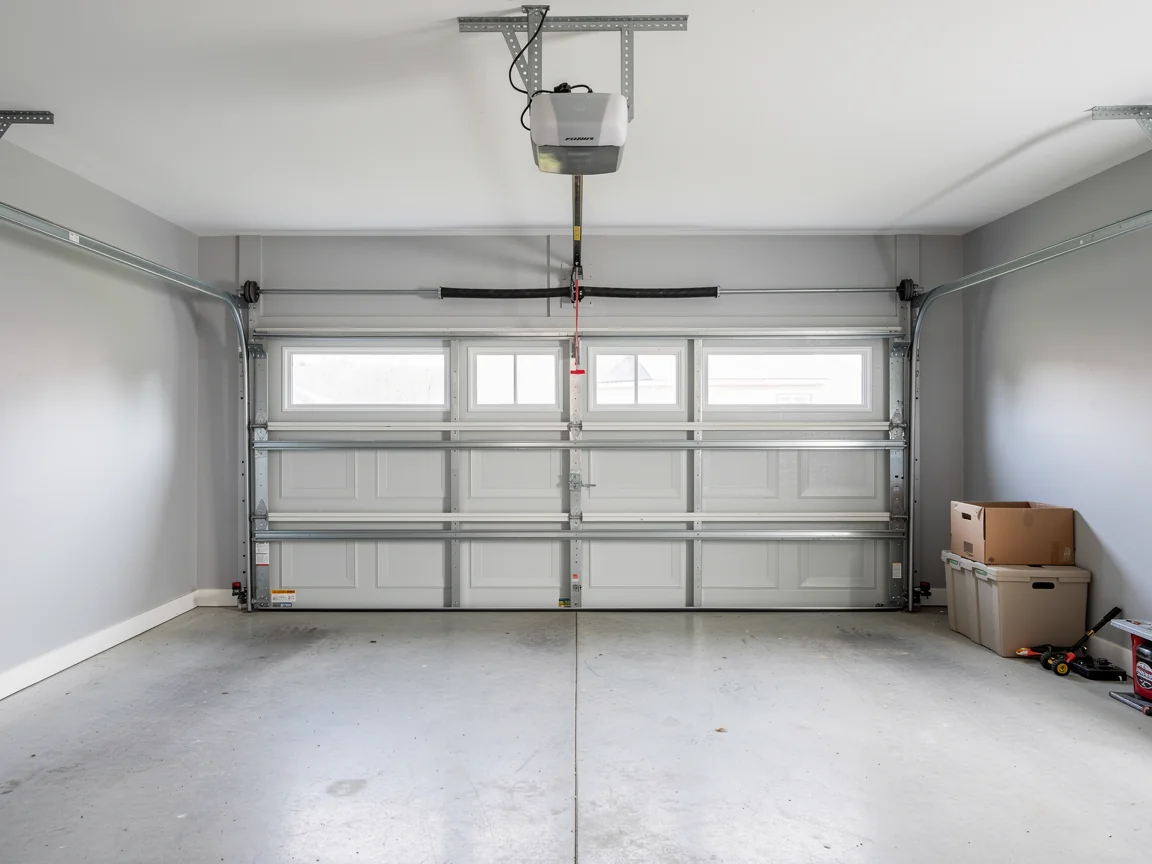
The Symptom
The most common call we get from Spencer is a door that reverses right before it closes, or won't close at all unless you hold the wall button down.
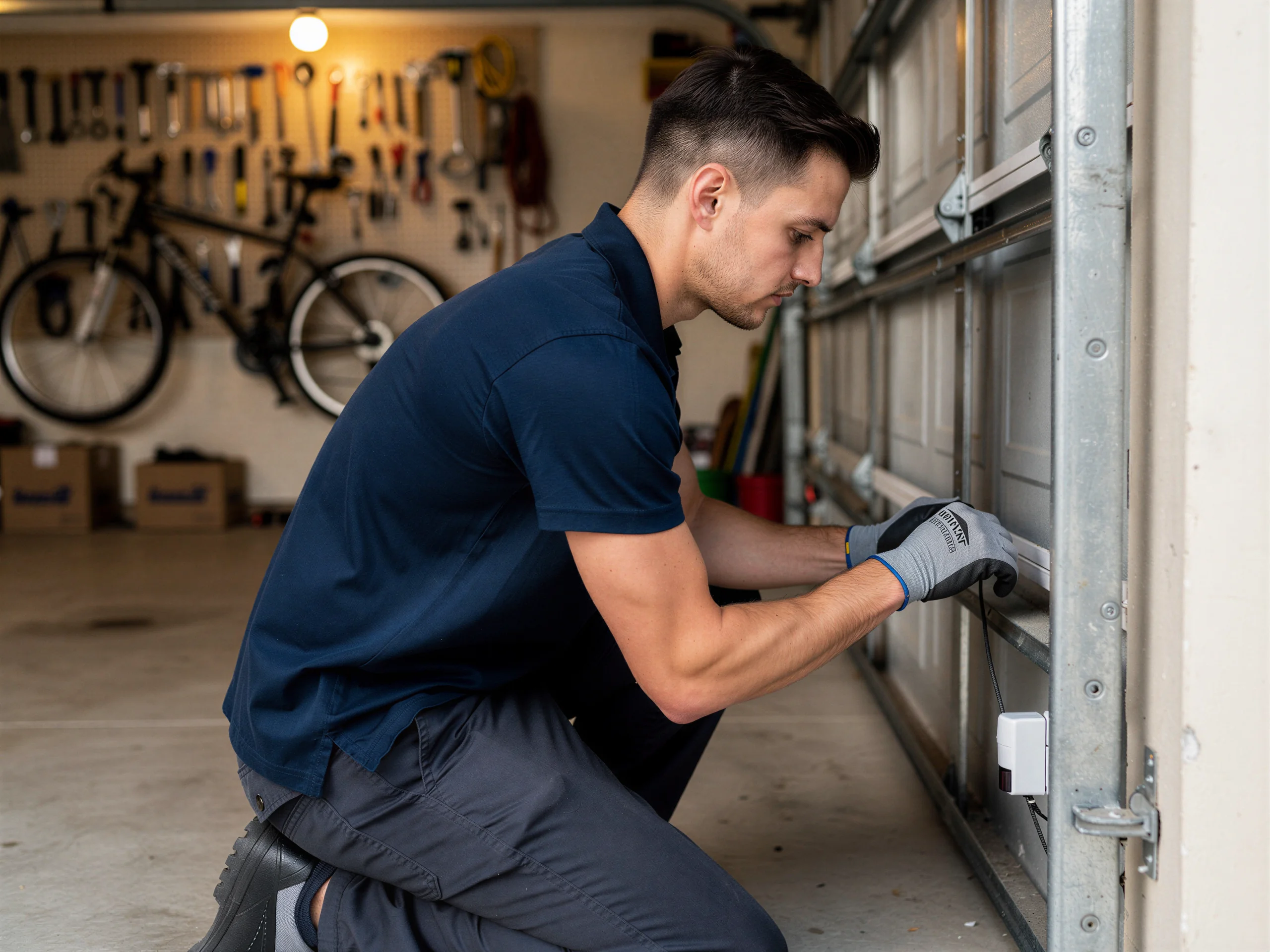
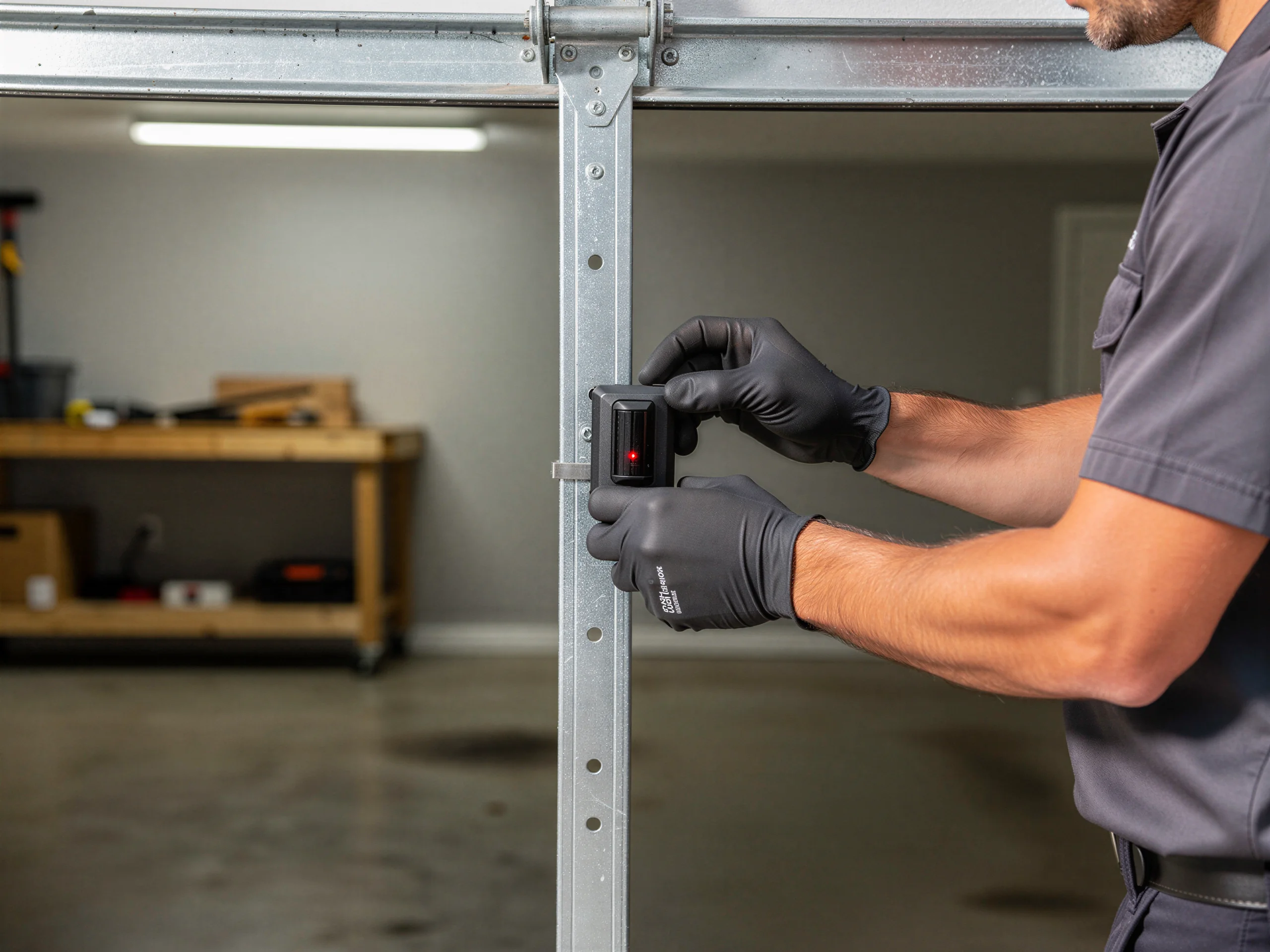
Drifted safety sensor
On a house with mid-century framing and a later-added header bracket, that's almost always a safety sensor that's drifted out of alignment or a close-limit setting that's been bumped by seasonal wood movement in older framing.
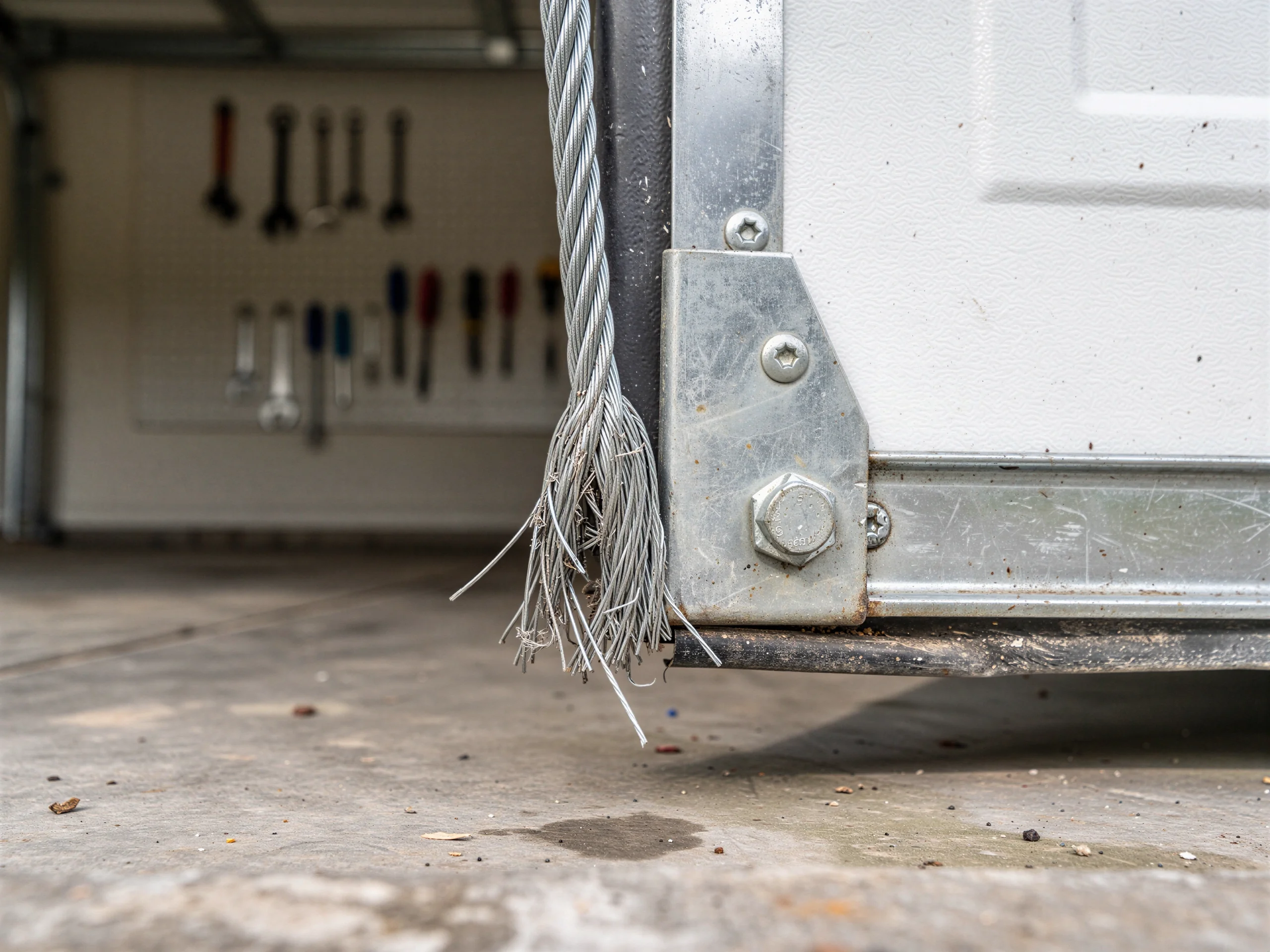
Loose chain skipping
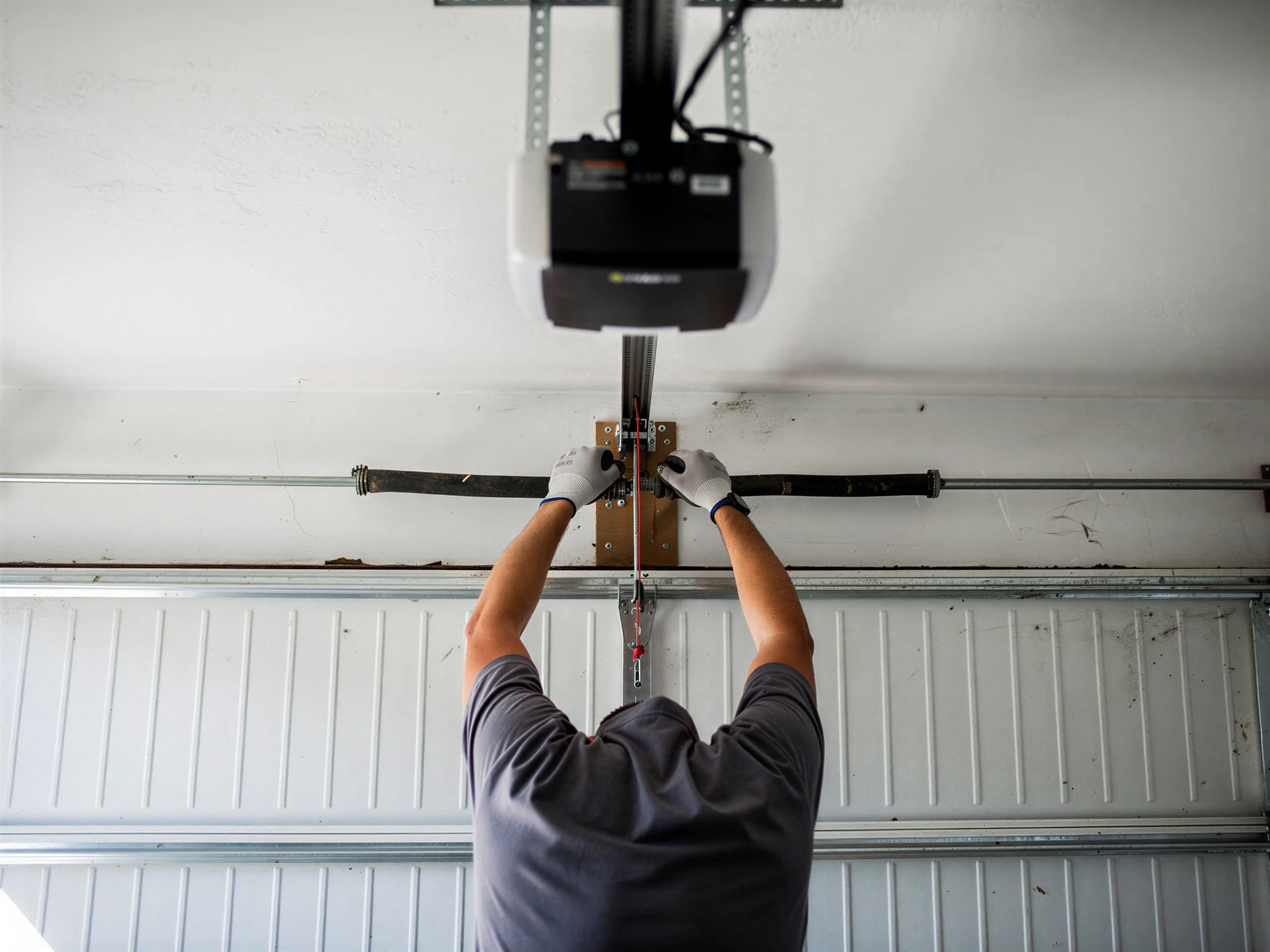
The second most common is a chain that's gone loose and started skipping teeth on the sprocket - on openers that have been running fifteen-plus years on original mounting hardware, that slack builds up slowly and then one day the door just stops halfway. Less often, but still regular, is a logic board that's failed outright after a power flicker, which on these older circuits happens more than you'd expect.
What You Pay
We don't publish a flat number for opener repair because the job varies with what's actually wrong - a sensor realignment and a dead circuit board are not the same bill. What we can tell you is that the median household income across the area we cover is $64,562, and in Spencer specifically it runs close to that at $64,031, so we price jobs with that in mind rather than treating every call like a full opener swap. If the motor and gears are sound and it's a limit switch, sensor, or chain adjustment, that's a service call, not a replacement. If the logic board is dead on an opener old enough that parts are no longer made, replacement usually costs less than hunting down a discontinued board.
What the Repair Takes
Most opener repairs here start with pulling the housing cover and checking the capacitor and logic board for visible damage, then testing the sensor alignment and the travel limits.
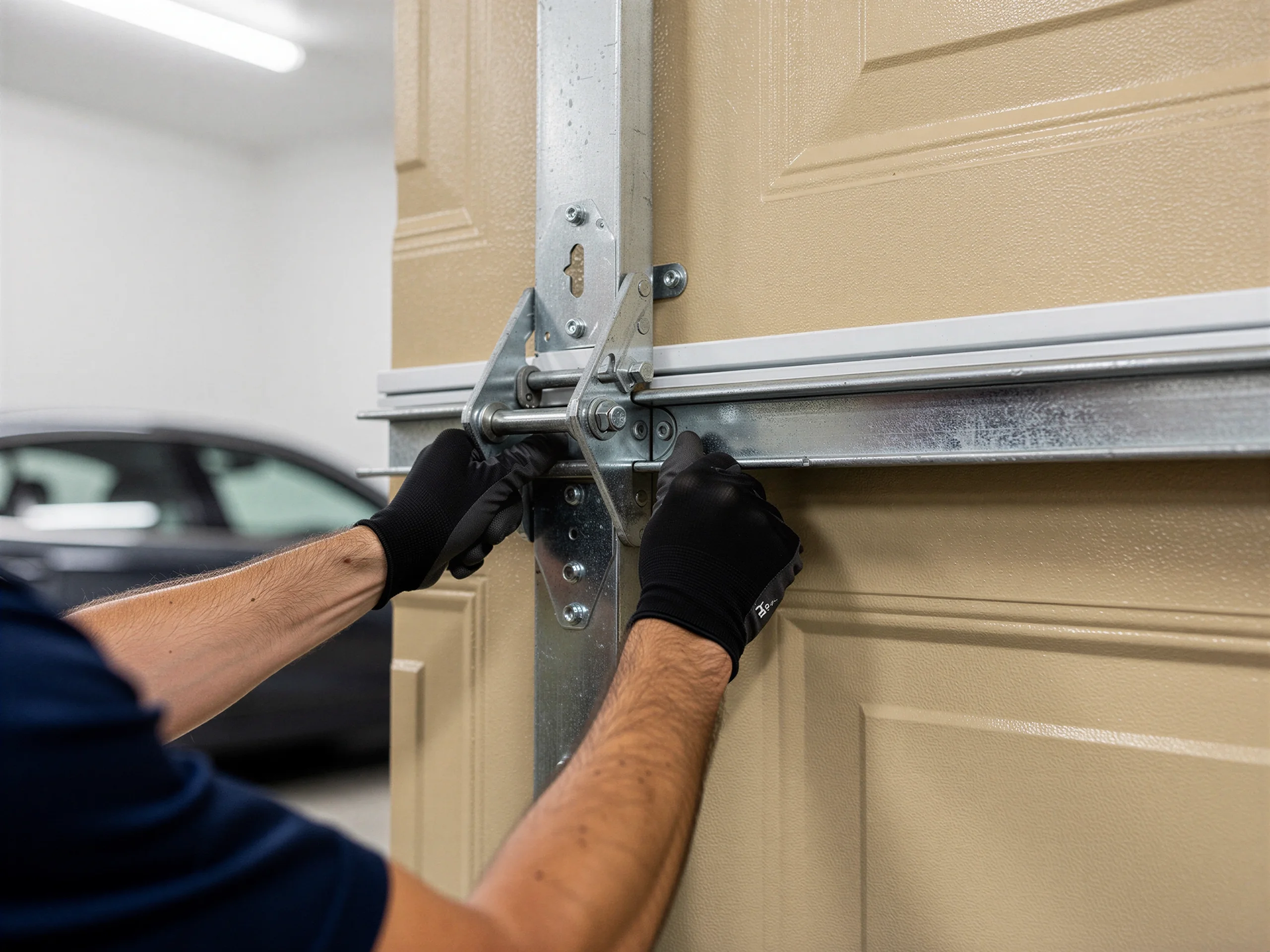
Loose bracket resets limits
On the retrofit-style installs common to Spencer's older garages, we also check the mounting bracket and header board for movement, since a loose bracket will throw off the limits again within weeks even after the electronics are fixed.
Stretched chain or belt
If the chain or belt has stretched, that gets tensioned or replaced. We carry standard relay boards, sensor pairs, and drive gears on the truck, so a lot of these jobs close out in one visit.
Discontinued board means replace
Where we hit a wall is openers old enough that the manufacturer no longer makes a matching logic board - at that point we'll tell you straight that replacement is the better dollar, rather than quoting a repair that won't hold.
How Long It Takes
A sensor or limit adjustment is usually done inside thirty minutes once we're on site. A chain tensioning or gear replacement runs closer to an hour. A full logic board swap, including re-programming the remotes and wall station, is typically the longest piece of a single visit but still finishes same-day in almost every case. We travel from Lexington, about 11 miles to Spencer, and we schedule the visit around what the diagnosis needs rather than quoting a time before we've seen the opener.
Stocked Parts
On the truck we keep the parts that fail most often on openers from this era: photo-eye sensor pairs, drive gears and sprockets, standard relay and logic boards for the major opener brands, wall control stations, and both chain and belt stock for re-tensioning. What we don't carry is a board for every discontinued opener model still running in a Spencer garage from the 1980s or earlier - if yours is one of those, we'll say so on site and lay out whether it's worth a special-order part or just time to replace the unit.
Talk to a local pro
Garage door service in Lexington?
Same-day service with honest, upfront quotes.