Why It Happens Here
Spencer's median year built sits at 1955, a full generation earlier than the 1983 median across the wider area this company covers out of Lexington. That gap matters for openers specifically. A house built in 1955 almost never had a garage door opener installed at the same time as the house - openers got added later, often decades later, as a retrofit onto a door and track that were never designed with motorized lift in mind.
That means a lot of the opener units running in Spencer right now are themselves old: chain-drive motors from a later remodel, bolted onto brackets that were never quite square to begin with. When one of these fails, it's rarely just the opener. The bracket, the header mount, and the travel limits on the rail have usually drifted with the house over seventy years of settling. Swapping in a new unit without checking that structure first is how you end up back on a service call inside a year.
The Symptom
The most common call from this part of the service area isn't total failure - it's a motor that runs but a door that won't.
Stripped gear on hum
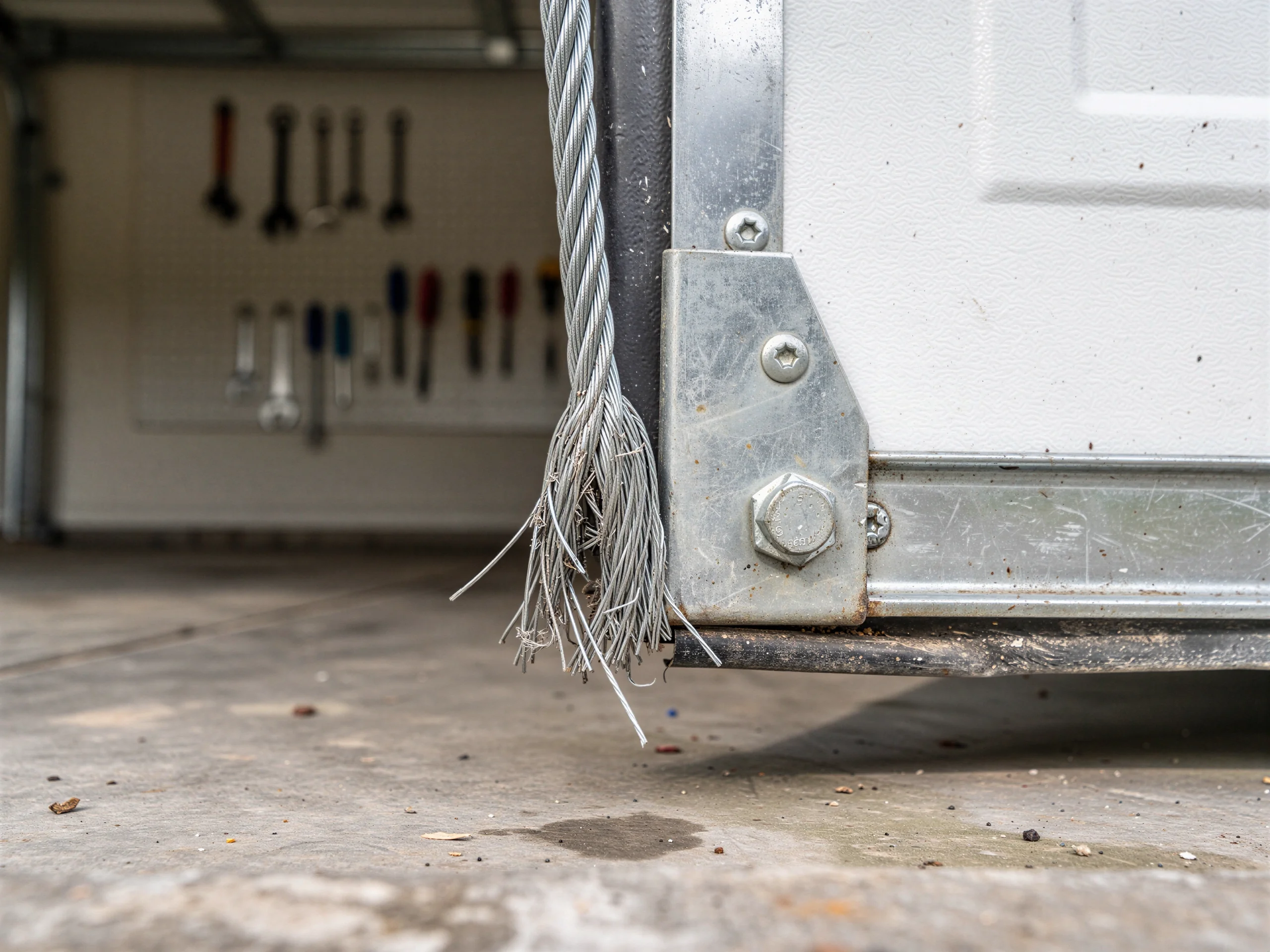
You hit the remote, the unit hums or clicks, and the door sits still or inches up a few degrees before stopping. On older chain-drive units, that's usually a stripped or jumped gear inside the housing, not something worth opening up and fixing piece by piece.
Reversing from drift
A close second: the door reverses on its own partway up or down, even with nothing in the way. On a retrofit opener mounted to a bracket that's shifted over decades, the travel limits and force settings drift out of calibration faster than they would on a newer, factory-aligned installation.
Flickering lights, weak remote
Flickering opener lights and a remote that only works from certain spots in the driveway point the same direction - the unit is past the point where adjustment buys you much time.
What You Pay
We can't give you a number here without seeing the door. Horsepower, drive type (chain, belt, or jackshaft), and whether the existing bracket and header can be reused instead of rebuilt all move the cost up or down, and none of that is something to guess at over the phone. What we can tell you: in a town where the median household income is $64,031, most of what we install leans toward a standard belt-drive unit rather than the heavier jackshaft setups built for oversized or commercial-weight doors - simply because most doors here don't need that much motor.
If your existing bracket or header is cracked, warped, or pulling away from the framing - not unusual in a house built in 1955 - that gets priced and quoted separately once we're looking at it in person. We'd rather tell you that upfront than low-ball a number and revise it on the day.
What the Repair Takes
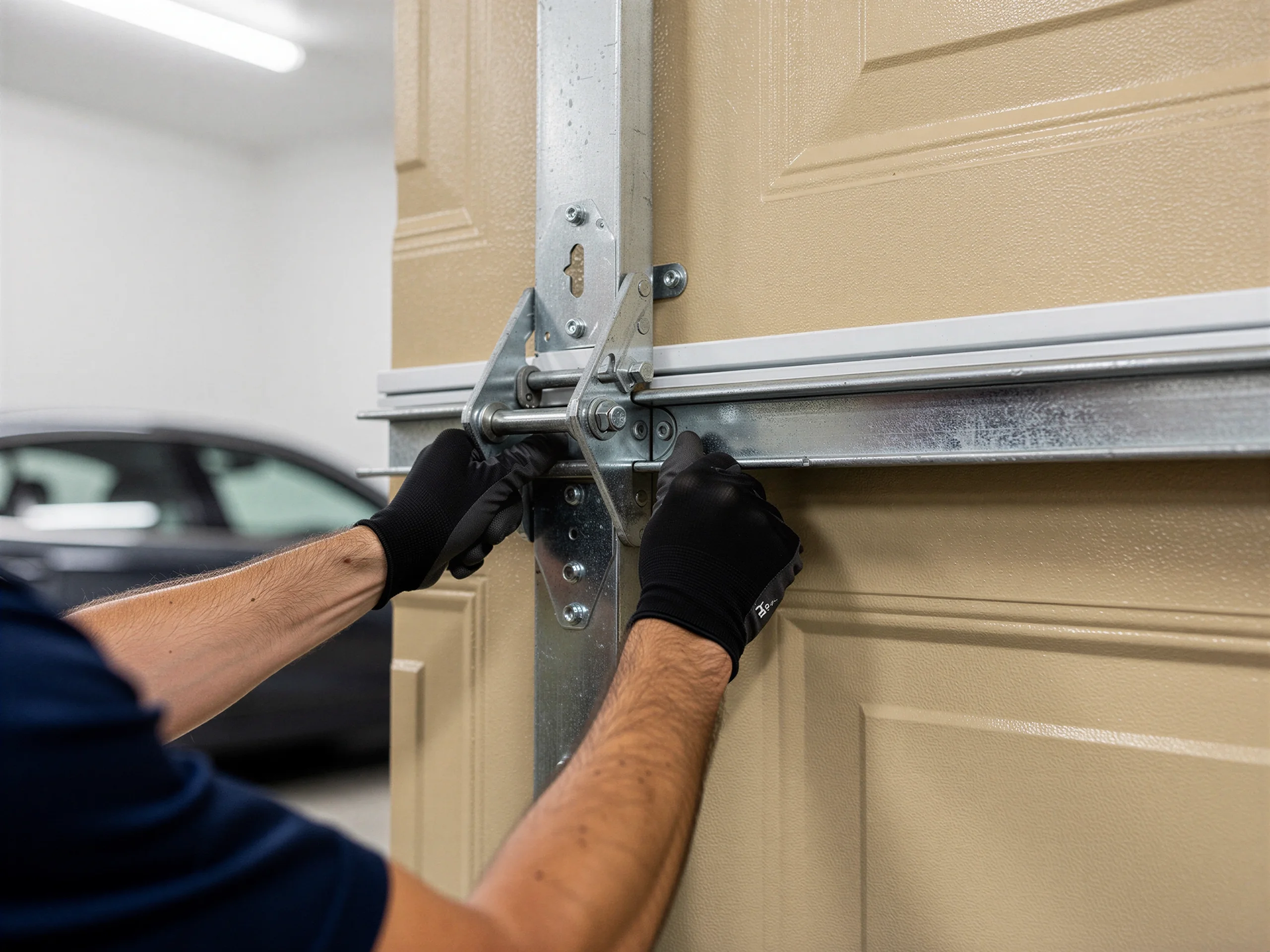
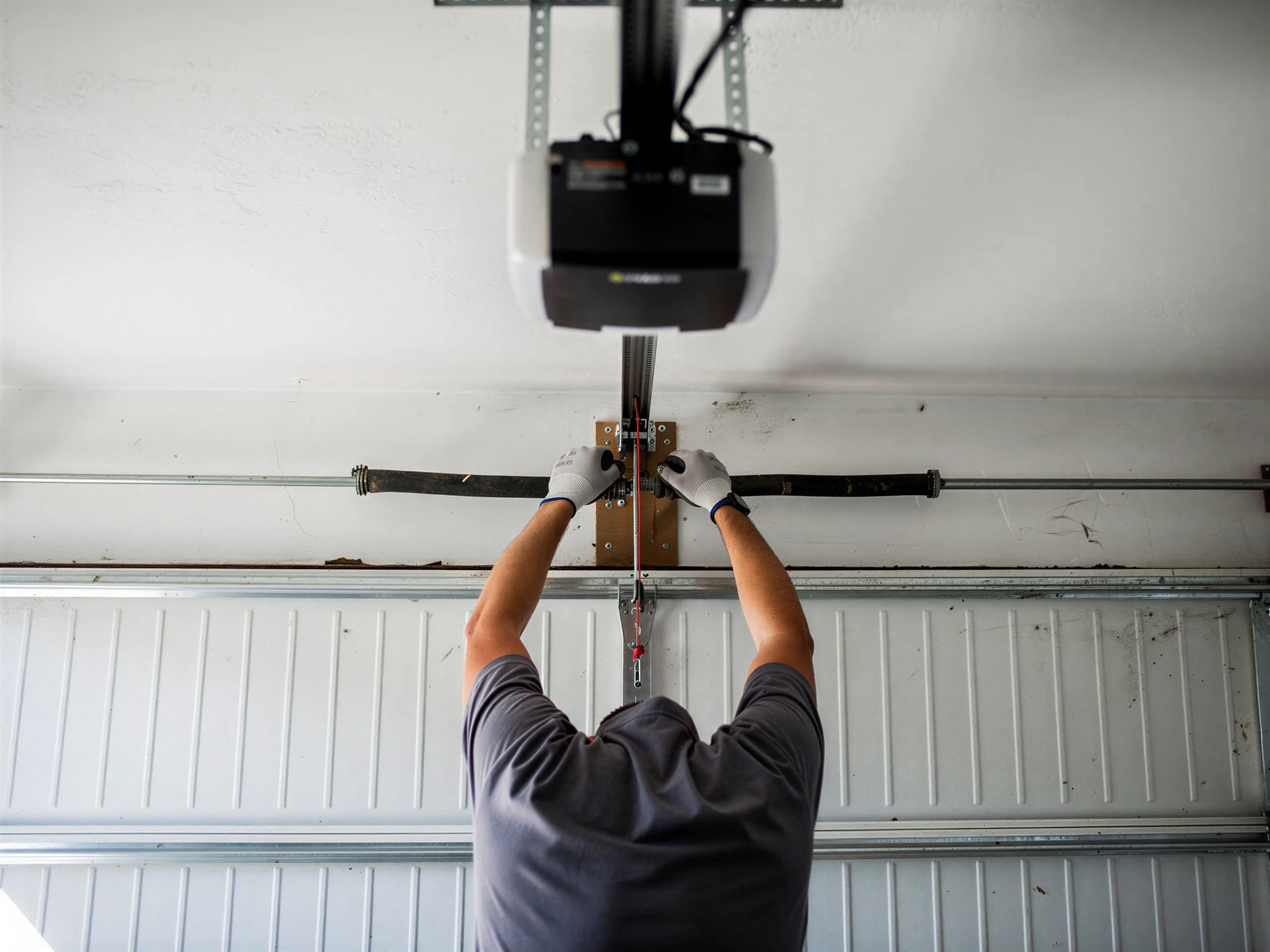
Installation starts with pulling the old motor head and chain or belt rail off the header bracket, then checking that bracket for cracks, rust, or play before anything new goes up - on a house from this era, that check isn't optional.
Rebuilding a weak mount
If the bracket's sound, the new rail mounts to the existing track alignment. If it's not, we rebuild the mount first, which adds time but isn't something to skip.
Limits, pairing, and sensors
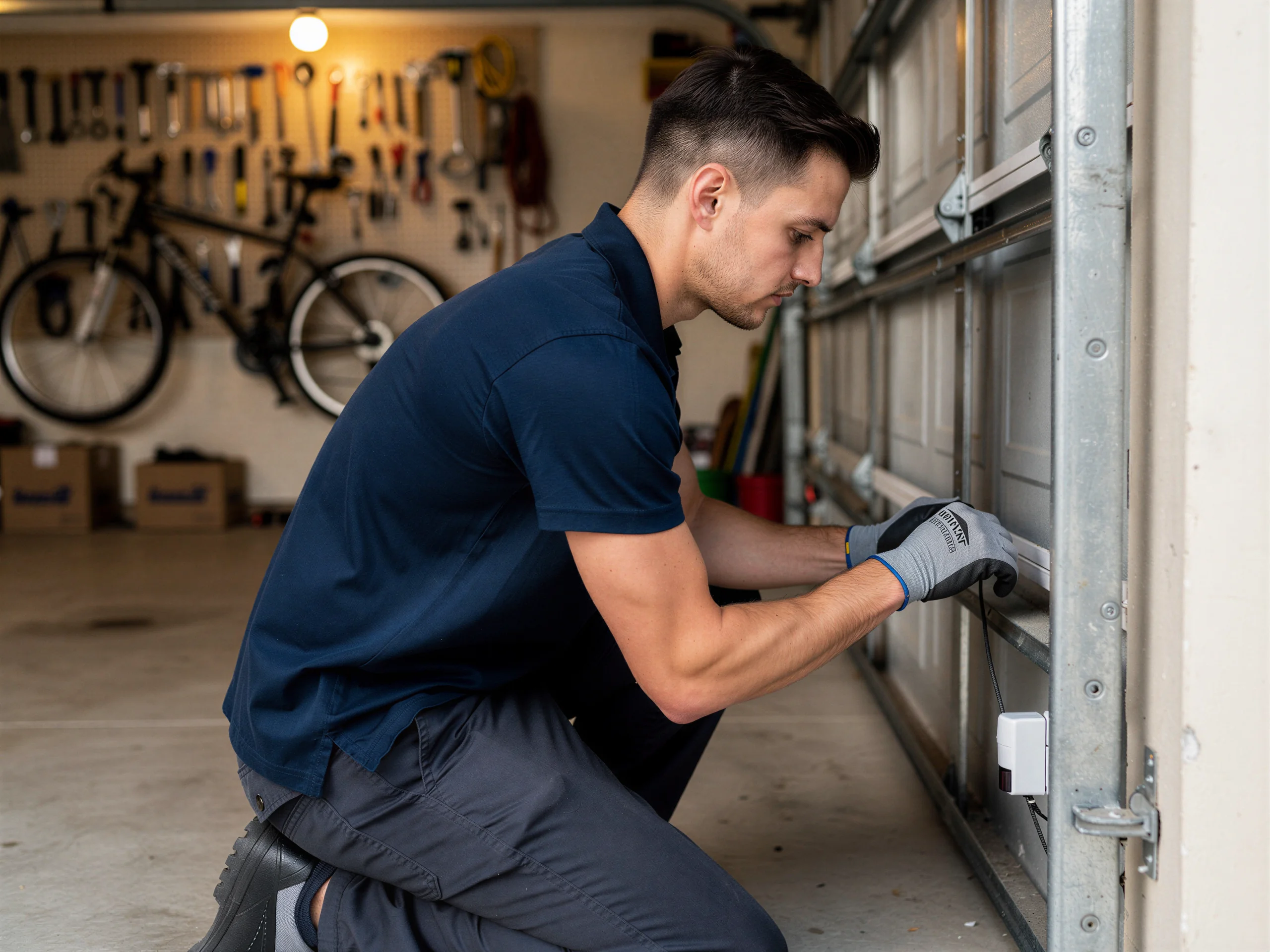
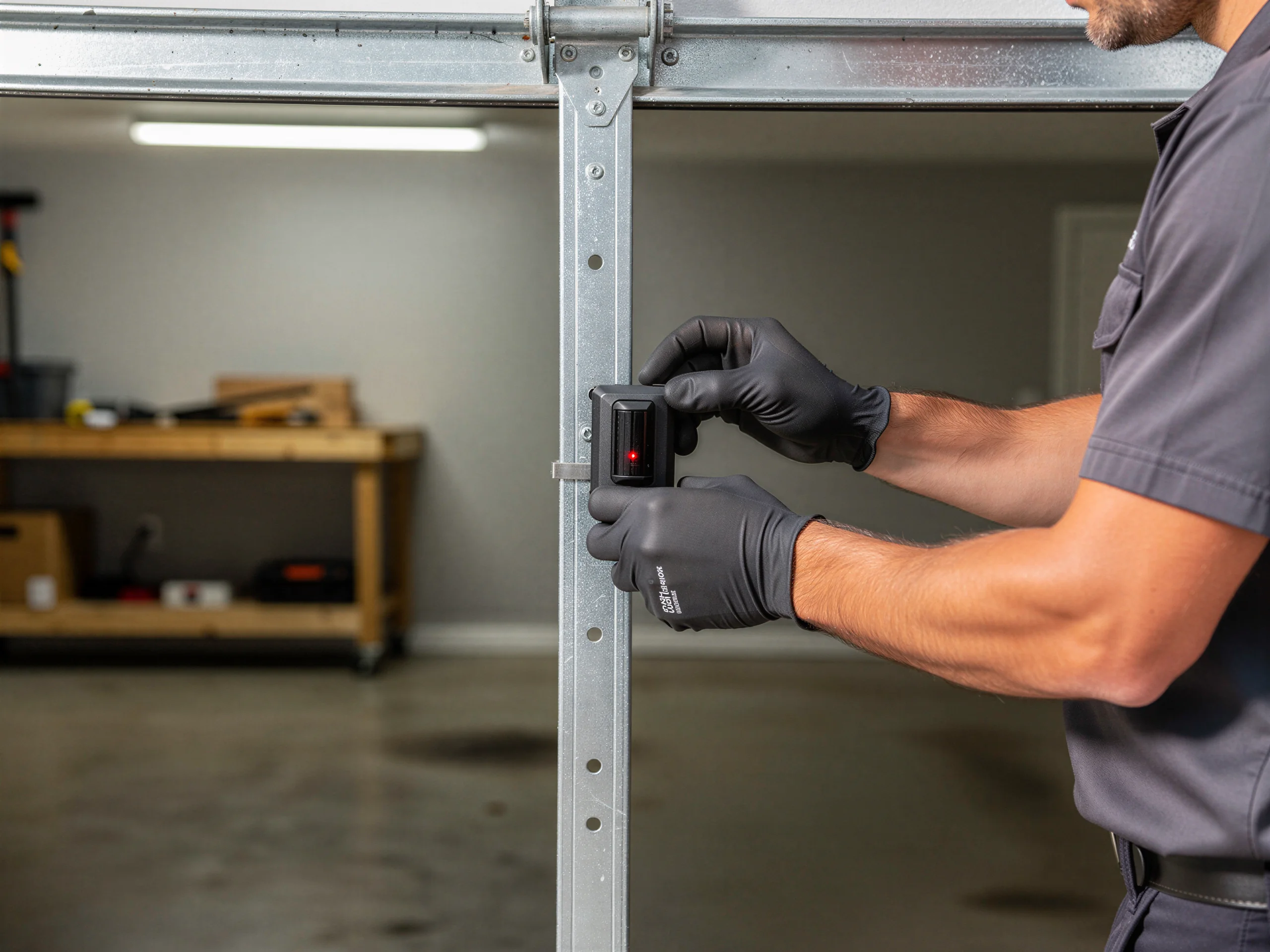
From there: wiring the unit to power, setting travel limits top and bottom, pairing the remote and keypad, and aligning the safety sensors at the base of the track so the door won't close on an obstruction.
Retrofit alignment takes longer
On a straightforward swap where the bracket's solid, that's most of the job. On an older retrofit where the header's shifted or the track isn't square to the opener's mounting point, that alignment step takes longer and matters more than on a newer build.
How Long It Takes
A straightforward opener swap, where the bracket and header are sound, runs a few hours on site. The variable in Spencer specifically is what's behind the drywall - houses built in 1955 have had seventy years of settling, and that sometimes means the header bracket needs reinforcing before a new motor goes up, which adds to the job rather than the drive.
Spencer sits 11 miles from Lexington, so scheduling means the truck is loaded with the right rail length and drive type before it leaves - we don't carry every configuration on every run, which is one more reason to confirm door specs ahead of the appointment rather than on arrival. We're not going to promise a same-day slot here; distance and what's already on the truck both factor into when we can get out.
Stocked Parts
Because housing in this part of the service area spans everything from original 1955 construction to the 1980s and 90s builds more typical of the wider area, the truck carries opener rails and mounting hardware sized for both older, narrower track widths and the standard sectional doors from later decades. Belt-drive units are the most common stock item we pull for this kind of job, with chain-drive as the budget alternative when noise isn't a concern.
What doesn't always ride on the truck: jackshaft openers for oversized doors, and odd-length rail extensions for openings outside standard width. If your door turns out to need either, that's typically a next-visit item rather than same-day - we'd rather say that plainly than promise a part we don't have in hand.
Talk to a local pro
Garage door service in Lexington?
Same-day service with honest, upfront quotes.