Why It Happens Here
Start with the door itself, not the dent in it. Spencer's housing stock centers on 1955, a full generation older than the 1983 median built-year across the wider service area we cover from Lexington. That gap matters because a door built in the mid-1950s is almost never the same animal as a door built in 1985. You're looking at narrower panel widths, often a single 8-foot opening rather than the 16-foot doubles that came standard later, and steel gauge that ran thinner before manufacturers beefed up panel stock for wind and impact codes. Some of these openings still carry the original flush-panel steel doors, never swapped, just repainted a few times over the decades.
That older steel doesn't flex the way newer ribbed or insulated panels do. A low-speed bump from a bumper or a trash can lid denting under a gust leaves a crease that doesn't pop back, because there's no foam core behind it and the ribbing pattern that modern doors use to distribute impact simply isn't there. Combine that with a cold-moderate climate and you get a second failure mode layered on top of the first: rust finds the crease and works it from the inside out before you notice from the driveway.
The Symptom
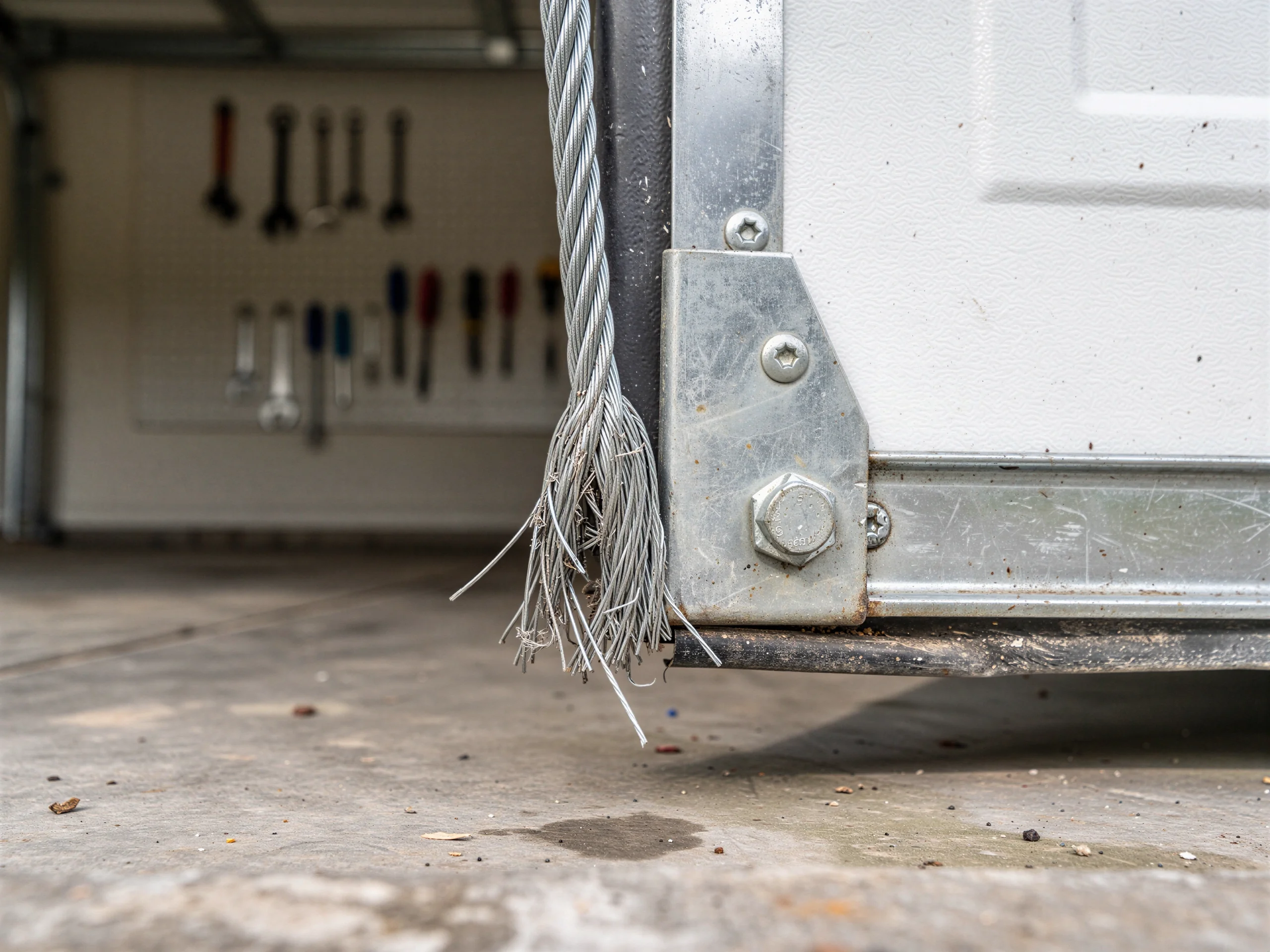
The most common call out of Spencer isn't a door that won't open - it's a bottom or second-row panel with a visible crease, a rust bloom spreading from a ding, or a seam where two sections used to meet cleanly and now show daylight. On the 1955-era single doors, you'll sometimes see the whole panel bowing slightly inward, which tells us the steel has fatigued at the fold rather than just taken one hit.
Less common but real: a homeowner who painted over a rust spot a few years back and is now looking at a hole. Paint buys time, it doesn't buy structure. If you can push a thumb through the metal at the bottom edge, that's not a patch job - that panel needs to come out.
What You Pay
We don't have a fixed number to quote here without seeing the door, and anyone who gives you one over the phone for a 1955-era panel sight unseen is guessing.
Sourcing drives panel cost
What drives the cost on a door this old is less about labor and more about sourcing: the panel width, the number of sections involved, and whether the color or rib pattern on a neighboring panel can even be matched.
Original panel match impossible
Matching an original flush panel from a door this age is sometimes not possible - the honest answer on some jobs is that a full section replacement, not a single panel, is the better route because a mismatched patch looks worse than a whole new look.
Panel alone or whole door
We'll tell you straight whether the panel is worth replacing on its own or whether you're better off putting that money toward replacing the whole door once one panel's gone. On a door already pushing seventy years old, that conversation comes up more often here than it does on newer stock.
What the Repair Takes
First we measure the actual opening and panel height on site - on a 1955-era door, manufacturer specs from back then don't always line up with what's sold today, so field measurement isn't optional.
Track width adjustments
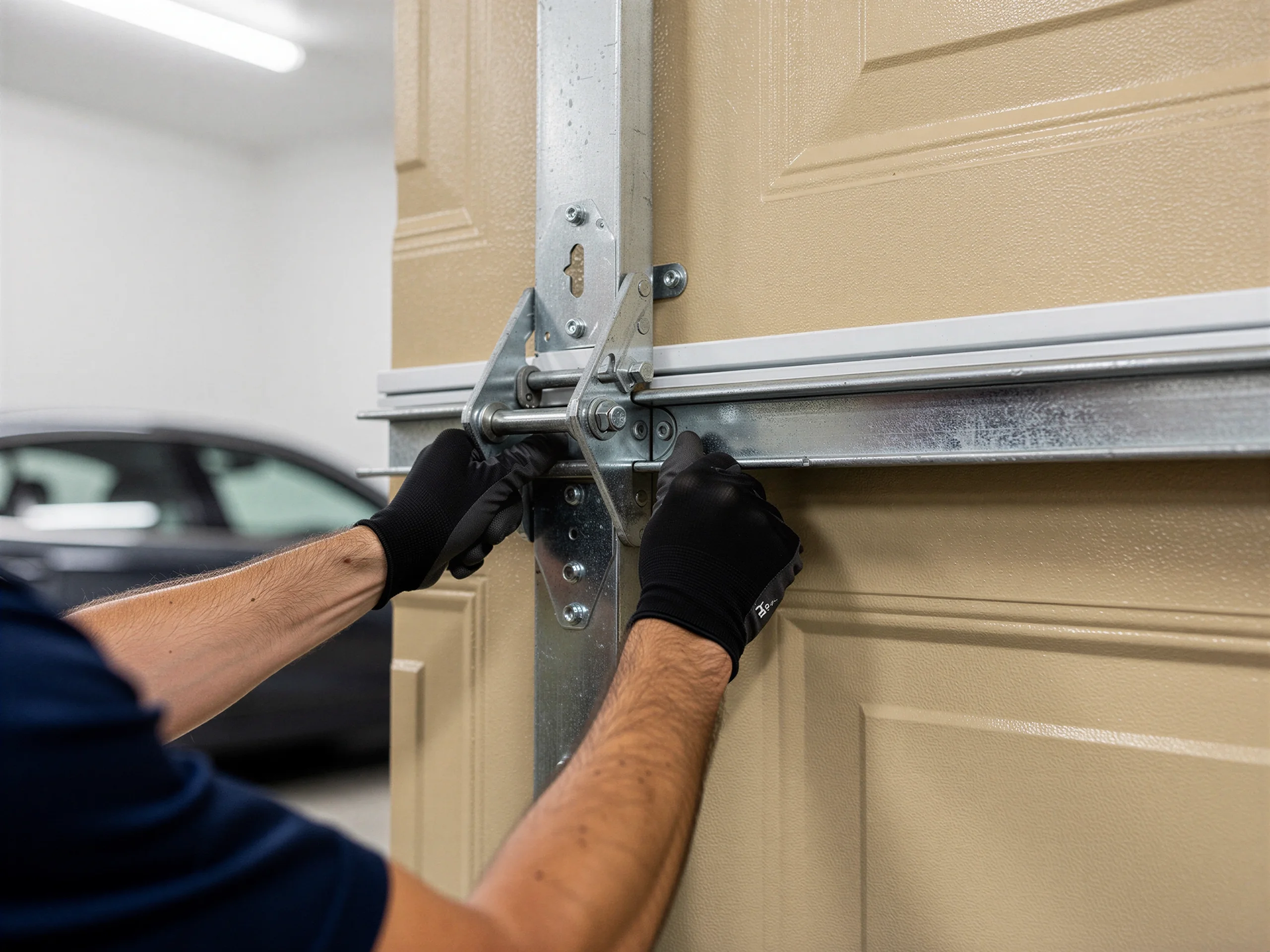
Then we check the track width and hinge spacing, because narrower older doors sometimes need hardware adjusted to accept a panel built to current dimensions. If an exact match panel isn't available, we order the closest current equivalent and talk through the visible difference before any work starts - no surprises once it's hung.
Removing panel without damage
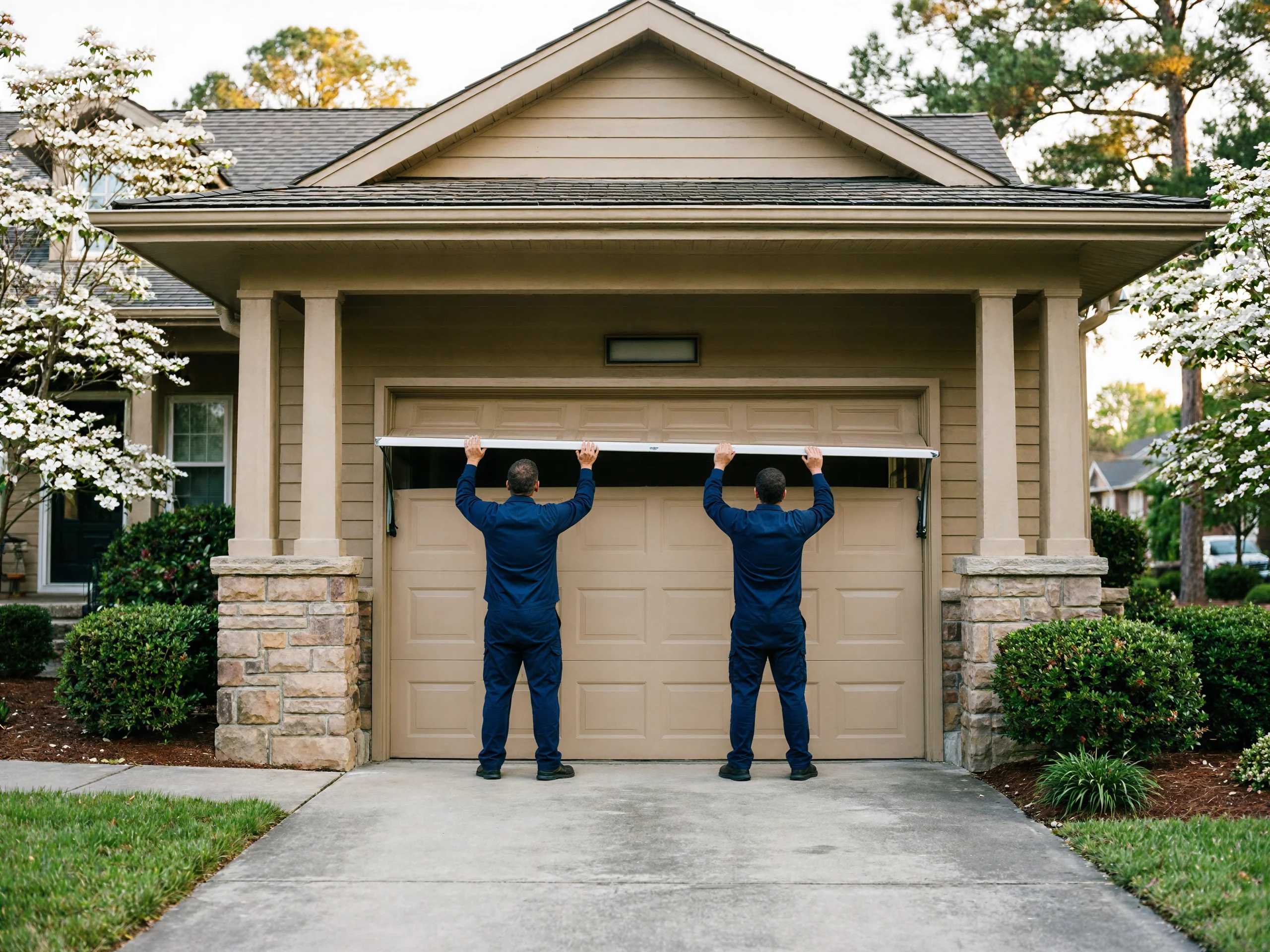
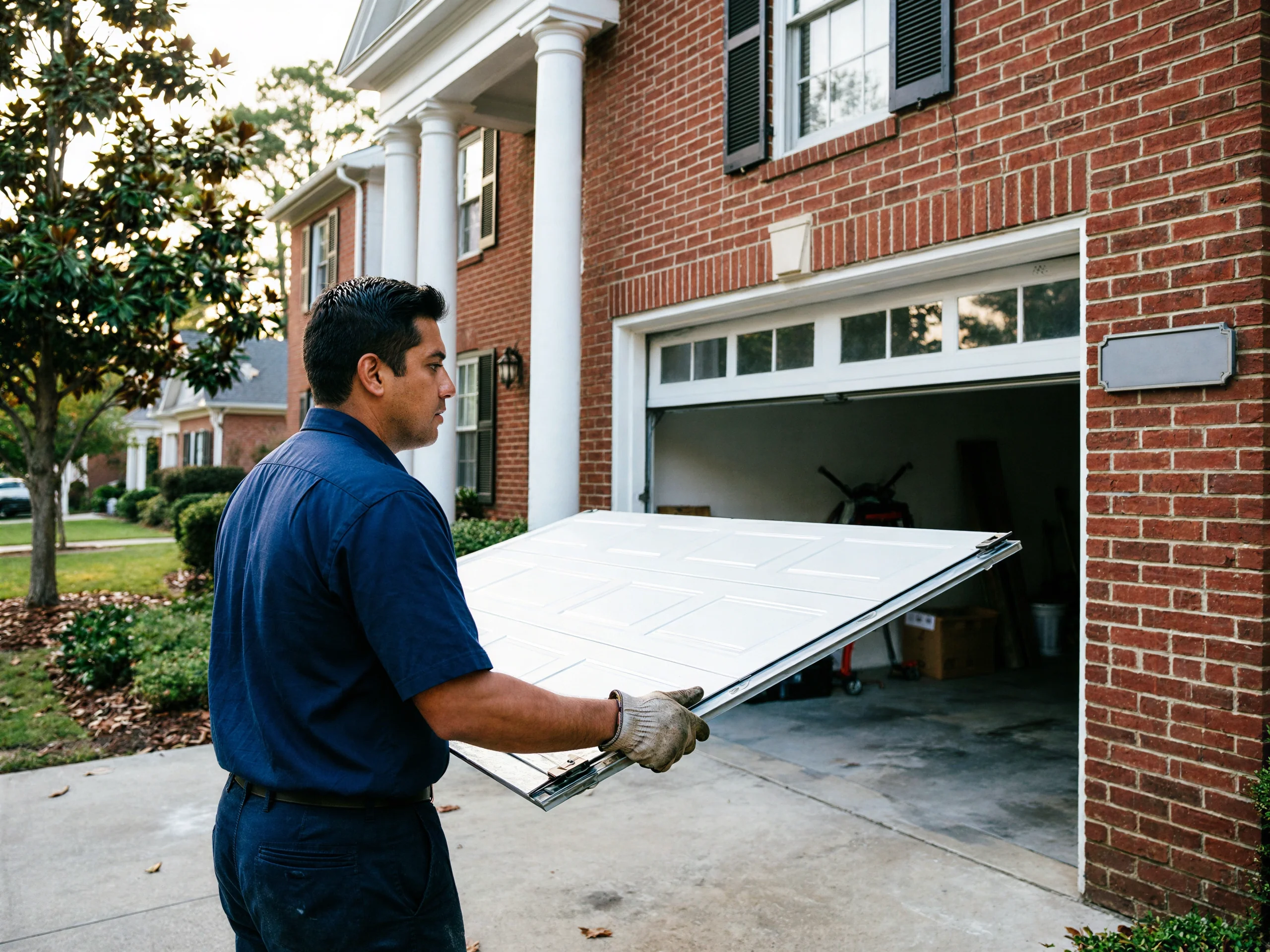
Removing the damaged panel usually means disconnecting the door from the opener temporarily and working the section out along the track without disturbing the panels above or below it, since an older door's fasteners can be more brittle than they look.
How Long It Takes
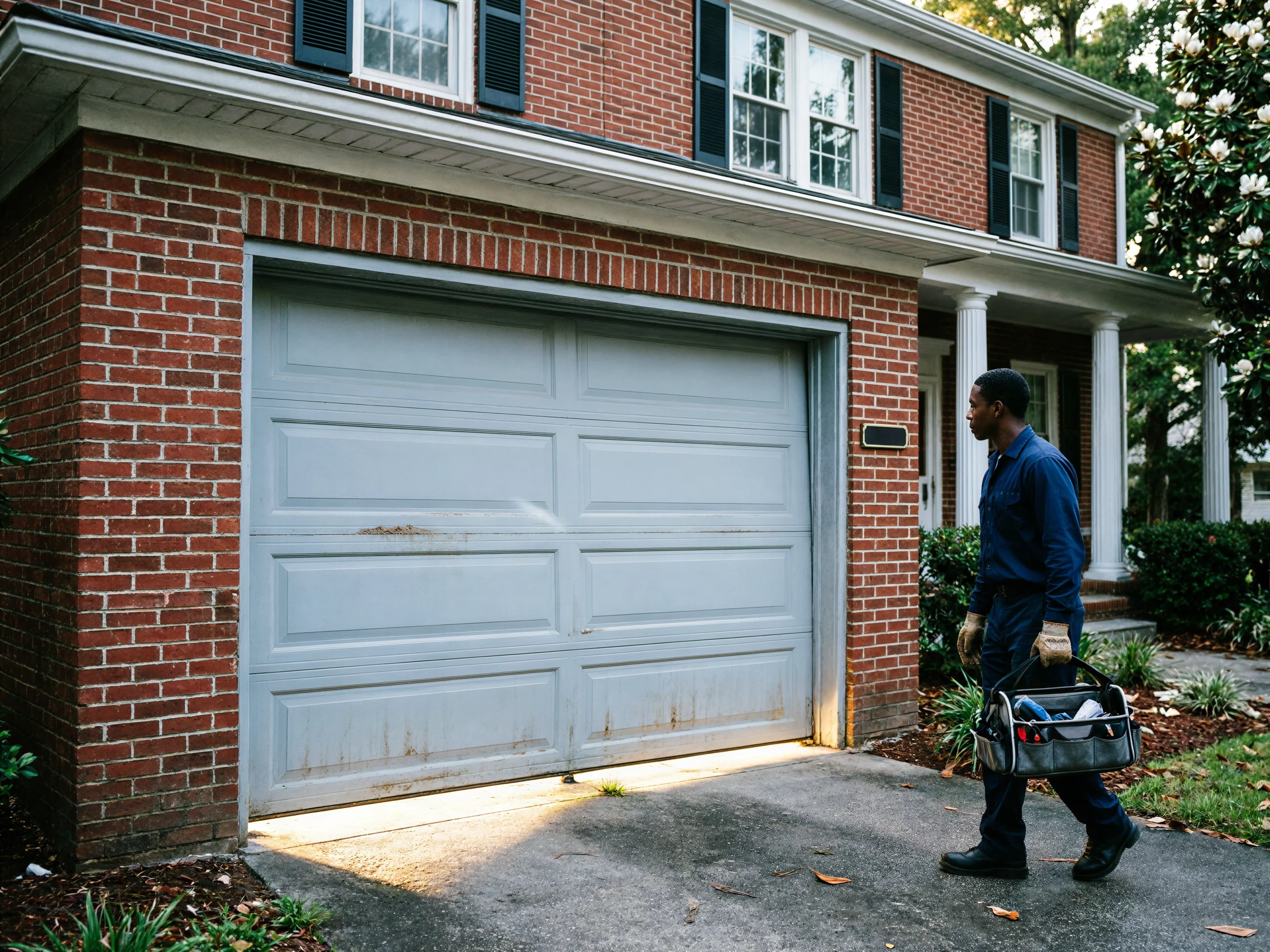
The truck comes from Lexington, roughly eleven miles out, and that drive is part of scheduling - we're not a Spencer-based crew, we're a Lexington crew that covers Spencer. On-site, a single-panel swap with stock hardware usually runs under a couple hours once the crew is there. The variable is the panel itself: if your door takes a common current-stock size, we can often turn the job around quickly; if it needs a special order to match an older width or discontinued color, that lead time sits with the supplier, not with us, and we'll tell you the real number once we know what we're ordering.
Stocked Parts
What we carry on the truck covers the sizes and hardware that fit most doors built from the 1980s and 90s forward, since that's the bulk of what the wider service area has. Spencer's older stock means we more often special-order a panel sized for a 1955-era opening rather than pull one straight off the truck - we'd rather tell you that up front than pretend otherwise.
With around 1,351 households in Spencer and an area-wide ownership rate of 11,737 owner-occupied homes out of 19,193 households, original doors that have never been touched are common enough that we see this exact situation on a regular basis, just not common enough that the part sits pre-stocked. See our general panel replacement coverage at /garage-door-panel-replacement-lexington-nc or check /spencer-garage-doors/ for what else we handle in town.
Talk to a local pro
Garage door service in Lexington?
Same-day service with honest, upfront quotes.