How Long It Takes
Trinity isn't big - about 2,628 households, which means the installs that come up here are spread out rather than clustered the way they'd be in a denser subdivision.
Full trip scheduling
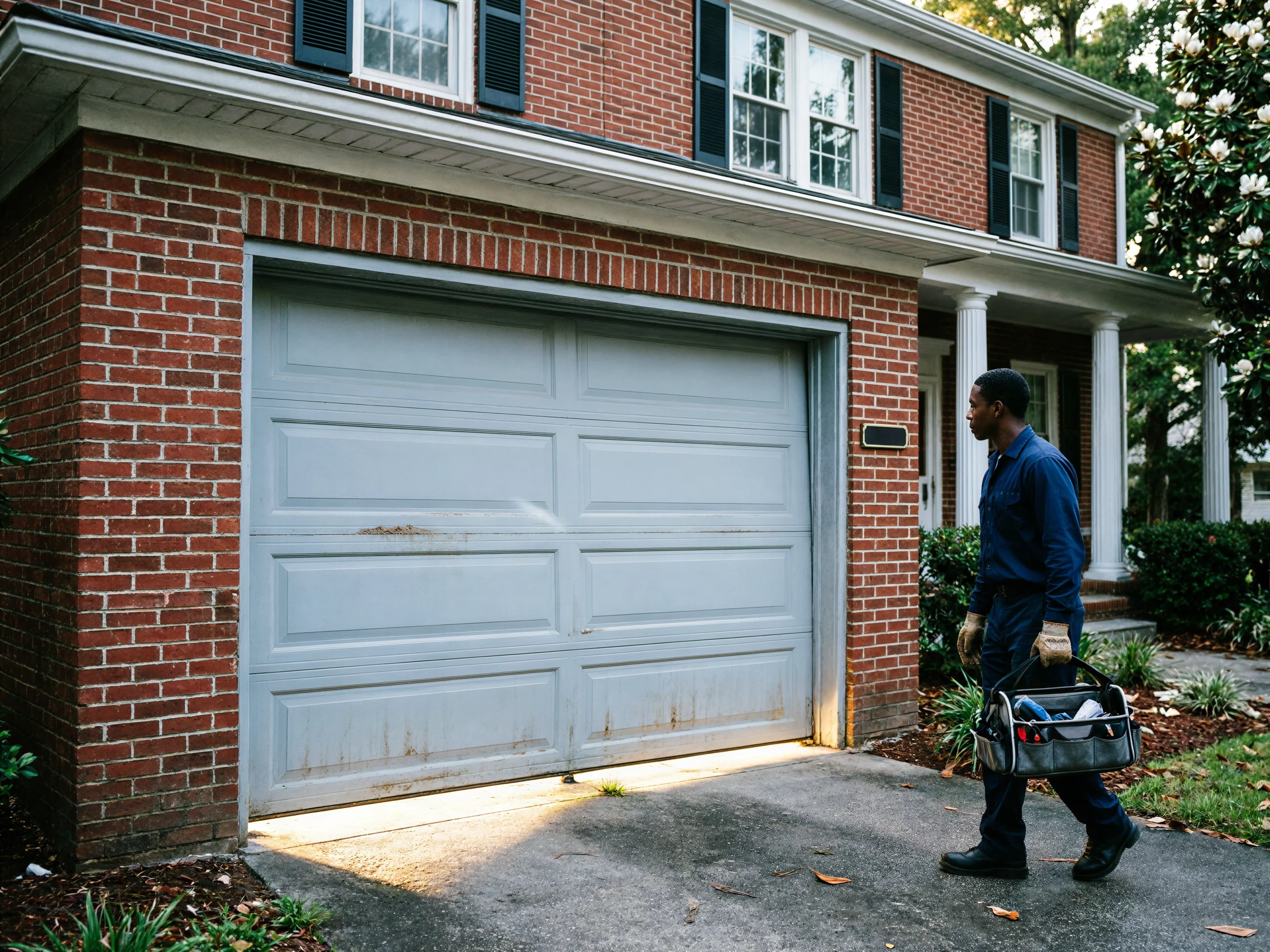
That changes how a job gets scheduled, not how it gets done. Because the crew comes from the Lexington shop, roughly 16 miles out, a Trinity install gets planned as a full trip: measuring the opening, confirming the door size and track configuration ahead of time, then loading the truck so the install itself doesn't stall waiting on a part that should have been checked beforehand.
Lead time on custom doors
Most of the delay on a new door isn't the labor, it's the lead time on the door itself if it's a size or style that has to be ordered rather than pulled off a shelf.
Measure twice late 70s
A standard double door on a home built in the late 1970s usually isn't a custom-size headache, but older openings sometimes run just enough off standard that it's worth measuring twice before anything gets quoted. We don't promise a same-day turnaround here - the drive and the ordering both factor into when the truck actually shows up.
Why It Happens Here
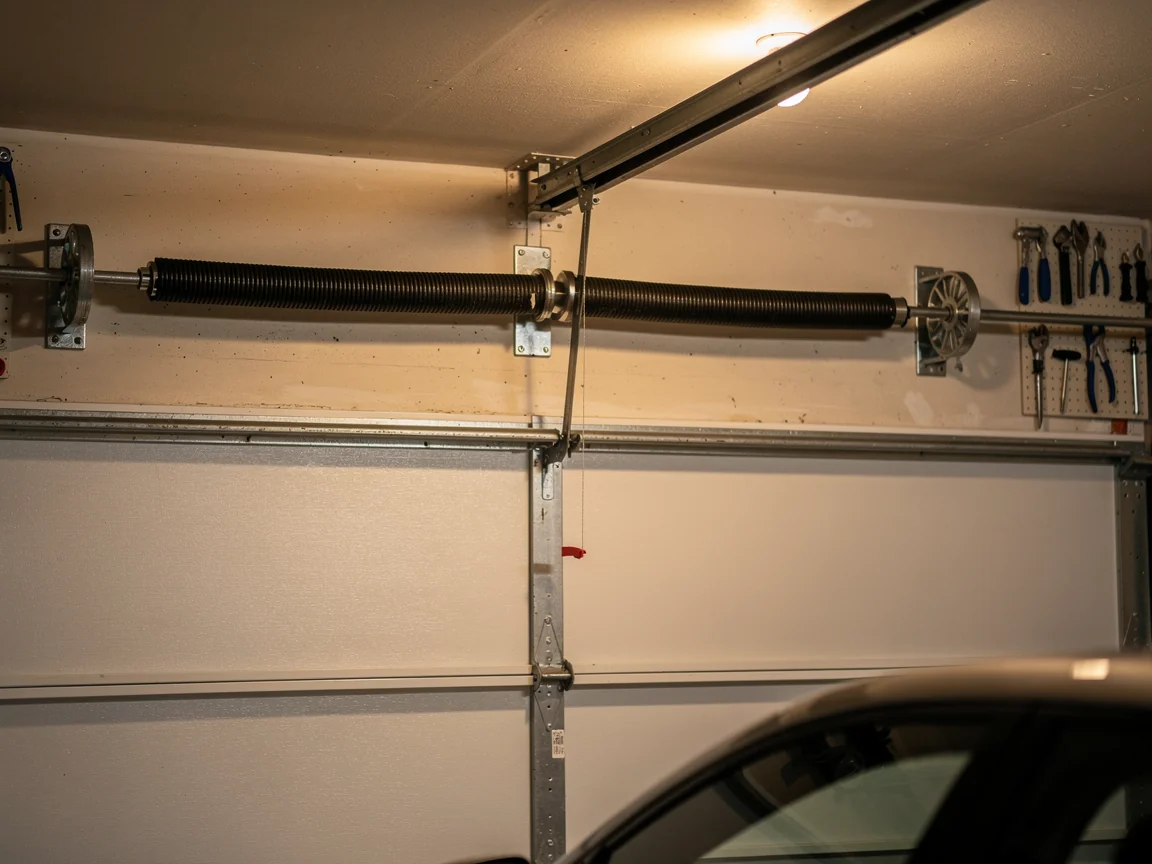
The median year built in Trinity is 1977, which puts a big share of the housing stock here ahead of the 1983 median for the wider service area this company covers. That gap matters more than it sounds like. A door and track system installed in the late '70s has had roughly fifteen more years of cold-season expansion and contraction than the area average, and in a climate classed as cold-moderate, that shows up as stiffened rollers, loosened track bolts, and springs that have simply outlived their rated cycle count.
It's not that Trinity's doors are unusual - it's that there are more of them at the point where replacement starts making more sense than another repair. A torsion spring or a weatherstrip kit can stretch a door's life a few more years, but on a door this old, you're often one more broken part away from needing a new unit anyway. Framing an install here starts with the age of the opening, not a generic pitch about upgrading.
The Symptom
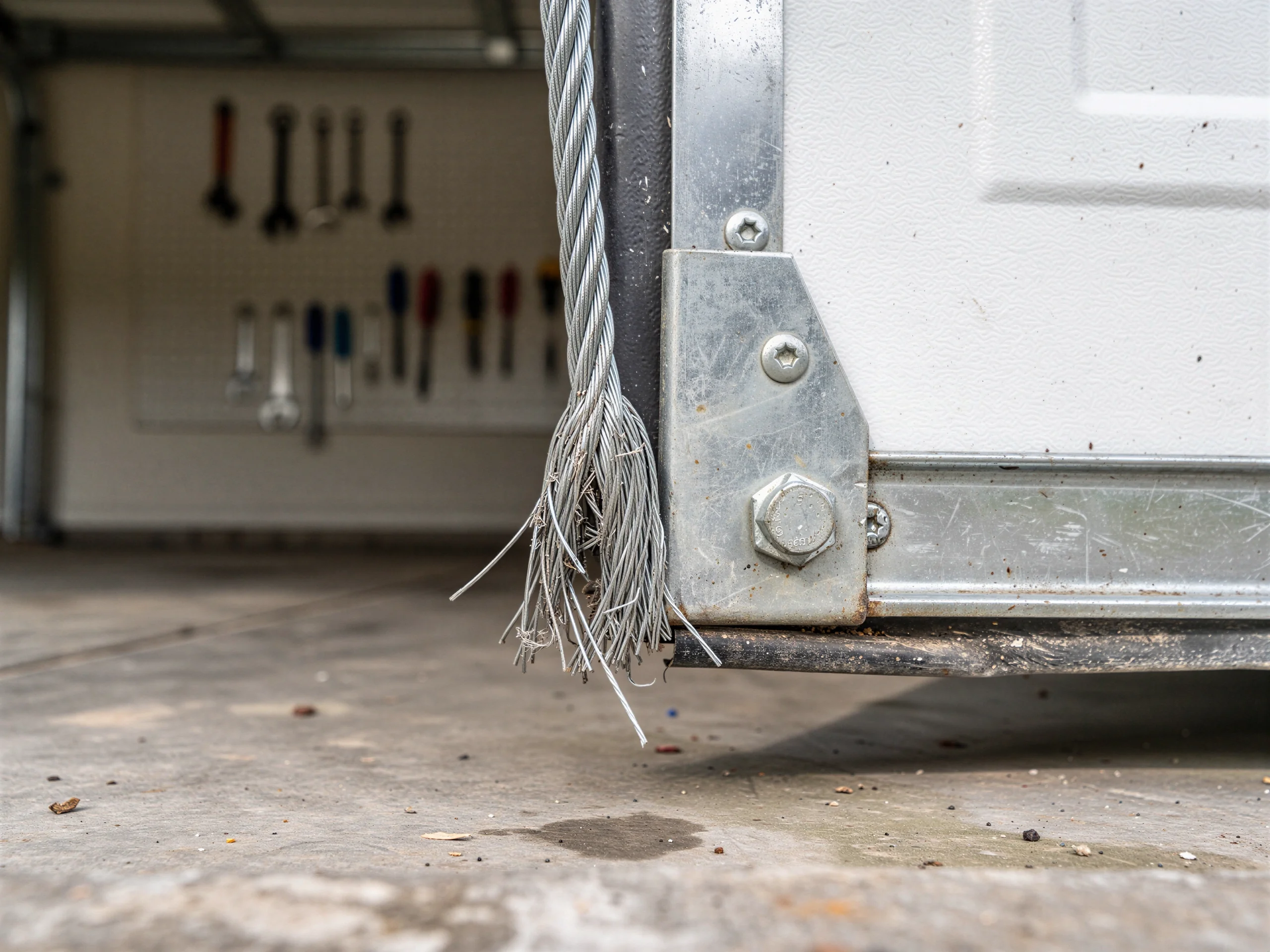
On a lot of Trinity's older openings, the tell isn't a dramatic failure - it's a door that's gotten heavy to lift by hand, sags visibly at the top panel when it's halfway up, or rattles through the track on the way down.
Pre-1993 openers lack sensors
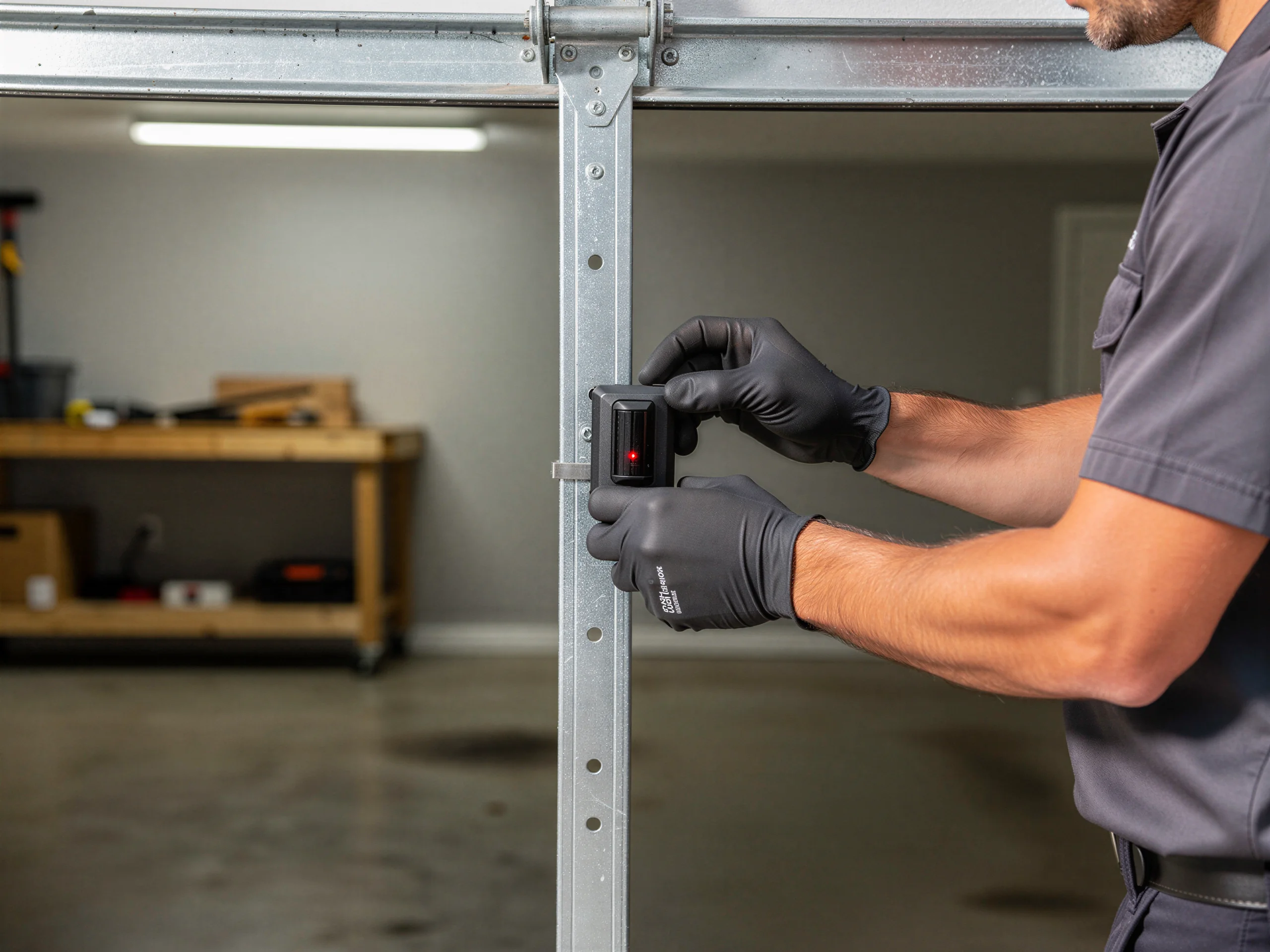
Doors from the 1977 wave predate the 1993 federal rule requiring photo-eye reversal sensors, so a fair number of these homes are still running openers with no auto-reverse eye at all, which is a safety gap worth knowing about even before the door itself is the issue.
Condensation rust on steel
Single-layer steel panels were standard for that era, with no foam core, which in a cold-moderate climate means more condensation on the inside face and, over enough winters, rust starting at the bottom panel where it sits closest to the slab.
Reddish line at bottom
If you're seeing flaking paint and a reddish line along the bottom edge, that's usually the panel telling you it's past patching. None of this is dramatic on its own - it's the accumulation that eventually makes repair not worth chasing.
What You Pay
We don't have a fixed number to quote here without seeing the opening - door size, insulation level, and whether the track and opener need replacing too all move the total. What's worth knowing locally: Trinity's median household income runs at $80,349, well above the $64,562 median across the broader service area, and that tends to show up in which doors homeowners here actually choose - more insulated steel and composite options, fewer bare single-layer replacements just to get something working again.
That's a pattern, not a promise of what you'll spend. The honest limitation is that any number given over the phone before a measurement is a guess, and a bad guess on a 1977-era opening - where the rough dimensions don't always match what's printed on a modern spec sheet - causes more problems than it solves. A real quote means someone measures the opening first.
The DIY Question
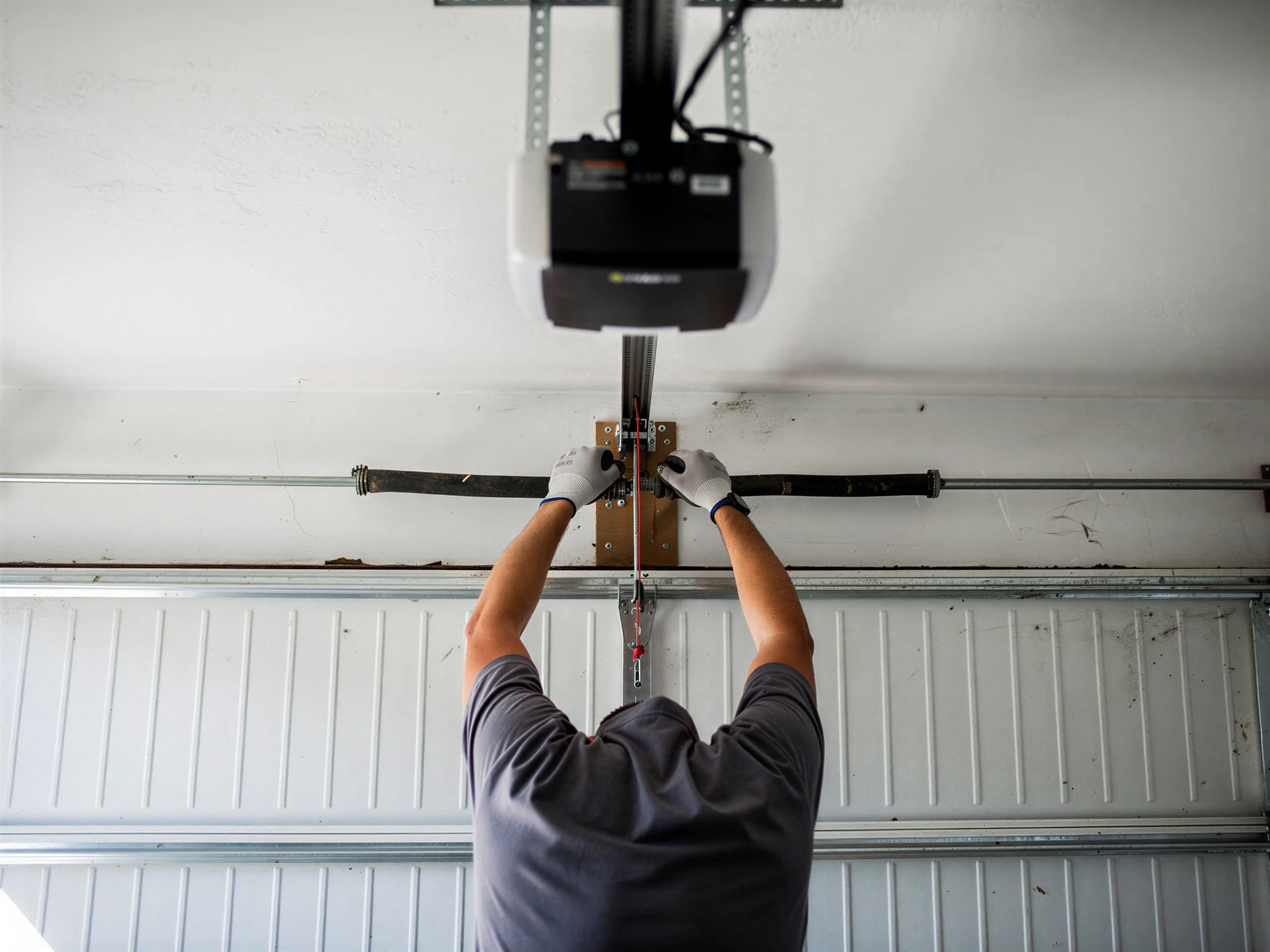
A torsion spring under load can break a bone or worse, and that risk doesn't change because the door is old or the house is modest.
Spring and sensor DIY pitfalls
If you're set on doing the install yourself, the panels and track are within reach for someone comfortable with tools, but the spring tensioning and the opener's safety sensor alignment are where most DIY installs go wrong - and on a door from this era, those parts are also the ones most likely to already be fatigued.
No phone spring coaching
We'll say plainly what we don't do: we're not going to talk someone through spring tensioning over the phone, and we don't sell bare parts for a self-install on a torsion system.
Panel-only DIY is fair
If the opening is a standard size and the existing track is sound, a straightforward panel swap is a fair DIY project. Past that - new springs, new track, or anything touching the opener's safety reverse - it's not worth the risk to save a service call.
What the Repair Takes
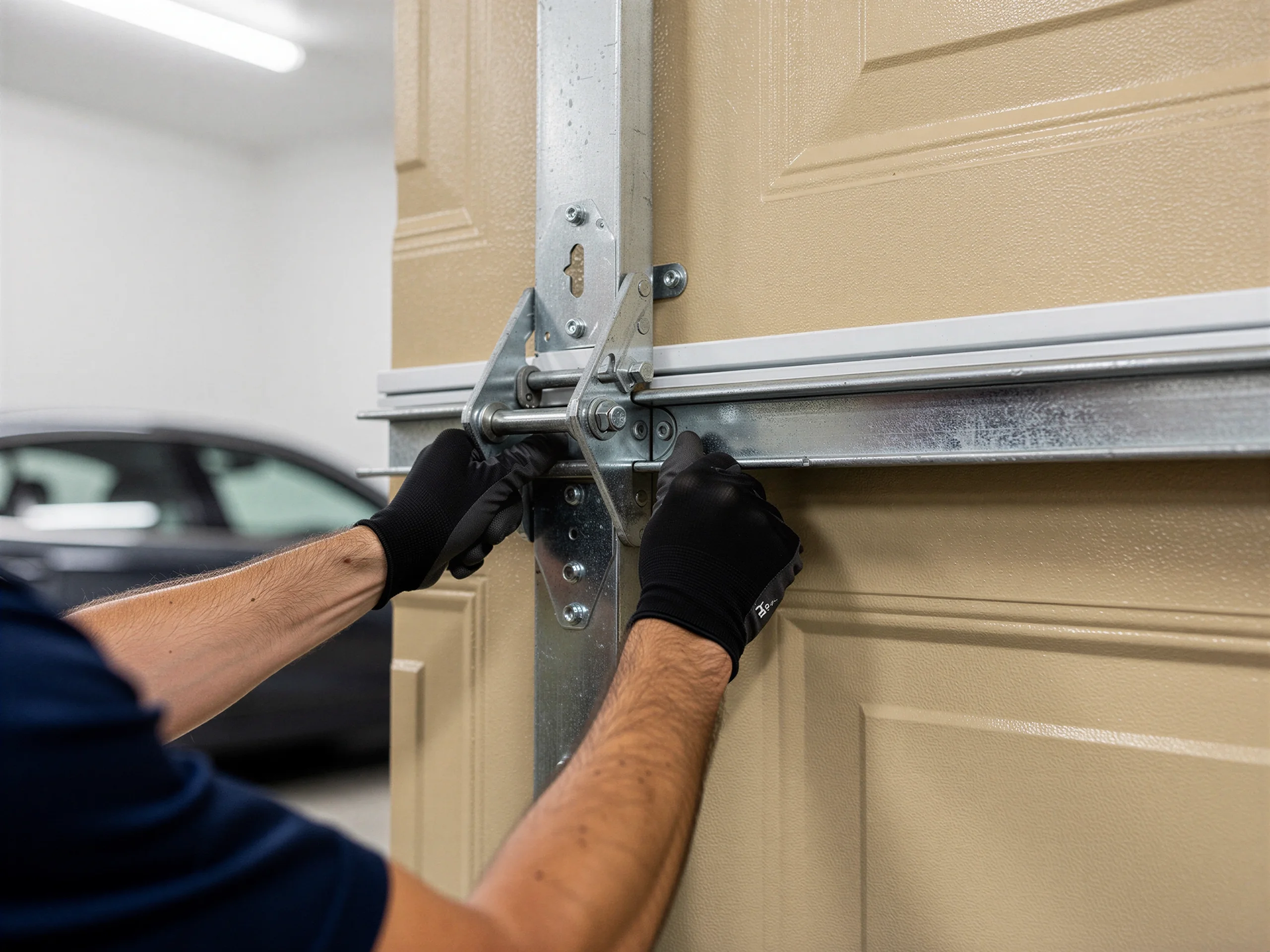
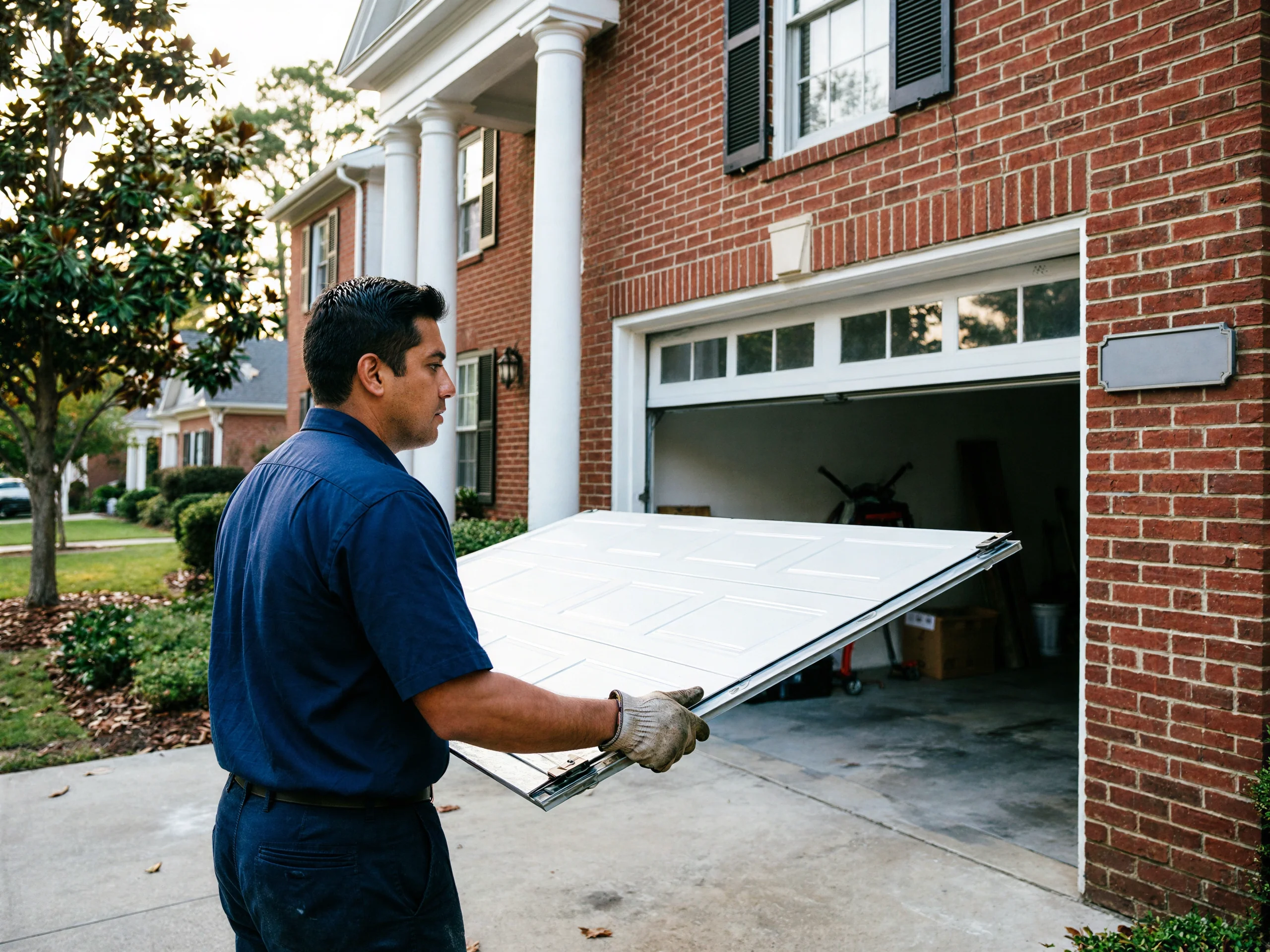
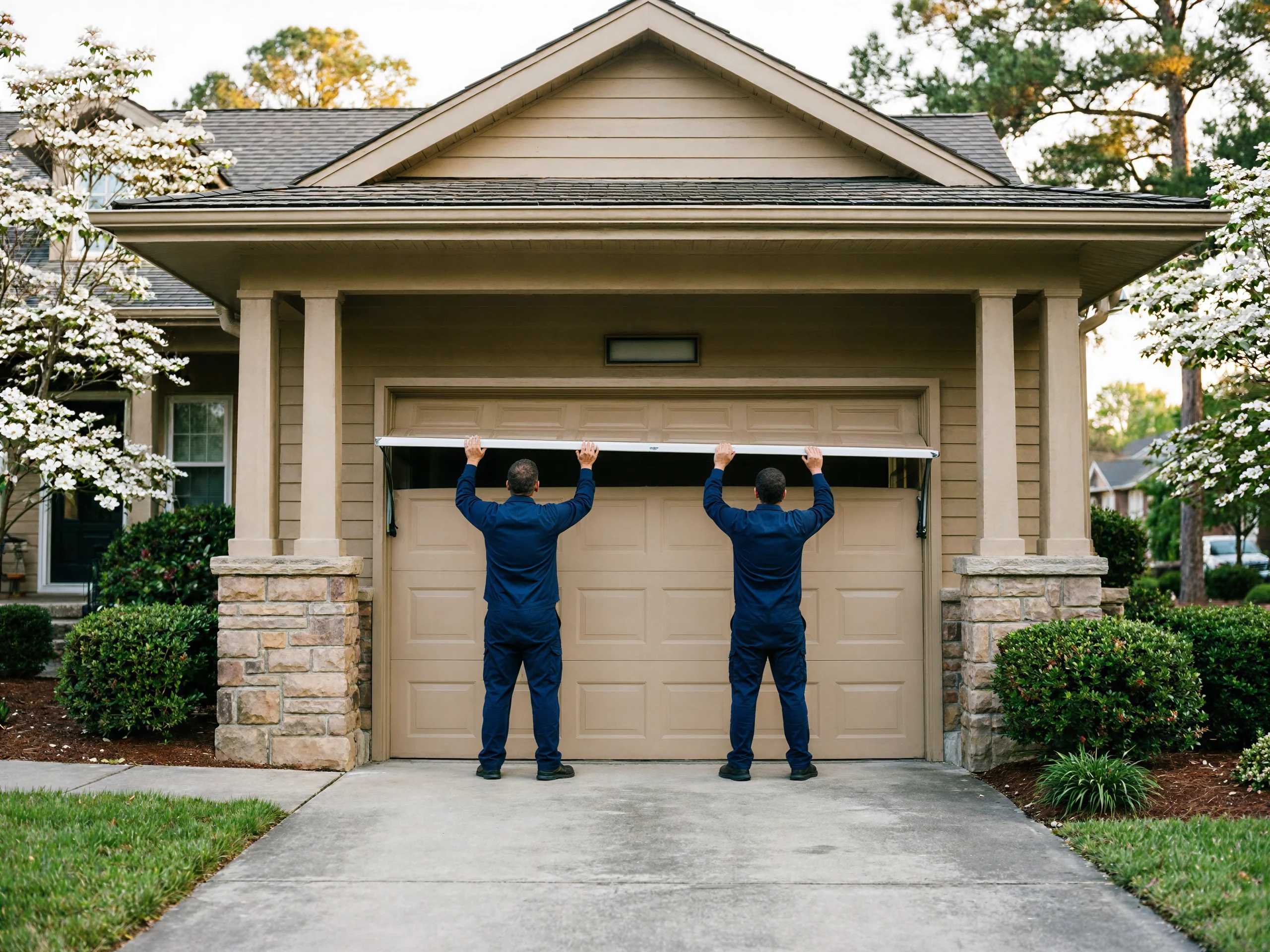
Swapping out an old door starts with pulling the existing panels and track hardware clear, checking the jamb and header for rot or settling - common enough on a house built around 1977 - and confirming the new door's track and spring size actually match the opening rather than just the door's listed width.
Mostly removal and reinstall
On a lot of these homes, the original framing is sound even when the door isn't, so the job is mostly removal, disposal of the old panels, and a clean reinstall rather than carpentry.
Sensors added during install
Once the new door's up, the opener gets mounted or reconnected, the travel limits set, and - if the home didn't already have one - a photo-eye sensor pair installed and aligned, since a lot of Trinity's older setups never had one to begin with.
Halfway balance check last
Balance gets checked last: a door that swings freely by hand at the halfway point is properly sprung. If it doesn't, something's off before the crew leaves, not after.
Talk to a local pro
Garage door service in Lexington?
Same-day service with honest, upfront quotes.